
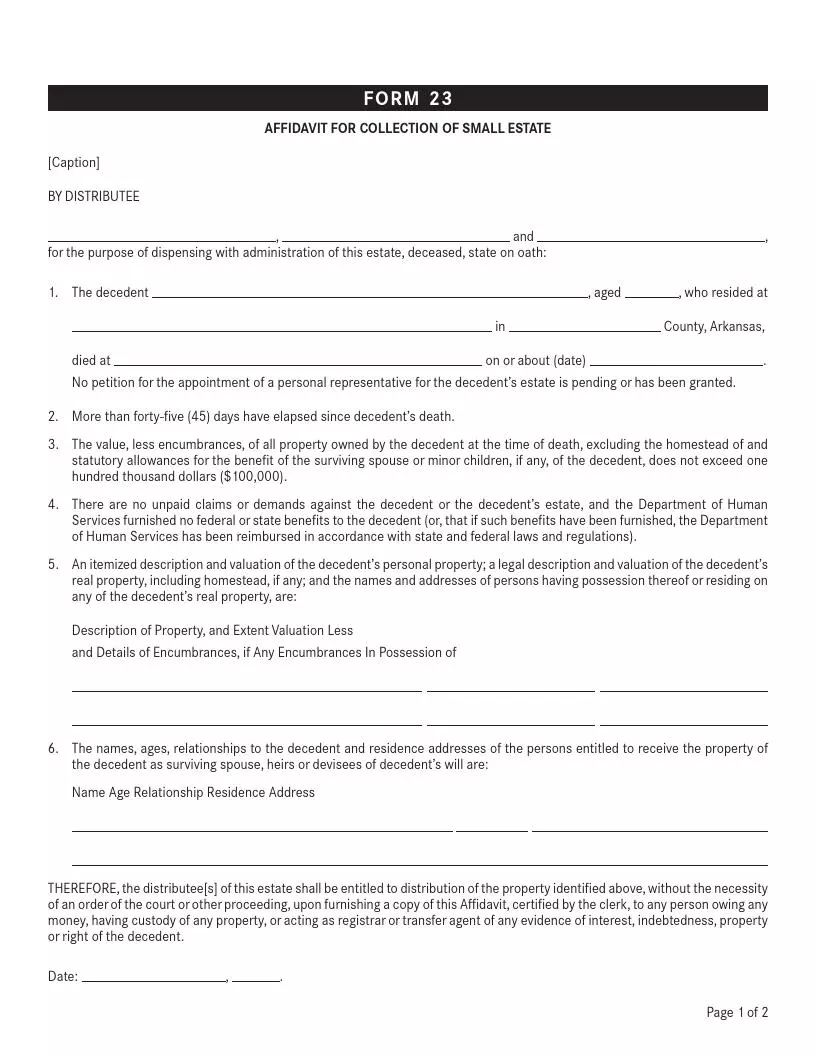
The Arkansas small estate affidavit form is the Arkansas Judiciary's Form 23, the Affidavit for Collection of Small Estate by Distributee. It fits an estate when the value of the decedent's property, less encumbrances, does not exceed $100,000 and more than 45 days have passed since the death.[1] This page lists the Arkansas requirements and walks through the form step by step.
Last Updated: October 2026. This guide is reviewed and updated regularly to reflect current Arkansas law. If you notice an error or outdated information, please contact us.
Build Your Document
Answer a few simple questions to make your document in minutes
Save and Print
Save progress and finish on any device, download and print anytime
Sign and Use
Your valid, lawyer-approved document is ready
This is the Arkansas Judiciary's Form 23, and the person who died is called the decedent. Four conditions apply. The estate is worth $100,000 or less, and more than 45 days have passed since the death. No personal representative is pending or appointed, and no claims are unpaid.[1]
The form states the value limit in these words:
The value, less encumbrances, of all property owned by the decedent at the time of death, excluding the homestead of and statutory allowances for the benefit of the surviving spouse or minor children, if any, of the decedent, does not exceed one hundred thousand dollars ($100,000).
The distributees receive the property without a court order or other proceeding only on furnishing a copy of the affidavit, certified by the clerk.[1] The copy goes to any person owing money, having custody of property, or acting as registrar or transfer agent.
Form 23 rests on Ark. Code Ann. § 28-41-101, the law on collection of small estates by a distributee, and you can use it whether or not the decedent left a will.[1][2]
This table sums up the same Arkansas requirements in short form.
| Max. Estate | $100,000, less encumbrances (the homestead and statutory allowances for a surviving spouse or minor children are not counted) |
| Min. Time to Wait After Death | More than 45 days |
| Personal Representative | No petition pending and none appointed |
| Unpaid Claims | None |
| Clerk Certification | A copy of the affidavit certified by the clerk |
| Source | Arkansas Judiciary, Form 23 (Affidavit for Collection of Small Estate by Distributee)[1] |
| State Law | Ark. Code Ann. § 28-41-101 (collection of small estates by distributee)[2] |
Looking for another state? See all small estate affidavit forms.

The Arkansas small estate affidavit form has two pages and six parts to complete. The distributees fill in the first page and sign on the second, and the clerk completes the certificate at the end. Follow the steps below in order.
The distributees state the facts of the affidavit on oath and file it with the probate clerk of the circuit court.[2][1] No witnesses are required.[2]
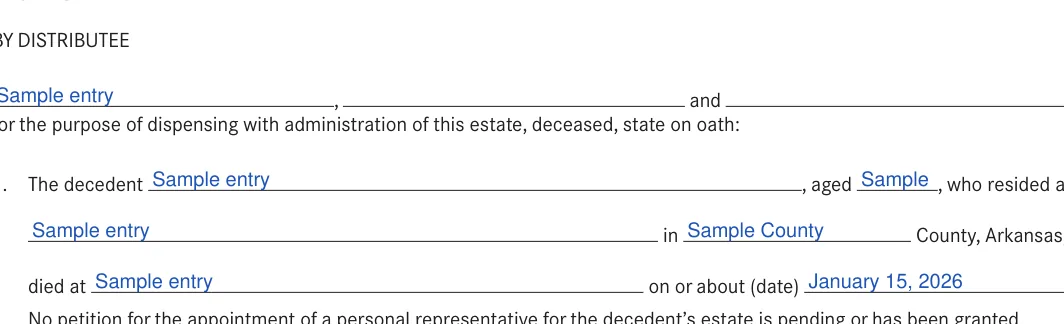
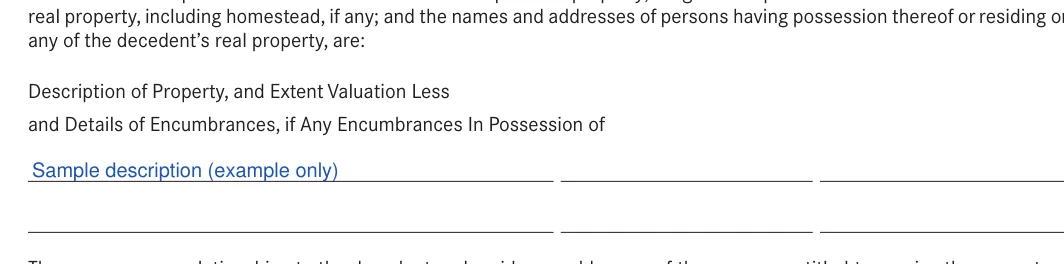
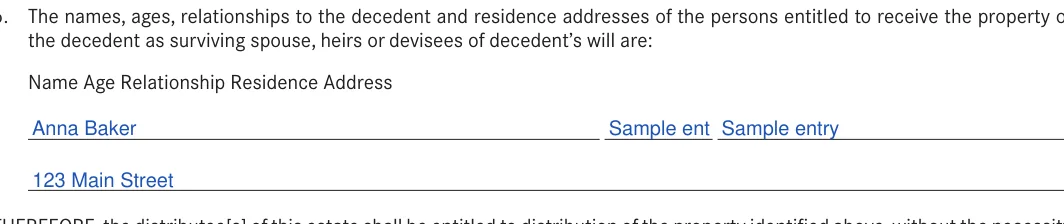
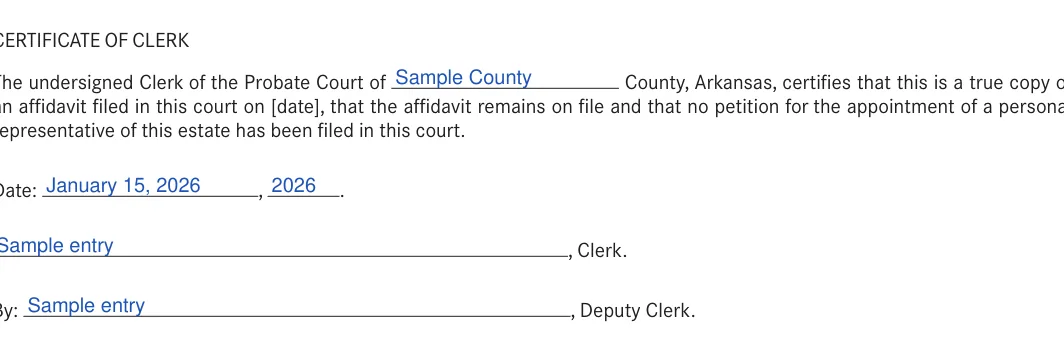
The screenshots under each step show the FormsPal Arkansas small estate affidavit template filled with sample entries in blue, so you can see where each answer goes. The names, addresses, dates and amounts are examples only.








These short answers cover the questions people ask most about the Arkansas small estate affidavit. They all come back to the $100,000 limit in the Arkansas Judiciary's Form 23, and the 45-day wait is the other number to keep in mind.
The small estate procedure applies when the decedent's property, less encumbrances and excluding the homestead and statutory allowances for a surviving spouse or minor children, does not exceed $100,000. The other conditions above also apply, including the 45-day wait.[1]
The amount is one hundred thousand dollars ($100,000). It is measured as the value of all property the decedent owned at death, less encumbrances.[1]
Arkansas sets the limit at $100,000. The homestead and the statutory allowances for a surviving spouse or minor children are left out of that value.[1]
The small estate limit in Arkansas is $100,000. An estate whose value, less encumbrances and excluding the homestead and statutory allowances, does not exceed that amount can use the small estate affidavit.[1]
General information, not legal or tax advice.
