

Form OPNAV 5500 at a glance
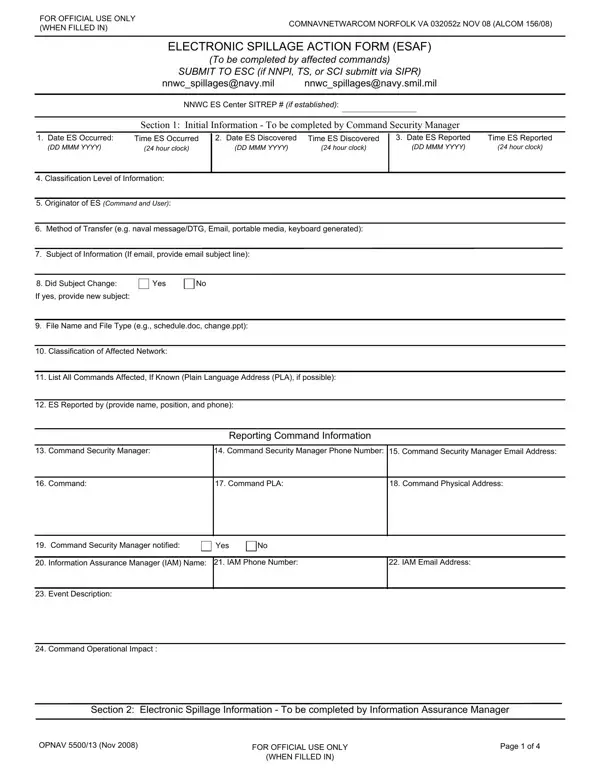
What it is: The Electronic Spillage Action Form (ESAF) is to be completed by affected commands.
Where and when to file: Submit to ESC at nnwc_spillages@navy.mil; if NNPI, TS, or SCI, submit via SIPR at nnwc_spillages@navy.smil.mil.
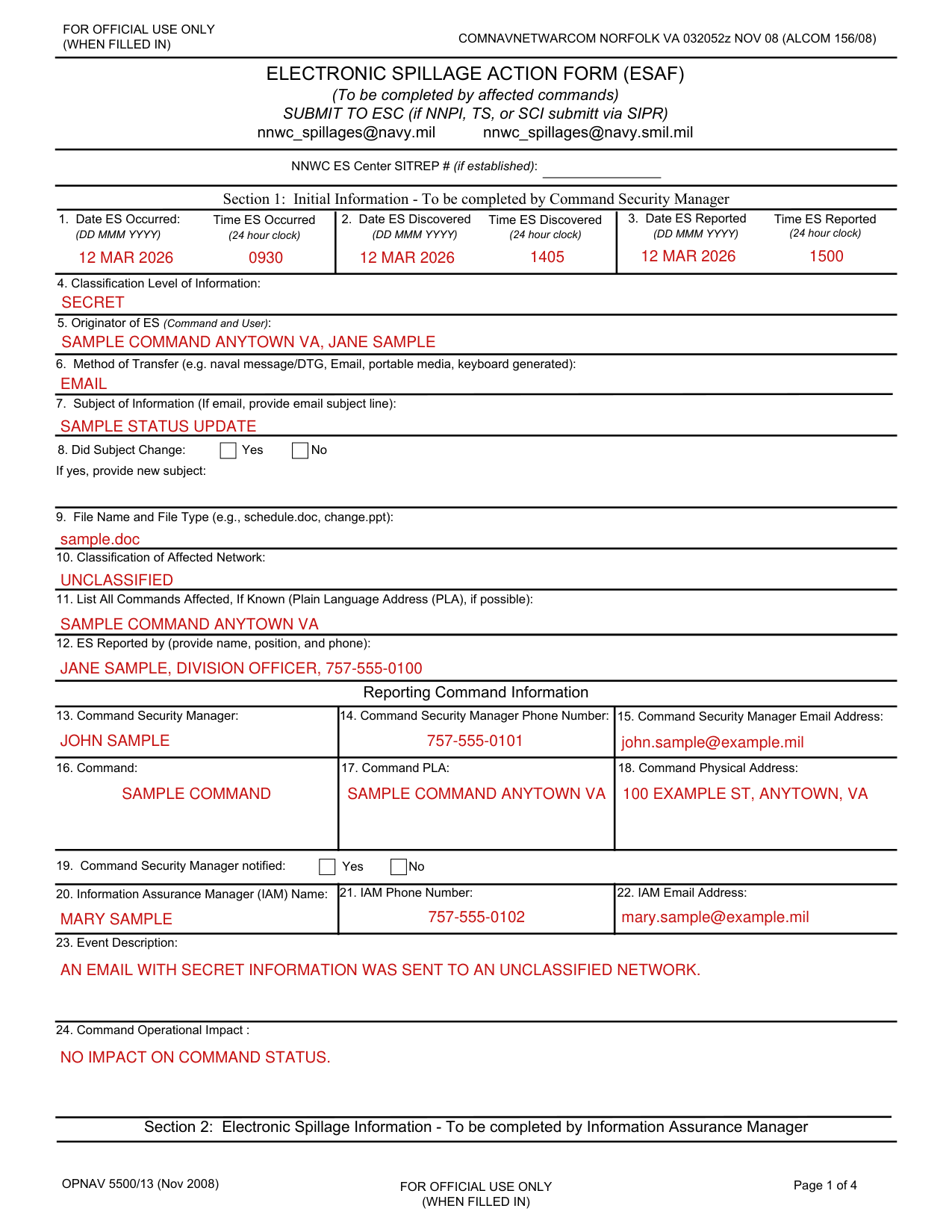
A filled-in Form OPNAV 5500 example: a command reports an email spillage
How to fill out Form OPNAV 5500, box by box
NNWC ES Center SITREP #, and the dates and times the ES occurred, was discovered and was reported

Section 1: Initial Information is to be completed by Command Security Manager.
Enter the NNWC ES Center SITREP # if established.
Enter the date and time the ES occurred (Block 1), was discovered (Block 2) and was reported (Block 3), expressed as DD/MMM/YYYY and local time.
Classification Level of Information, Originator of ES and Method of Transfer

Block 4: the classification the information was received as or the classification the information should be.
Block 5: provide the Plain Language Address (PLA) of originating command, if possible; if PLA is unknown, provide common command name; provide originating individual of ES, if possible.
Block 6: provide how the ES was transferred to/from workstation. For a naval message, provide the DTG of the naval message; Web Posting and Chat are also possible methods.
Block 6: Portable Media is defined as: CD-ROM, Floppy Disk, Thumb Drive, Memory Stick, Flash Drive, Portable Hard Disk Drive. Keyboard Generated is defined as: Scanned, Locally typed information saved to a drive.
Subject of Information, Did Subject Change, File Name and Classification of Affected Network
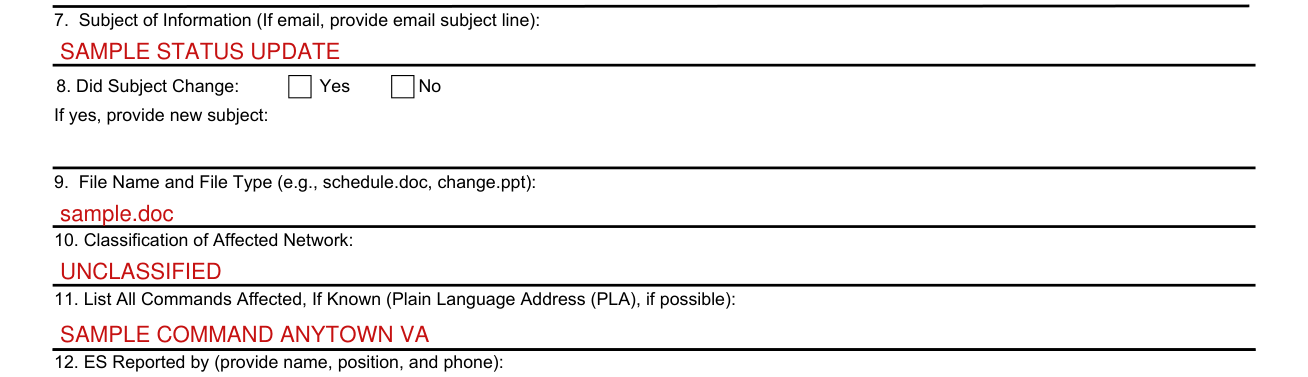
Block 7: if a single file, provide the subject of the file; if an email, provide the email subject line; if a naval message, provide the subject line only. Block 8: if the subject changed, provide the new subject information.
Block 9: provide all file names and file types involved. Block 10: provide the classification of the network the ES was presented to. Block 11: provide the list of all commands as a PLA, if possible; if PLA is unknown, provide common command name.
ES Reported by and Reporting Command Information
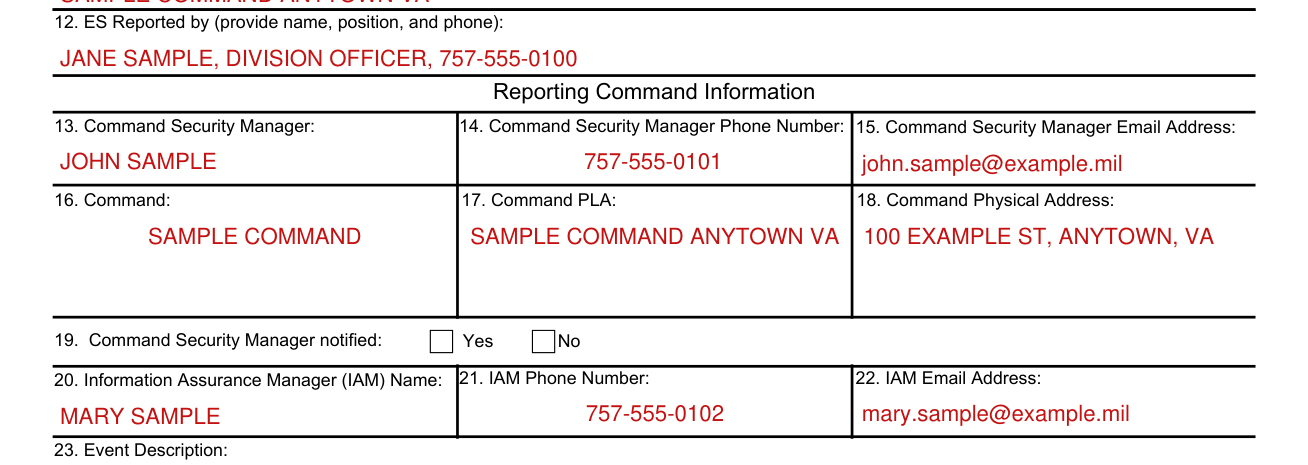
Block 12: provide the name, position and phone number of the reporting individual.
Block 13: provide the first and last name of the CSM at reporting command. Block 14: provide 10 digit number. Block 15: provide email address.
Block 16: provide the common name of command. Block 17: provide the full PLA of command. Block 18: provide the local address of command. Block 19: provide a yes or no answer.
Block 20: the IAM at reporting command, first and last name. Block 21: 10 digit number. Block 22: email address.
Event Description and Command Operational Impact
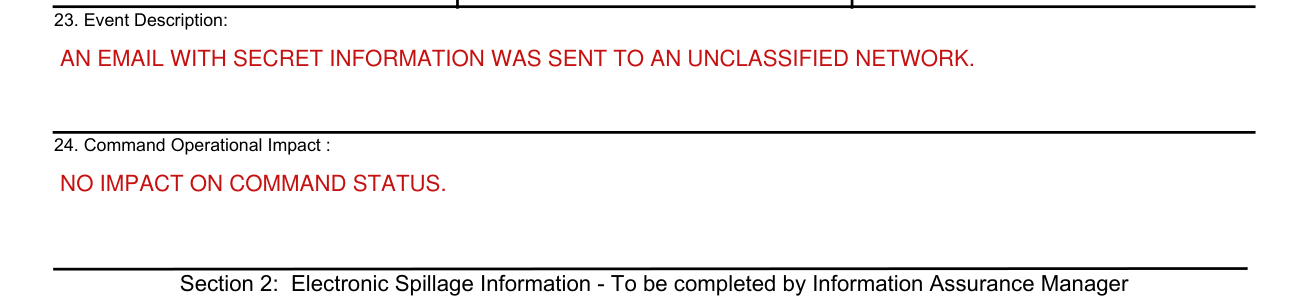
Section 2: Electronic Spillage Information is to be completed by Information Assurance Manager.
Block 23: provide command view point of how ES occurred.
Block 24: provide description of how this ES may impact command status.
Affected Network Type and Domain Name, Workstations and Users Affected

Block 25: provide the network the ES occurred on and the domain name of the network.
Block 26: how many workstations affected by ES. Block 27: how many users affected by ES.
Email Addresses of Originator and Recipients, NMCI Assets, Information Printed and Information Saved
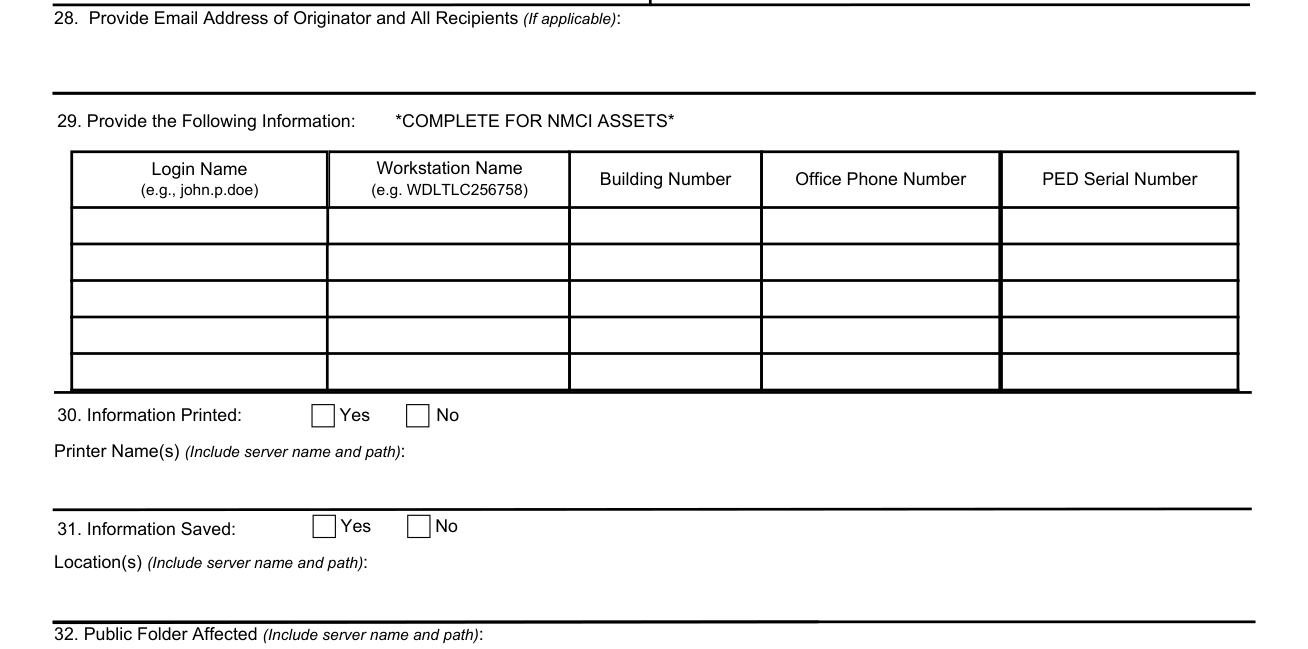
Block 28: list originator and all recipients of the email causing the ES. Block 29: provide the following information for NMCI Assets Only; PED is defined as a Portable Electronic Device. Block 30: provide the server name of the printer and path to the printer. Block 31: provide the server name and path to location saved.
Public Folder Affected and Date/Time Information Placed in Folder

Block 32: provide the server name and path to the public folder.
Block 33: date and time, expressed as DD/MMM/YYYY and local time.
Functional Account and Functional Mailbox
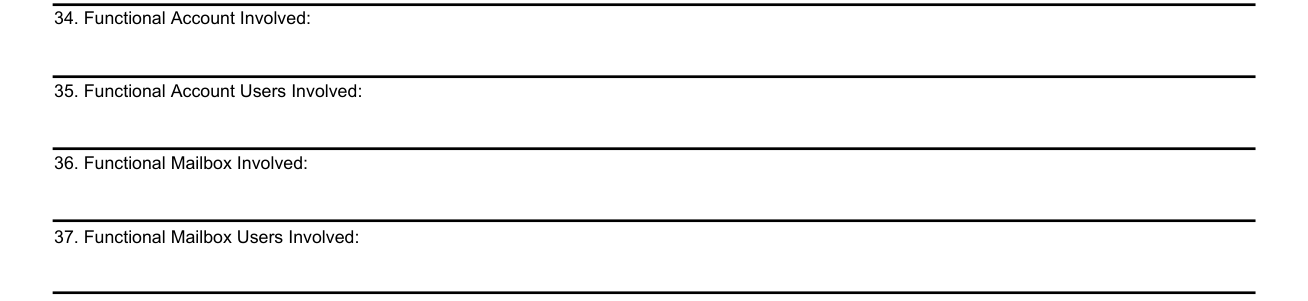
Block 34: Functional account is defined as a single login workstation with multiple users attached. Block 35: provide the users associated with this account.
Block 36: Functional mailbox is defined as single email address associated with the functional account. Block 37: provide the users associated with this account.
Non-Government Assets, OCA Classification Determination and PI Completion
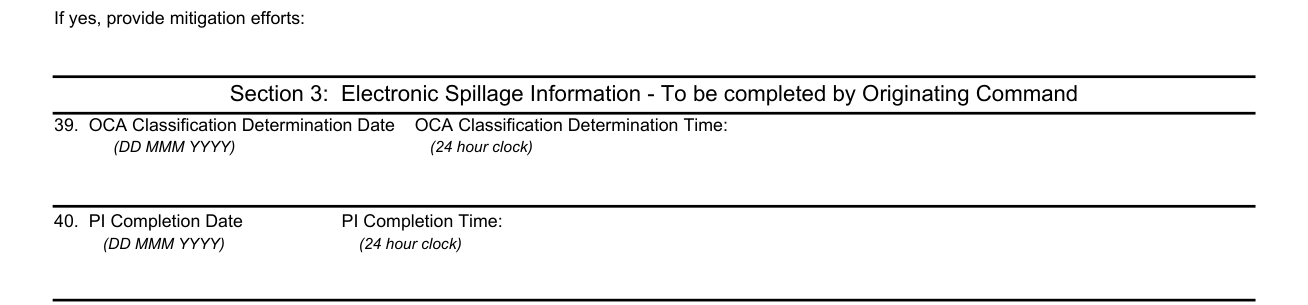
Block 38: describe the mitigation efforts for those workstations affected outside the Navy.
Section 3: Electronic Spillage Information is to be completed by Originating Command.
Block 39: OCA Classification Determination Date/Time, expressed as DD/MMM/YYYY and local time. Block 40: PI Completion Date/Time, expressed as DD/MMM/YYYY and local time.
Common questions about Form OPNAV 5500
Where do I file it?
Submit to ESC at nnwc_spillages@navy.mil; if NNPI, TS, or SCI, submit via SIPR at nnwc_spillages@navy.smil.mil.
Sources
[1] Form OPNAV 5500/13 (Nov 2008), Electronic Spillage Action Form (ESAF) (the Official source link on this page).