
A firearm bill of sale is a written record of a gun sale. It names the buyer and the seller, describes the gun, and shows the price and the date. People who sell a gun privately often sign one before the gun changes hands.
Last Updated: October 2026. This guide is reviewed and updated regularly to reflect current law. If you notice an error or outdated information, please contact us.
The bill of sale carries the names and signatures of both parties, the date of the sale, and the details of the gun. It works as a receipt that shows the sale took place.
A firearm bill of sale is also called a gun bill of sale or a firearm transfer record. Whatever the title, the document does the same job: it records who sold which gun to whom.
A firearm bill of sale protects both sides of a private sale. It records who sold the gun, who bought it, which gun it was, what the buyer paid, and when the sale took place. If a question about the gun comes up later, the signed document shows who owned it and when.
For the seller, the document shows how much was paid and on what date. It also shows the date the gun left the seller's hands, which helps if the buyer's use of the gun is ever questioned.
For the buyer, the document is proof of purchase. If a dispute about the sale or the gun comes up later, the buyer has a signed record to point to. For more on this, read how binding a bill of sale is.
Most forms record the same core details:
| Document Name | Firearm Bill of Sale Form |
| Other Name | Gun Bill of Sale |
| Relevant Link | Bureau of Alcohol, Tobacco, Firearms and Explosives |
| Avg. Time to Fill Out | 12 minutes |
| # of Fillable Fields | 66 |
| Available Formats | Adobe PDF, Microsoft Word |
Federal law requires a Federal Firearms License (FFL) for anyone in the business of selling, manufacturing, or importing firearms. The Federal Firearms License comes from the ATF, part of the Department of Justice. Before a licensed dealer completes a transfer, section 922(t) of Title 18 of the United States Code has the dealer contact the National Instant Criminal Background Check System (NICS).
A person who sells a gun now and then, and is not in the business of selling guns, is generally not treated as a dealer. State rules still apply, and some states send private sales through a licensed dealer. Check your state's rules before you agree to any sale.
In a dealer sale, a licensed dealer handles the paperwork and runs the federal background check before the transfer. In a private sale, the seller and the buyer handle the transfer themselves, so the bill of sale is often the main record of what happened.
Because no dealer stands in the middle of a private sale, careful records matter more. Fill in every field of the document, sign it with the other party, and keep a copy.
A private gun sale goes smoothly when you check the rules, vet the buyer, and put the terms in writing. These six steps cover the sale from start to finish.

Learn the rules for your state before you offer the gun for sale. Rules on buyer permits and on private sales through a licensed dealer vary from state to state, and laws change. Use the list of state-specific forms above to find your state, and check current federal rules too.

Only sell to a buyer you can vet. A person you know well is easier to judge than a stranger, but you should still confirm that the buyer may legally own the gun. Many online platforms restrict gun listings, so read a platform's rules before you advertise.
If the buyer is a stranger, ask to see a government-issued photo ID, and make sure the name and address match what goes on the bill of sale. Trust your judgment, and walk away if anything feels off. Selling a gun to a person who is not allowed to own one can bring criminal charges for the seller.

Confirm that the buyer is allowed to own a gun before you sign anything. A licensed dealer runs the federal background check before completing a transfer, and a private seller may use one too, for example by completing the sale through a licensed dealer. Some states require that step for private sales.
Useful points to check:
Never sell a gun to someone you know cannot legally own one. Selling a firearm to a prohibited person is a crime in every state we have researched, and a signed bill of sale does not change that.

Once you are sure about the buyer, agree on the price, the form of payment, and any installments. Base the price on the model of the gun and the current market. Put every agreed term in the bill of sale.

After you and the buyer agree, complete the bill of sale. Many sellers add a short statement, signed by the buyer, that the seller is not responsible for how the buyer uses the gun afterward. The next section walks through each part of the form.

At the meeting, both parties sign the bill of sale and complete the transfer. The seller brings the gun, and the buyer brings payment. If the sale needs a background check, complete it at a licensed dealer before the gun changes hands. You can also hand over a gun sale receipt as proof of payment.
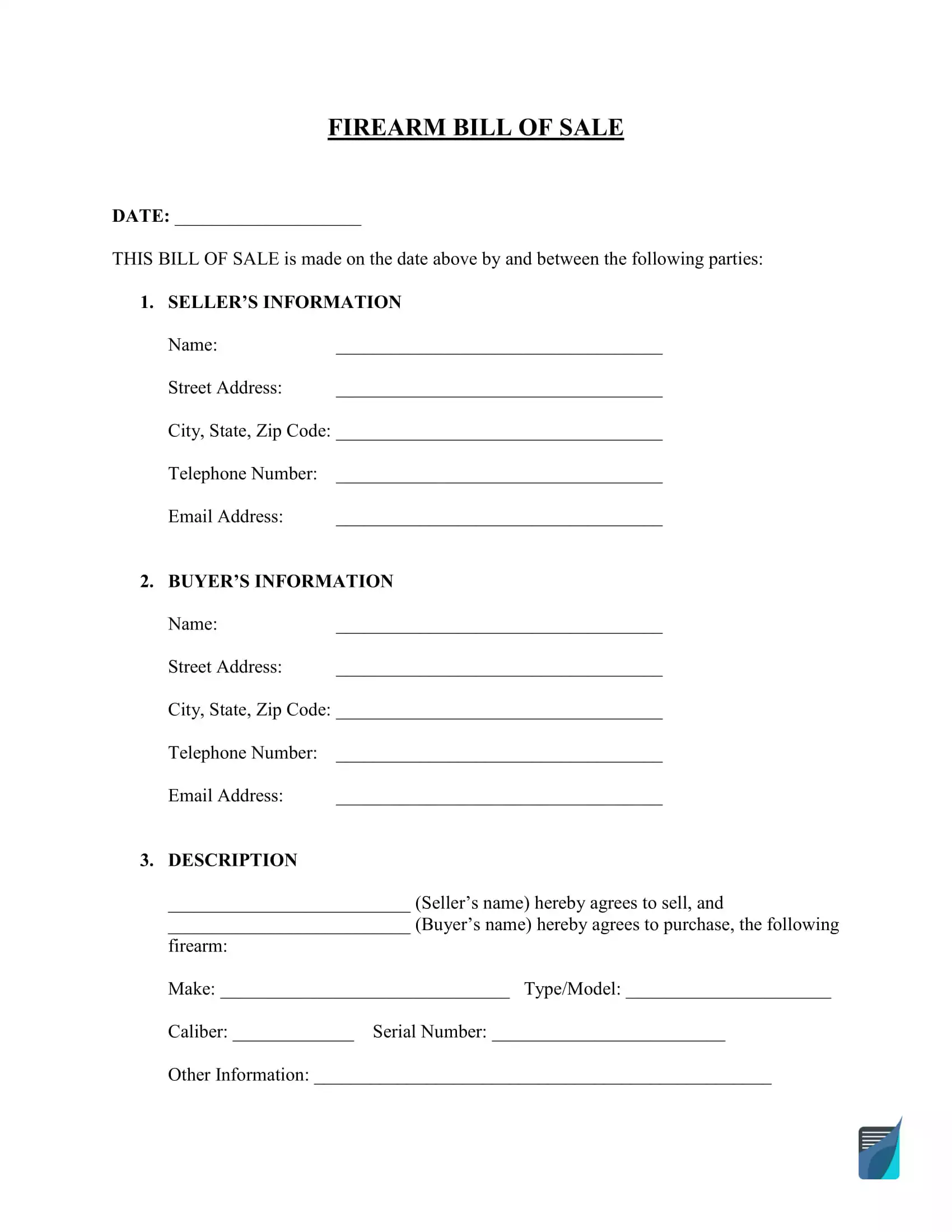
A firearm bill of sale records the buyer and the seller, a description of the gun, the price and the sale date, and the signatures of both parties. Fill it in with accurate details, because it becomes the written record of the sale. The steps below go through each part of the form in order.
Download the template as a PDF or Word file, or use the Create My Document button to fill it out online. The preview image at the top of this page is a sample of the finished form.
Add the details of both the buyer and the seller so the record is complete. For each party, include:

Describe the firearm in detail and make sure every detail is correct:
Next, enter the purchase price and the sale date. The form has a blank for the amount the buyer agrees to pay. If the buyer will pay in installments or on a later date, add a clause that states each amount and its due date.

Both parties sign a disclosure that confirms the facts of the sale. Typical statements for the buyer are:
A form can carry more statements than these. The buyer finishes by adding a full name and signature.
The seller signs a statement as well, for example that the seller owns the gun and has the right to sell it. Once both parties sign, the bill of sale is complete.
Many forms also include signature lines for witnesses, who add their names and signatures.
After both signatures are on the form, the buyer pays and takes the gun.

Many buyers and sellers also have the signatures notarized. The notary completes a certificate of acknowledgment, which confirms who signed. Not every sale calls for one, so check what your state asks for.
Give the buyer a copy of the signed bill of sale and keep a copy for yourself. Store it somewhere safe, because you may need it later to show when and to whom you sold the gun.

A bill of sale is only useful if you can find it later. These habits help:
A few small errors make a bill of sale much less useful:
General information, not legal or tax advice.
