
Updated:
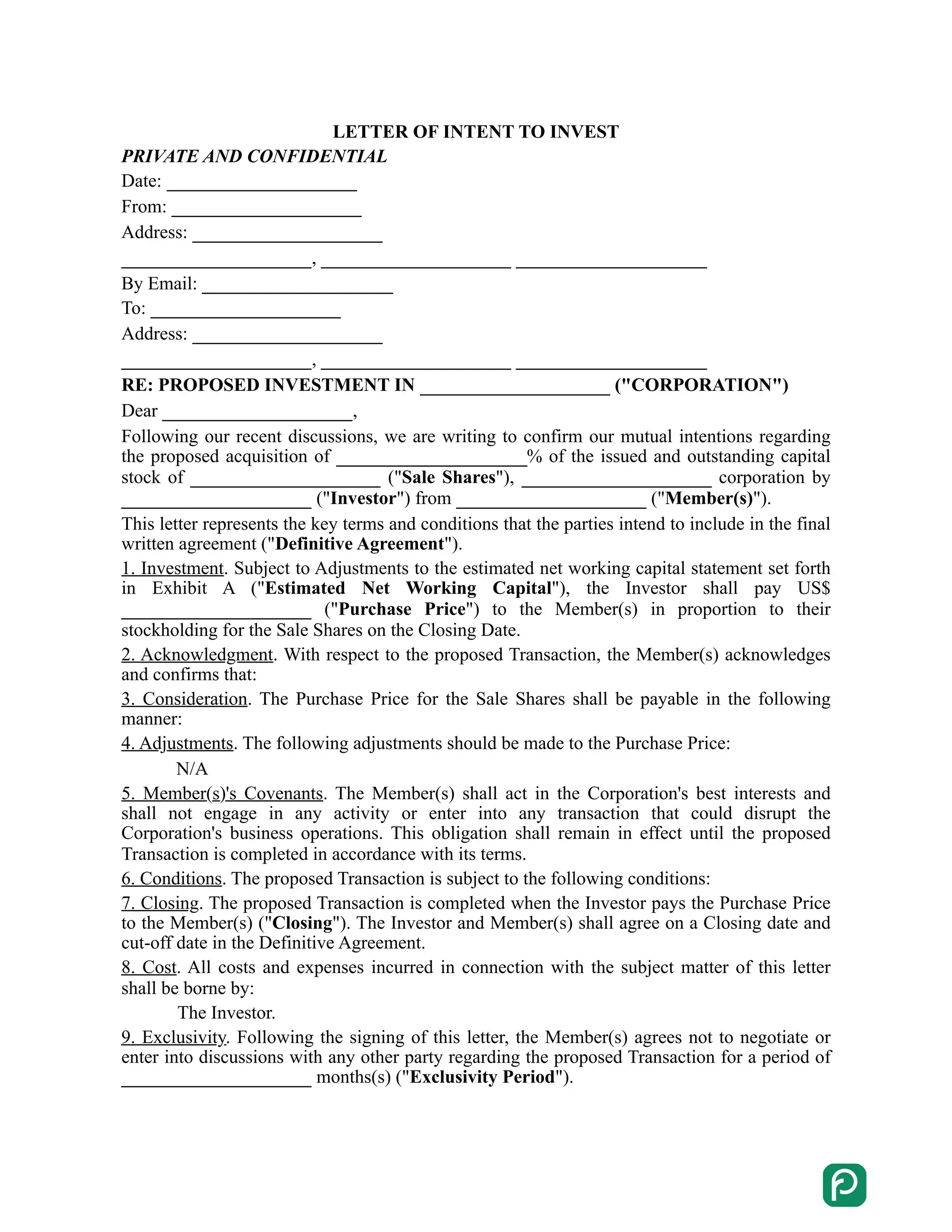
An investment letter of intent is an investor's written offer to invest. The letter sets out the investment amount, the shares in return, the financing terms and the closing date. Investors and company owners use it before drafting an investment agreement, especially for equity deals.
Key facts
Build Your Document
Answer a few simple questions to make your document in minutes
Save and Print
Save progress and finish on any device, download and print anytime
Sign and Use
Your valid, lawyer-approved document is ready
An investment letter of intent, also called an investment LOI or a letter to invest, is a letter in which a person or company offers to put money into a business in return for part ownership. The letter lists the main terms of the deal so both sides can agree on them before the longer paperwork starts.
The investment LOI belongs to the wider family of letters of intent, which cover purchases, leases and jobs as well as investments. This one deals with money for a share of a company or of real property.
The investor usually writes the letter. It goes to the principal shareholders, the owners who hold a significant share of the business and can agree to sell part of it. In the sample on this page, the investor is called the Buyer and the principal shareholders are called the Sellers.
A letter of intent to invest fits the moment after the first talks and before the investment agreement, when the investor and the owners agree on the price and the shares in principle. The letter turns a spoken deal into written terms that both sides can check.
Common situations for an investment LOI:
The letter also gives the company a formal notice of the investor's intention. If the parties later disagree about what the investor offered, the signed letter shows the terms they started from.
The investment LOI is the wrong document when no investor has made an offer yet. A company still looking for money writes an investment request letter or a proposal instead, and a deal with every term settled goes straight into the investment agreement.
An investment letter of intent can be binding, non-binding or a mix of both, and the letter itself should say which. The choice decides whether the letter is the deal or only the starting point for the deal.
The formal agreement clause and the deadline for the agreement matter most in a binding letter. A non-binding letter can leave out the deadline. A letter meant to bind no one should list every term that is not binding, the good faith clause included, or leave that clause out.
An investment letter of intent covers the money, the ownership, the conditions and the closing. Each part below matches a clause of the letter and a step of the guide further down.
The investment clause gives the amount of the contribution, the number of shares the investor buys and the ownership percentage those shares represent. The shares clause also says that the shares come free and clear of all liens, charges and encumbrances, so no lender or third party has a claim on them.
The financing clause says whether the offer depends on the investor's ability to obtain financing. A letter with this condition is conditional; a letter without it is non-conditional. When the offer depends on a loan, the clause describes the loan and the share of the investment it covers.
The due diligence clause gives the investor a period to review the company's materials before closing. It names the information the investor may see, the third parties the investor may talk to, such as accountants and advisers, and the investor's right to review and approve the materials.
The confidentiality clause keeps the talks and the company's information private unless the parties give written consent. The exclusivity clause, also called a no-shop clause, stops the principal shareholders from discussing a sale of shares with other buyers. The standstill clause stops them from selling any part of the offered shares to third parties while the deal is open.
The closing clause names the date when the investor pays the investment in full and the shares pass to the investor. The closing costs clause says who pays the expenses of the letter and of buying and selling the shares; a common choice is that each side pays its own.
The closing part of the letter holds the general clauses:
An investment letter of intent is filled out clause by clause, in the order the terms appear, so each step below matches one part of the LOI. The investor usually completes it and sends it to the principal shareholders.
An investment letter of intent takes effect once the investor and the principal shareholders have both signed it. The investor signs first and sends the letter; the shareholders accept by signing and returning a copy.
An investment letter of intent comes from the investor, while an investment request letter comes from the company that wants money. The request letter asks investors for funds; the LOI answers with an offer on set terms.
An investment request letter, also called an investment opportunity letter or a letter to investors, describes the business, the amount it seeks, what the money will pay for and what the investor gets in return. An investment proposal is a longer version of the same pitch, often with a business plan attached.
| Document | Who writes it | What it does |
|---|---|---|
| Investment request letter | The company seeking money | Asks investors to fund the business |
| Investment proposal | The company seeking money | Explains the business plan and the offer in detail |
| Investment letter of intent | The investor | Offers to invest on named terms |
| Investment agreement | Both parties | Sets out the final, complete deal |
An investment LOI works best when both sides read and check it before signing. These habits make the letter easier to rely on later.
The sample investment letter of intent below shows an investor named Dean Lion offering to buy half of the shares of a company called the H&Co Corp. The LOI lists the buyer, the investment sum, the shares, the financing and the closing date. Replace the names, figures and dates with your own details.
From: Dean Lion
833 8th St.
Fort Worth, TX 76112
April 4, 2021
To: Shon Buzz
CEO of the H&Co Corp.
943 Smith St.
Cleburne, TX 76031
RE: Purchase of Shares of the H&Co Corp.
The following letter sets out the basic terms upon which I would be prepared to purchase the Shares. The terms are not complete, and I expect that additional terms, including reasonable warranties and representations, will be incorporated into a formal agreement to be negotiated. The basic terms are as follows:
The Buyer Date
The Seller Date
These answers cover the questions the sections above leave open, from related documents to getting ready to write.
A mutual fund letter of intent is a different document from the investment LOI on this page. It states that the investor plans to buy a set amount of a fund family's shares within a set period, and the fund's prospectus sets its terms, including what happens if the investor buys less.
A commitment letter usually comes from a lender and sets out the loan the lender agrees to make. An investment LOI comes from an investor and sets out the investment the investor offers to make.
An indication of interest is an earlier and shorter signal than an LOI. It shows that an investor or buyer wants to talk about a deal, usually with a price range rather than the full terms an investment LOI lists.
An LOI sets out the main terms of the deal at the start. A formal investment agreement is the longer document that the parties draw up later to complete the deal.
The letter needs the names and addresses of the investor and the business, the investment sum, the number of shares, the financing plan and the planned closing date. Having them ready makes the steps above quick to complete.
Read it as an example of the wording and the order of the terms. Then replace the names, figures and dates with your own details.
General information, not legal or tax advice.
