
Updated:
A Florida firearm bill of sale is a signed gun sale record. It names the seller and buyer, the firearm's make, model, caliber and serial number, and the price. The form serves Florida private sellers and buyers, especially in a sale without a dealer.
Key facts
This page covers what the document includes, who may buy a gun in Florida, the dealer waiting period and fee, and each part of the form, step by step.
Build Your Document
Answer a few simple questions to make your document in minutes
Save and Print
Save progress and finish on any device, download and print anytime
Sign and Use
Your valid, lawyer-approved document is ready
For more background, read our guide to bill of sale documents. You can also browse the Florida bill of sale templates, which come with instructions. Other Florida sale documents include a Florida boat bill of sale, a Florida motorcycle bill of sale and a Florida trailer bill of sale.
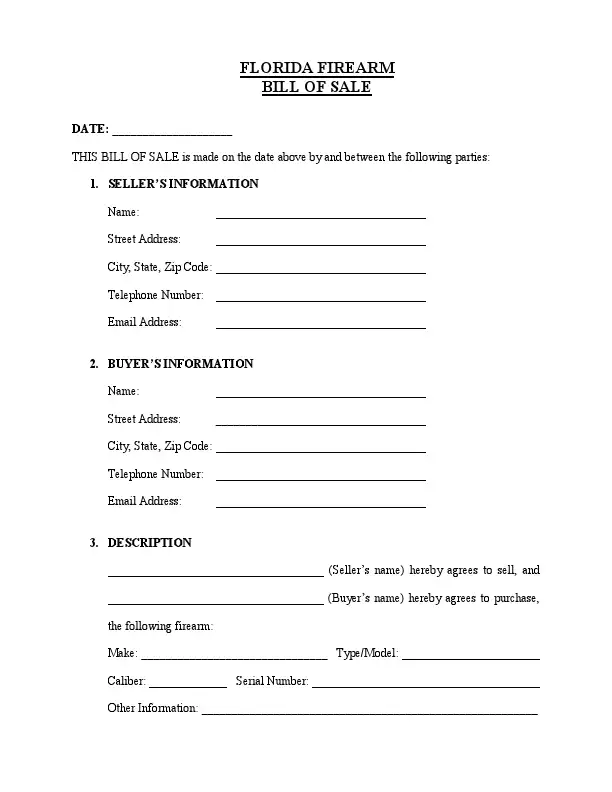
A Florida gun bill of sale includes the two parties, the firearm, the price and the signatures, so the seller and the buyer each hold the same dated record of the sale. The form on this page runs five pages and groups these details into numbered parts.
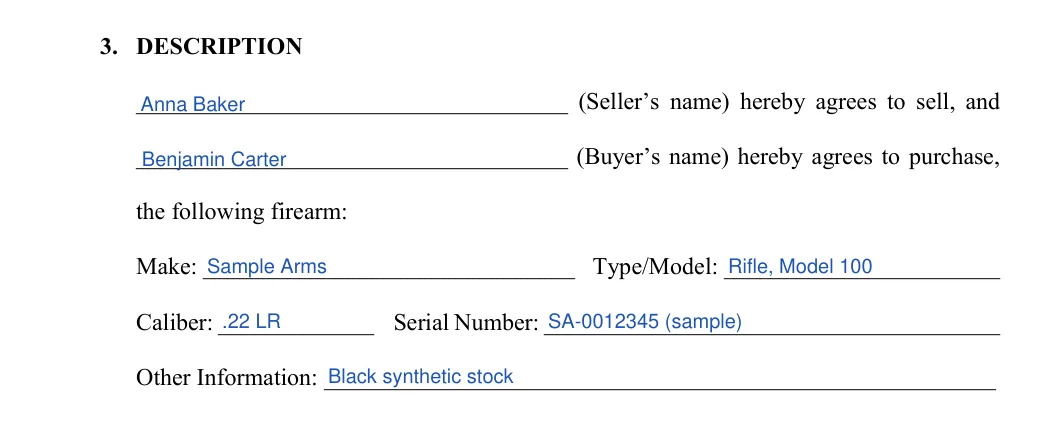
The firearm description identifies the exact gun sold by its make, its type or model, its caliber and its serial number. A space for other information takes details such as the finish, the barrel length or any accessories sold with the gun. The serial number is copied from the frame or receiver, never from a box or an old receipt, because a typo makes the record point to a different firearm.
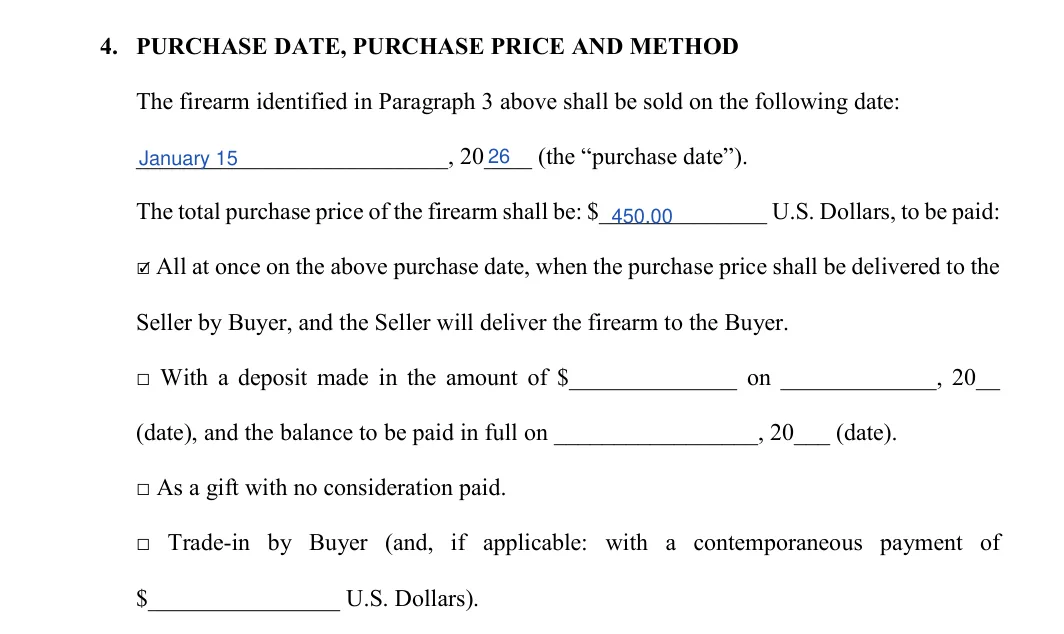
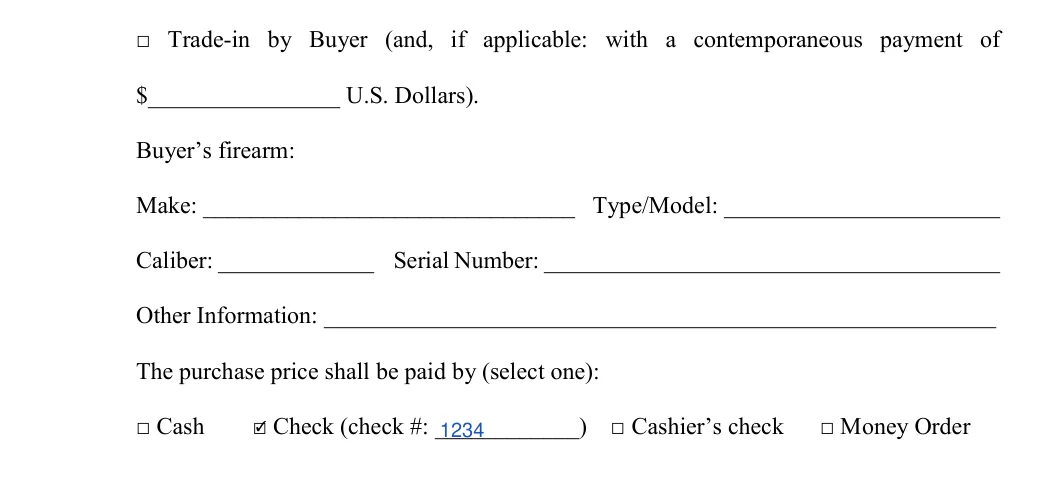
The price section records how the firearm changes hands: paid all at once, paid as a deposit and a balance, given as a gift, or traded for another gun. A deposit sale lists the deposit amount, the deposit date and the balance due date. A trade-in lists the buyer's firearm and any extra payment, so both guns in the deal appear on one record.
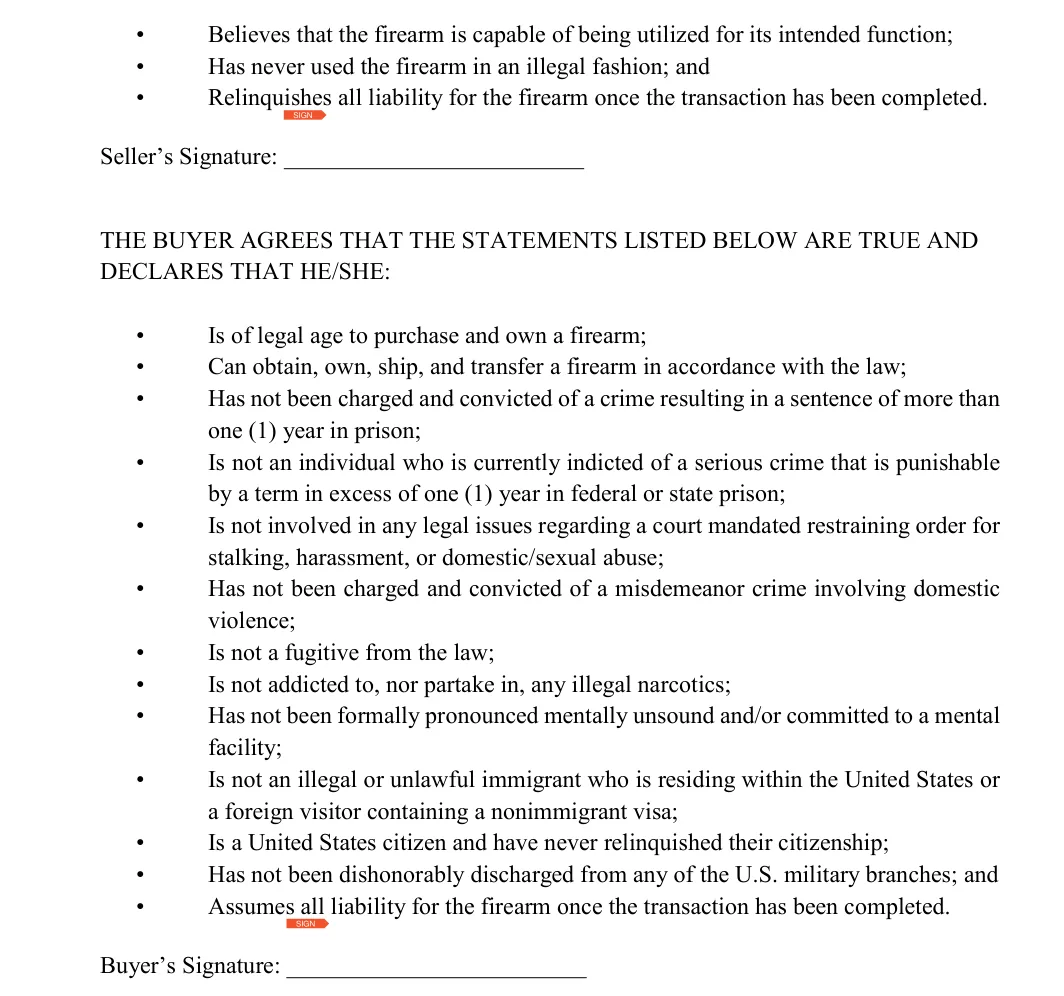
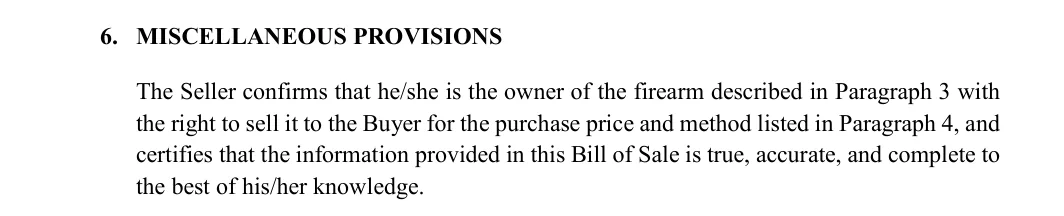
The disclosures section holds each party's signed statements about the sale. The seller states, among other things, that the seller owns the firearm and has the right to sell it. The buyer reads and signs the buyer's statements. A separate part, Miscellaneous Provisions, says the sale is "as is," with no express or implied warranties, and that the buyer accepts all liability for the firearm as of the sale date.
A gun bill of sale fits any private transfer of a firearm in Florida, whether the gun is sold for cash, sold on a deposit, traded or given as a gift. The document is the parties' own proof of the transfer: the date, the serial number and the names of both people. The statutes cited on this page do not call for a bill of sale on a private sale, so the document is a record the parties choose to keep.
The bill of sale helps each side later. The seller can show the date the firearm left the seller's hands and the name of the person who took it. The buyer can show where the firearm came from and what was paid for it.
A private firearm bill of sale is the transfer record most private sellers use, because the statutes cited on this page name no state transfer form for a sale between two private people. The bill of sale stays with the seller and the buyer; it is not sent to a state office. When a licensed dealer handles the transfer, the dealer uses the federal forms described in the dealer section below.
A Florida gun bill of sale records a buyer who may lawfully buy, so the seller checks the buyer's age and eligibility before anyone signs. Florida sets the age rule, and federal law sets the prohibited groups.
A person younger than 21 may not purchase a firearm in Florida, under Fla. Stat. § 790.065. The rule covers a rifle or a shotgun as well as a handgun. The only exception is a rifle or shotgun bought by a law enforcement or correctional officer or a servicemember. The statute reads:
A person younger than 21 years of age may not purchase a firearm.
Federal law also limits to whom any person may sell a firearm. Under 18 U.S.C. § 922(d), it is unlawful to sell or otherwise dispose of a firearm to a person in a prohibited group. This applies when the seller knows, or has reasonable cause to believe, that the person is in one. That includes a person who is a fugitive from justice or has been convicted of a crime punishable by imprisonment for a term exceeding one year.
A convicted felon may not own or possess a firearm in Florida unless civil rights and firearm authority have been restored, and a person found to have committed a delinquent act that would be a felony may not until age 24 (Section 790.23).
The dealer rules in this section apply only to a purchase from a licensed importer, manufacturer or dealer. When a licensed importer, manufacturer or dealer sells or delivers a firearm, the buyer pays a criminal history check fee under Fla. Stat. § 790.065(1)(a)2. When the firearm is bought from a licensed dealer, the buyer also waits out the period set by Fla. Stat. § 790.0655(1)(a), unless the buyer holds a concealed weapons or concealed firearms license, the purchase is a trade-in, or a person with a hunter safety certification buys a rifle or shotgun.
Fla. Stat. § 790.0655(1)(a) sets a waiting period of 3 days, excluding weekends and legal holidays, between the purchase and the delivery of a firearm when the firearm is bought from a licensed dealer, or until the records checks are complete, whichever occurs later. Under Fla. Stat. § 790.0655(1)(a), the waiting period does not apply when the buyer holds a concealed weapons or concealed firearms license, when the purchase is a trade-in, or when a person with a hunter safety certification buys a rifle or shotgun.
When you buy from a licensed dealer, you complete ATF Form 4473, show photo identification, and the dealer runs the background check before the transfer (27 CFR 478.124).
When a licensed dealer sells or delivers a firearm, the buyer pays a fee for the criminal history check, set by the Florida Department of Law Enforcement at no more than $8 per transaction (Fla. Stat. § 790.065(1)(a)2.).
| Subject | What the law says | Source |
| Minimum age to buy a firearm | A person younger than 21 may not purchase a firearm | Fla. Stat. § 790.065 |
| Waiting period on a dealer purchase | 3 days, excluding weekends and legal holidays, or until the records checks are complete, whichever is later; only when the firearm is bought from a licensed dealer, and not for a concealed weapons or concealed firearms license holder, a trade-in, or a rifle or shotgun bought by a person with a hunter safety certification | Fla. Stat. § 790.0655(1)(a) |
| Background check fee on a dealer sale | Set by the Florida Department of Law Enforcement, up to $8 per transaction, only when a licensed importer, manufacturer or dealer sells or delivers the firearm | Fla. Stat. § 790.065(1)(a)2. |
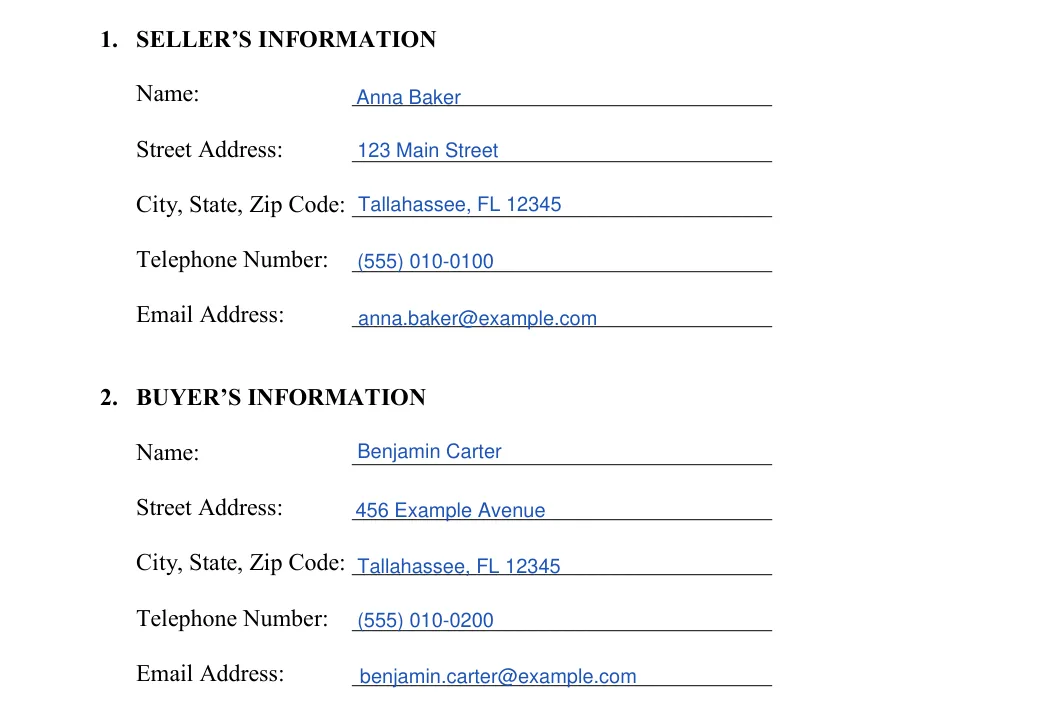
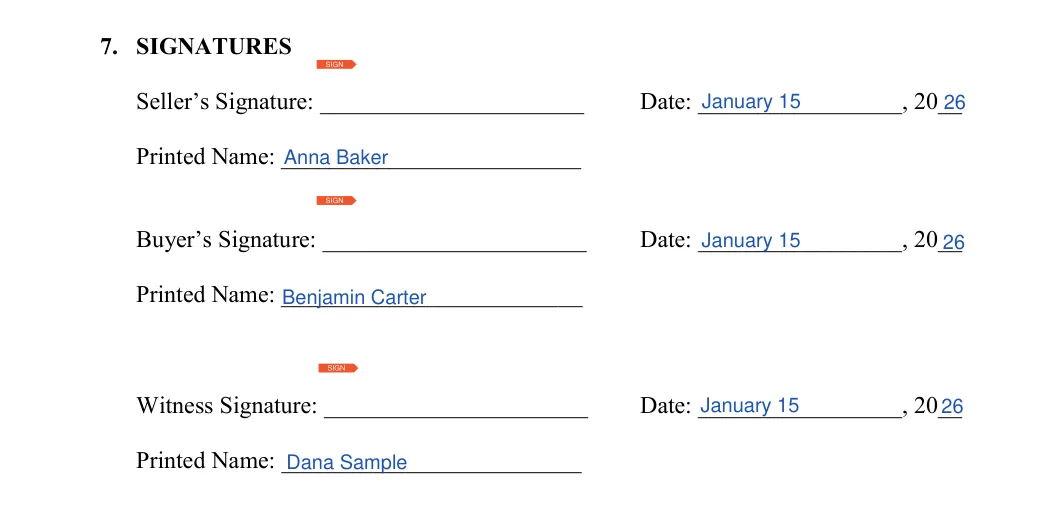
A Florida firearm bill of sale is filled out part by part, in the order the form numbers them, from the date on page one to the acknowledgment on page five. The screenshots under each step show sample entries in blue; the names, addresses, dates and amounts in them are examples only.
The form needs these details before you start:

The signed bill of sale closes the private sale when both parties hold a matching copy. These steps finish the transfer:
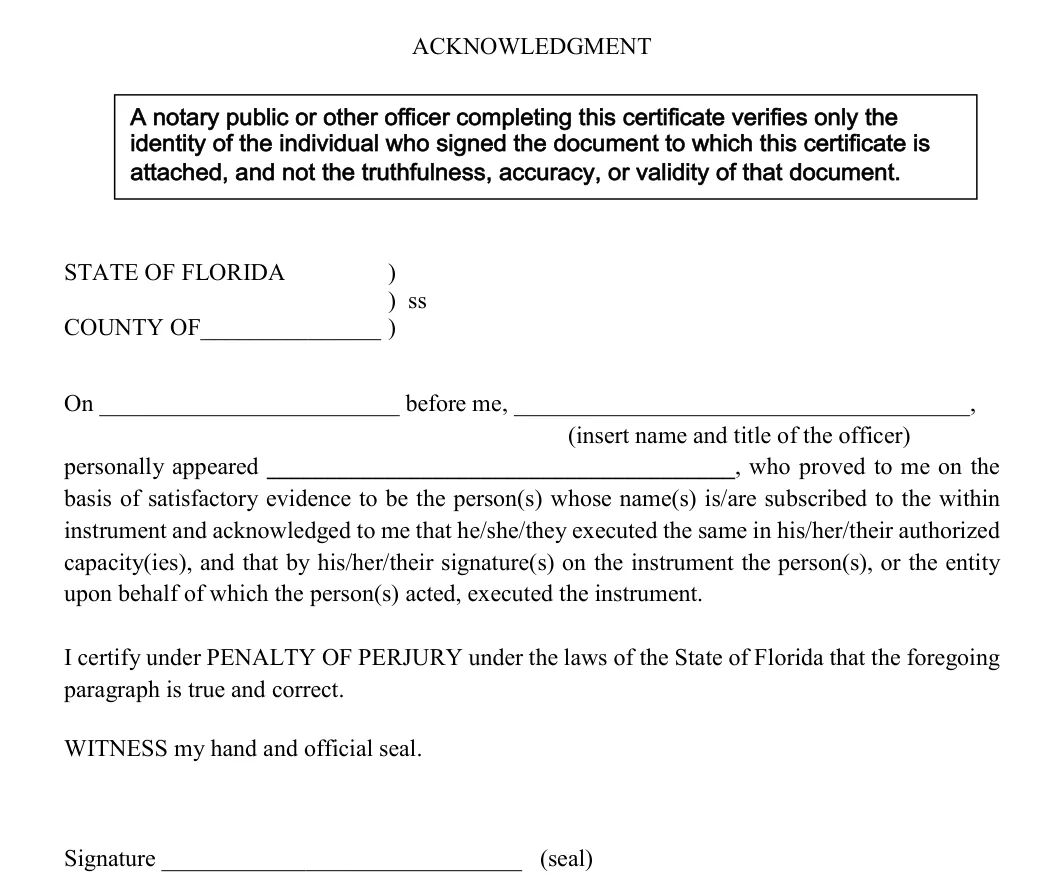
A Florida firearm bill of sale gets notarized only if the parties choose it: the statutes cited on this page set no notarization step for a private sale. The form's acknowledgment page lets a notary confirm who signed, which adds proof if the sale is ever questioned.
A bill of sale is the parties' own record, and none of the statutes cited on this page call for one on a private sale. The document still gives the seller and the buyer a dated proof of the transfer, with the serial number and both names.
A private sale stays lawful only to a buyer outside the prohibited groups. Federal law makes it unlawful to sell a firearm to anyone the seller knows, or has reasonable cause to believe, is a prohibited person. The buyer's age counts too: a person younger than 21 may not purchase a firearm (Fla. Stat. § 790.065).
Florida does not register privately owned firearms. Section 790.335(2)(a) bars any state or local government body, and any other person, from knowingly and willfully keeping a list, record or registry of privately owned firearms or their owners; section 790.335(3) exempts sales receipts kept by the seller and an owner's personal records, and chapter 790 sets no permit to purchase.
The form covers a gift and a trade-in as well as a cash sale. The method of sale has a box for each, and a trade-in adds a line to describe the buyer's firearm and any extra payment.
Each party keeps a signed copy of the full bill of sale, including the disclosures and, if completed, the acknowledgment page. The copy shows the date, the serial number and the names of both parties.
General information, not legal or tax advice.
