
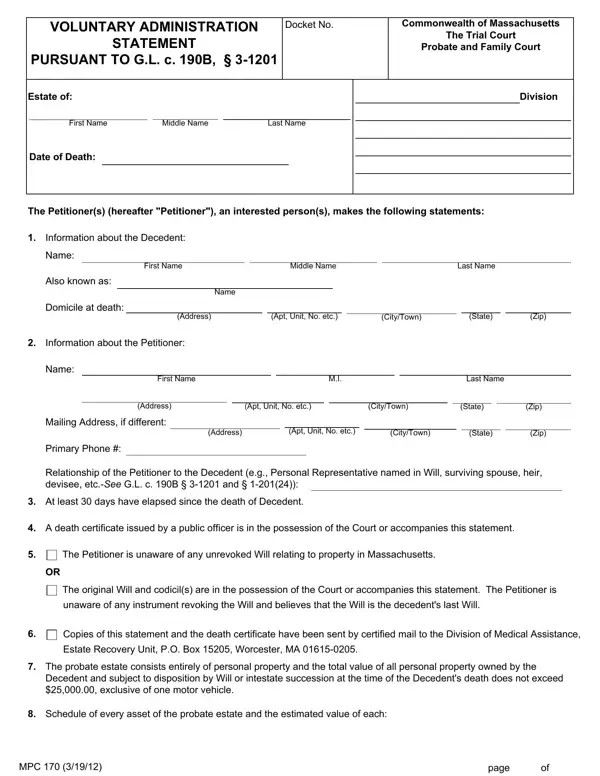
When a loved one passes away, the process of managing their estate, no matter the size, can be overwhelming. The Commonwealth of Massachusetts recognizes this challenge and offers a mechanism known as the Voluntary Administration procedure, detailed within the MPC 170 form. This formal document is especially crucial for estates deemed small under Massachusetts law, specifically those not exceeding $25,000 in total value, excluding one motor vehicle. It serves as a simplified court procedure that allows for an expedited and less formal process of settling an estate, bypassing the complexities that often accompany probate. The form requires detailed information about the decedent—the person who has passed away—and the petitioner, who is the individual initiating the process. It makes provisions for stating the decedent's assets, the identities of potential heirs or devisees, and asserts that no will exists or, if it does, that it is believed to be the last will of the decedent. Furthermore, the Petitioner agrees to act as the Voluntary Personal Representative, adhering to specified legal responsibilities. Importantly, it also emphasizes the importance of accountability, noting that actions are subject to review by any subsequently appointed Personal Representative or individuals with a superior claim to the estate. This introduction to the MPC 170 form underscores its role as a vital tool in the compassionate and efficient handling of a loved one's estate, emphasizing its utility for those facing the daunting task of estate administration.
| Question | Answer |
|---|---|
| Form Name | Mpc 170 Form |
| Form Length | 3 pages |
| Fillable? | No |
| Fillable fields | 0 |
| Avg. time to fill out | 45 sec |
| Other names | mass probate form mpc 170, ma voluntary administration statement, mpc forms massachusetts form, form voluntary administration |
Mpc 170 Form isn’t the one you’re looking for?