
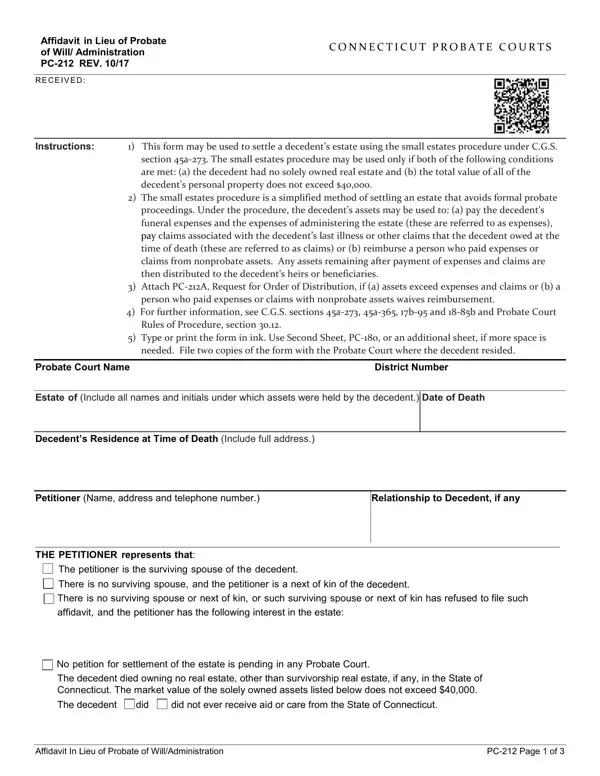

Form PC-212 at a glance
What it is: Form PC-212, Affidavit in Lieu of Probate of Will/Administration, may be used to settle a decedent's estate using the small estates procedure.
Who signs: The petitioner signs on the Signature of Petitioner line.
The petitioner is the surviving spouse of the decedent. If there is no surviving spouse, the petitioner is a next of kin of the decedent. If there is no surviving spouse or next of kin, or the surviving spouse or next of kin has refused to file an affidavit in lieu of probate, the petitioner has an interest in the estate.
What to bring and attach to Form PC-212
Attach a copy of the decedent's death certificate (with the social security number redacted).
Attach PC-212A, Request for Order of Distribution, if (a) assets exceed expenses and claims or (b) a person who paid expenses or claims with nonprobate assets waives reimbursement.
Also file Confidential Information Sheet, PC-212CI, with the decedent's confidential social security number.
A filled-in Form PC-212 example: a widow settles a small estate
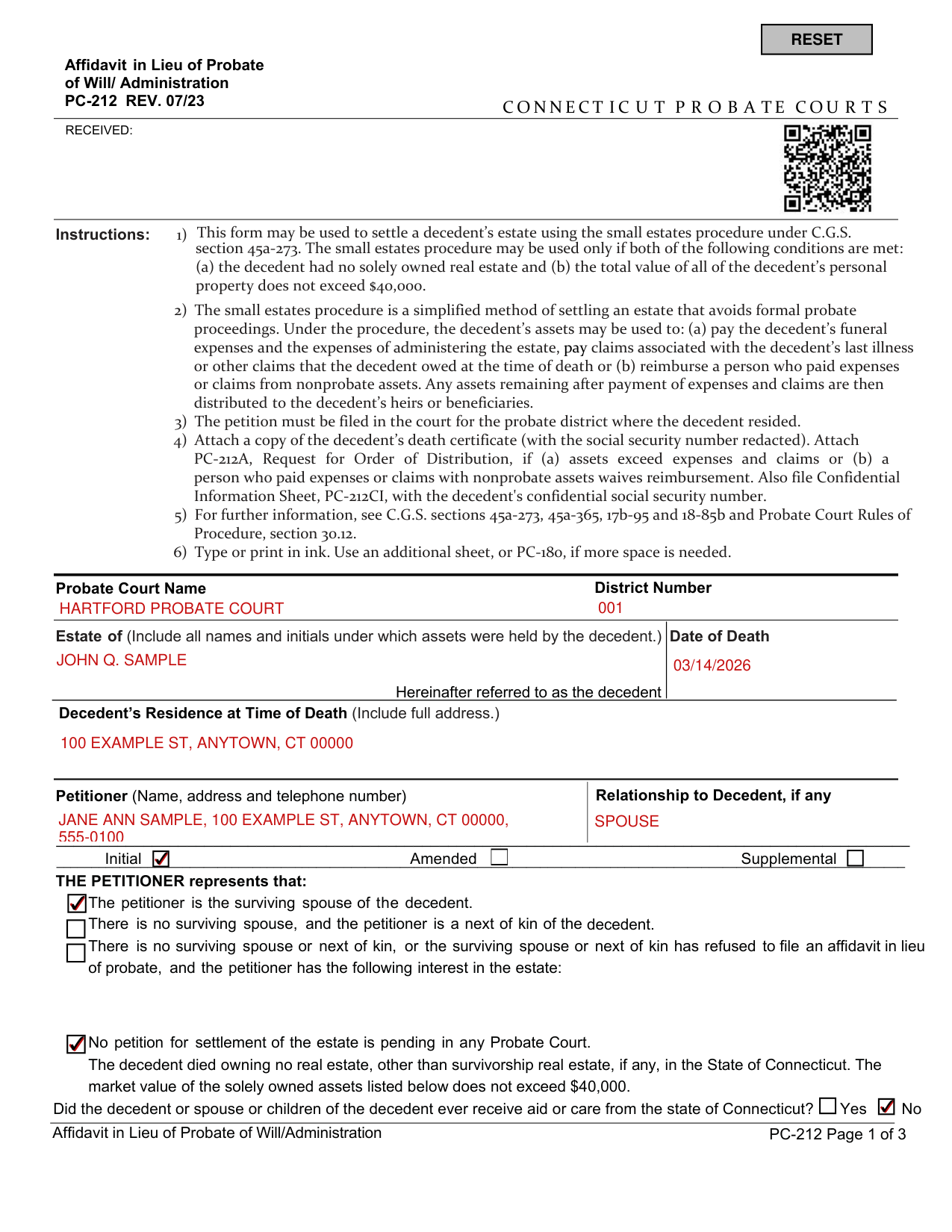
How to fill out Form PC-212, box by box
Court, estate and petitioner
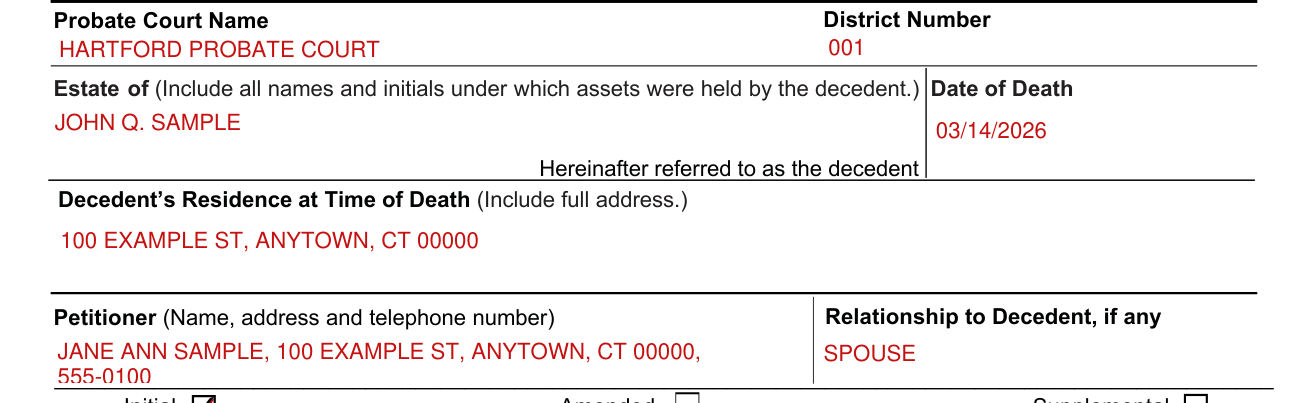
Enter the Probate Court Name and District Number, then the Estate of name, including all names and initials under which assets were held by the decedent, and the Date of Death.
Enter the Decedent's Residence at Time of Death (Include full address.)
Enter the Petitioner's name, address and telephone number, and the Relationship to Decedent, if any.
The petition must be filed in the court for the probate district where the decedent resided.
Initial, Amended or Supplemental

Mark Initial, Amended or Supplemental.
Who the petitioner is
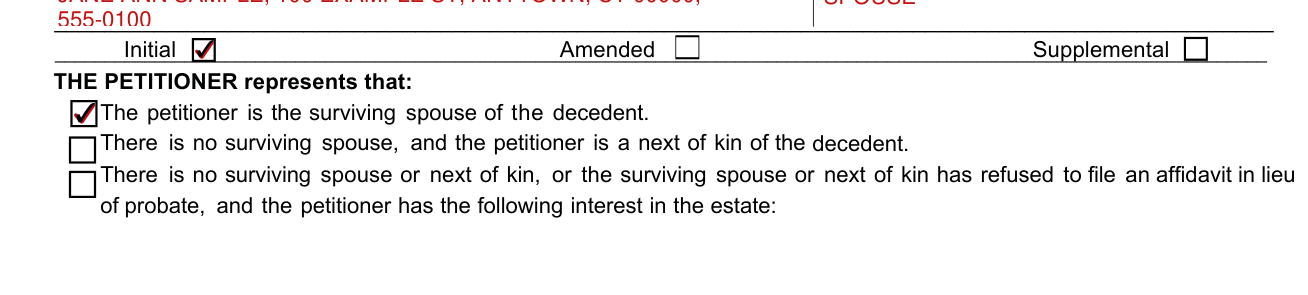
If the petitioner is the surviving spouse of the decedent, mark The petitioner is the surviving spouse of the decedent.
If there is no surviving spouse, and the petitioner is a next of kin of the decedent, mark There is no surviving spouse, and the petitioner is a next of kin of the decedent.
If there is no surviving spouse or next of kin, or the surviving spouse or next of kin has refused to file an affidavit in lieu of probate, mark it and write the petitioner's interest in the estate.
No petition pending and the market value of the solely owned assets

Mark the box for: No petition for settlement of the estate is pending in any Probate Court; the decedent died owning no real estate, other than survivorship real estate, if any, in the State of Connecticut; the market value of the solely owned assets does not exceed $40,000 (checked November 8, 2026).
Aid or care from the state of Connecticut

Mark Yes or No for: Did the decedent or spouse or children of the decedent ever receive aid or care from the state of Connecticut?
The will

If the decedent left a will dated on the line, which is not being presented for probate, mark it and enter the date.
If the decedent left no will, mark The decedent left no will.
The solely-owned assets
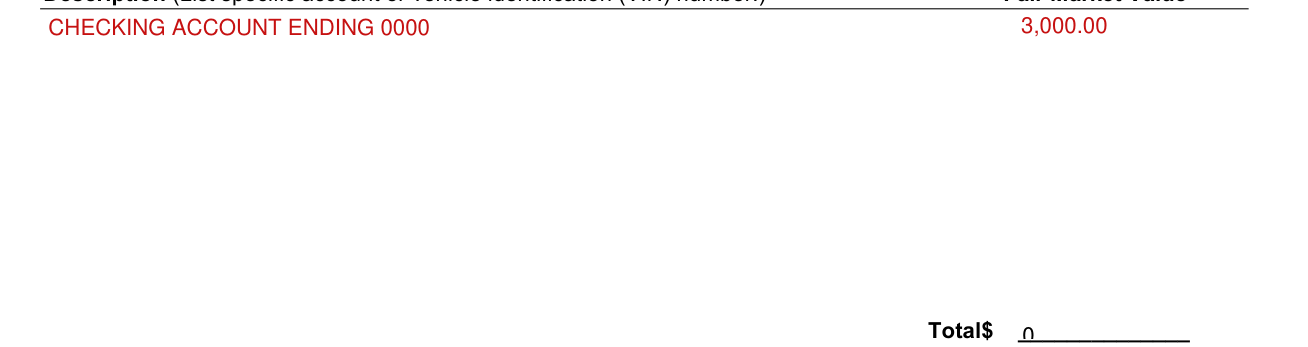
List the solely-owned assets the decedent died owning: under Description, list the specific account or vehicle identification (VIN) number, and enter its Fair Market Value.
Enter the Total.
Expenses and claims
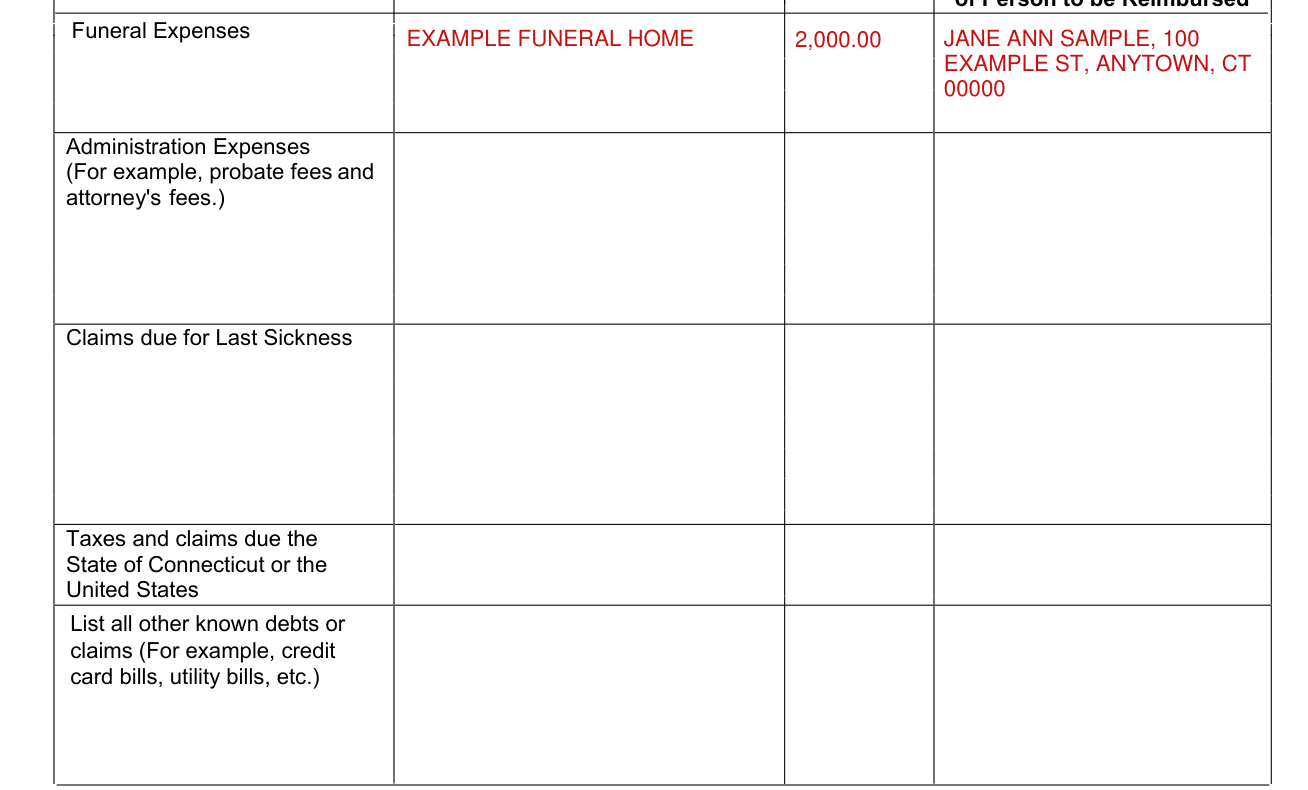
List the expenses and claims relating to the decedent's estate: the Description, the Name of Creditor, the Amount and, if paid, the Name and Address of Person to be Reimbursed.
The lines are Funeral Expenses; Administration Expenses (For example, probate fees and attorney's fees.); Claims due for Last Sickness; Taxes and claims due the State of Connecticut or the United States; and all other known debts or claims (For example, credit card bills, utility bills, etc.).
Requests for payment from the assets
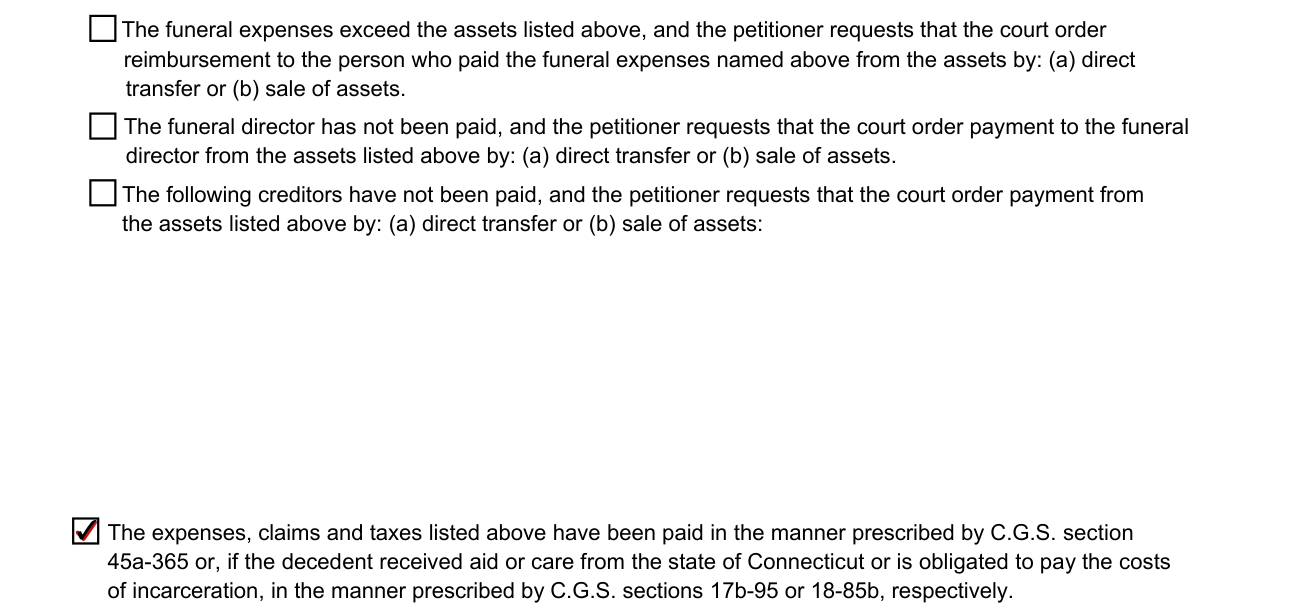
If the funeral expenses exceed the assets listed, mark that the petitioner requests that the court order reimbursement to the person who paid the funeral expenses named from the assets by: (a) direct transfer or (b) sale of assets.
If the funeral director has not been paid, mark that the petitioner requests that the court order payment to the funeral director from the assets listed by: (a) direct transfer or (b) sale of assets.
If creditors have not been paid, mark that the petitioner requests that the court order payment from the assets listed by: (a) direct transfer or (b) sale of assets.
Expenses, claims and taxes paid, assets exceed expenses and claims, and the children

If the expenses, claims and taxes listed have been paid in the manner prescribed by C.G.S. section 45a-365 or, if the decedent received aid or care from the state of Connecticut or is obligated to pay the costs of incarceration, in the manner prescribed by C.G.S. sections 17b-95 or 18-85b, respectively, mark it.
If assets exceed expenses and claims relating to the decedent's estate, mark it and attach form PC-212A, which includes the names and addresses for all heirs of the decedent and any beneficiaries under a purported will.
If one or more of the children listed on PC-212A is not also the child of the surviving spouse, mark it.
Signature of Petitioner

Sign on the Signature of Petitioner line, then enter Type or Print Name and the Date.
More rules for Form PC-212
Type or print in ink. Use an additional sheet, or PC-180, if more space is needed.
Common questions about Form PC-212
Is there a penalty?
The representations made in this affidavit are made under penalty of false statement.
When is this form not the right one?
The small estates procedure may be used only if both of the following conditions are met: (a) the decedent had no solely owned real estate and (b) the total value of all of the decedent's personal property does not exceed $40,000 (checked November 8, 2026).
Sources
[1] Form PC-212, Affidavit in Lieu of Probate of Will/Administration, Connecticut Probate Courts (the Official source link on this page).