
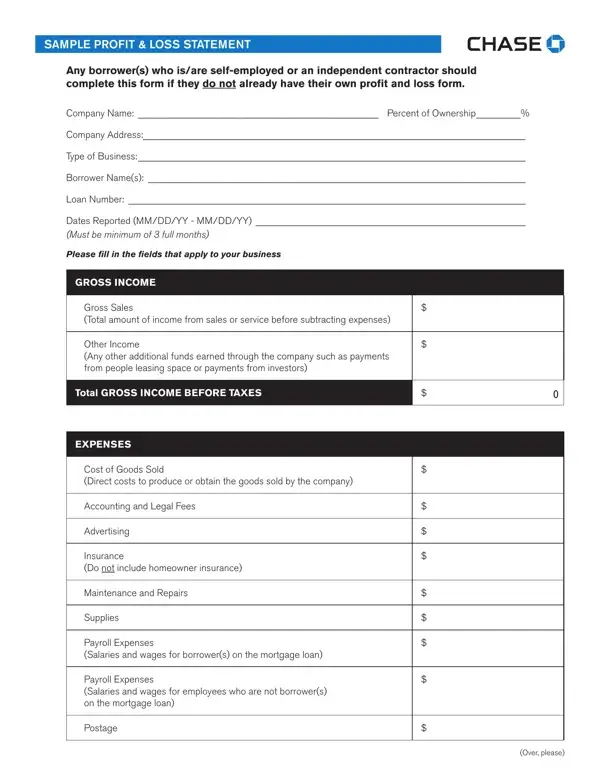
Understanding the Profit Loss Statement form is essential for self-employed individuals and independent contractors aiming to secure loans or simply track their business performance accurately. This crucial financial document requires the disclosure of various details about a business, starting from the company name, ownership percentage, and address, to the specific type of business and borrower information. It also calls for a detailed report of the company's financial activities over a minimum of three full months, including gross income, which encompasses total sales and any other income sources. The form meticulously categorizes expenses, separating costs directly associated with goods sold from operating expenses like accounting and legal fees, advertising costs, insurance (excluding homeowner insurance), and payroll for both the borrower(s) and other employees. Additionally, it includes maintenance, office supplies, rent, taxes (excluding real estate and income taxes but including other business taxes), and utilities, among others, providing a comprehensive view of the business's outgoings. The ultimate goal of the form is to calculate the net income before and after taxes, ensuring transparency and accountability in the process. By signing the form, borrowers affirm the accuracy of the information, acknowledging the serious implications of submitting false information. This document not only aids in loan applications but also serves as a vital tool for financial analysis and planning, making it indispensable in the realm of business finance.
| Question | Answer |
|---|---|
| Form Name | Profit Loss Statement Form |
| Form Length | 2 pages |
| Fillable? | No |
| Fillable fields | 0 |
| Avg. time to fill out | 30 sec |
| Other names | profit loss statement, loss and profit statement forms, how to profit and loss statement sample, chase bank statement |
Profit Loss Statement Form isn’t the one you’re looking for?