
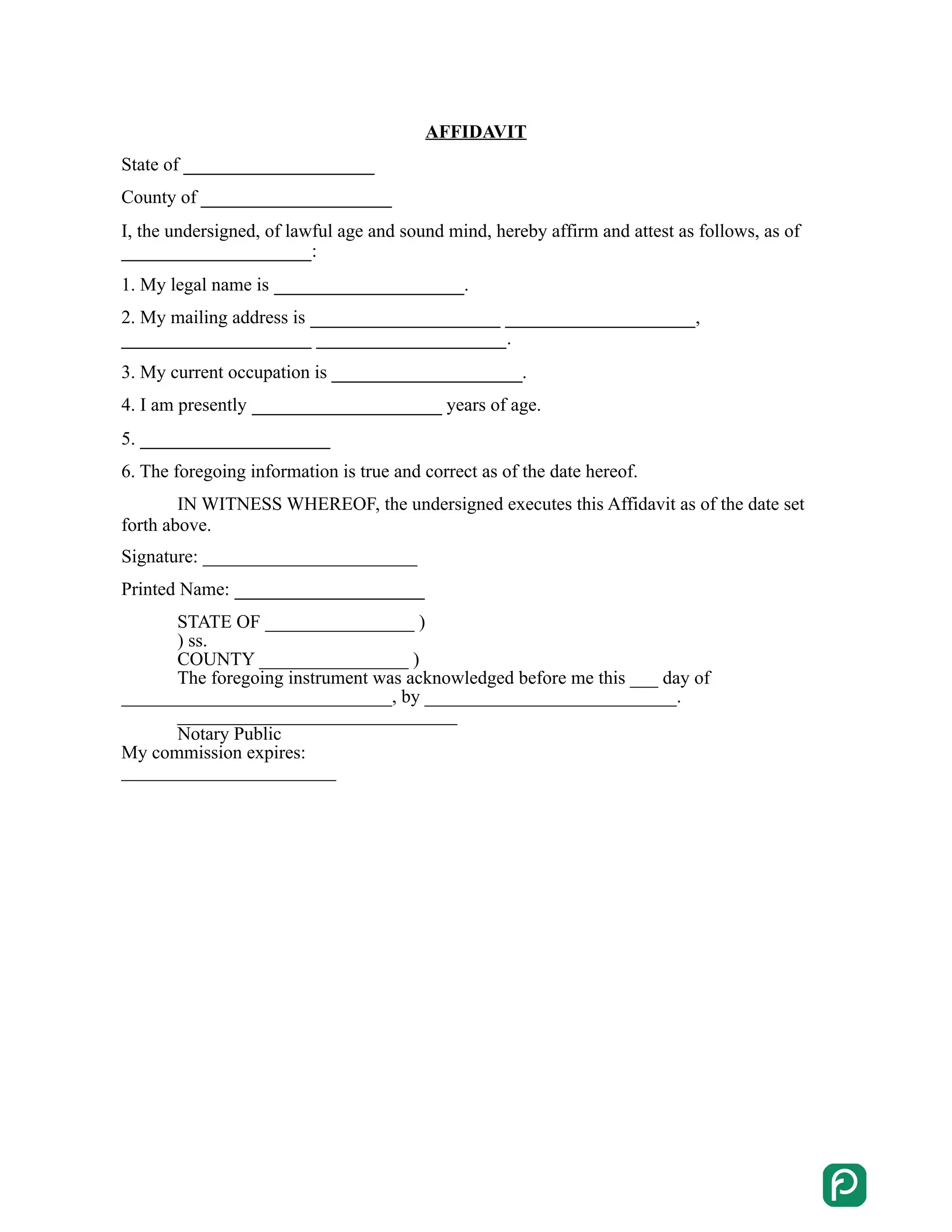
Indiana affidavit forms are legal tools designed to prove that a written statement made under oath is true and correct. The affidavits can be used as evidence in various judicial actions, including proving the identity, residential address, and inheritance rights. An affidavit of ownership, an affidavit of non-military service, and an affidavit of descent are a few examples of frequent affidavit forms used in Indiana. Each one is a sworn statement, and you can build it online with FormsPal or start from the official Indiana templates below.
Last Updated: October 2026. This guide is reviewed and updated regularly to reflect current law. If you notice an error or outdated information, please contact us.
Build Your Document
Answer a few simple questions to make your document in minutes
Save and Print
Save progress and finish on any device, download and print anytime
Sign and Use
Your valid, lawyer-approved document is ready
Indiana affidavit templates vary according to the statement of facts the affiant desires to confirm or verify. One of the popular official forms used in Indiana is Form 44780, or Indiana Paternity Affidavit. As the name implies, this document serves as a tool to confirm the father of a child. Filling out the template thoroughly is crucial to get the form valid in the state.
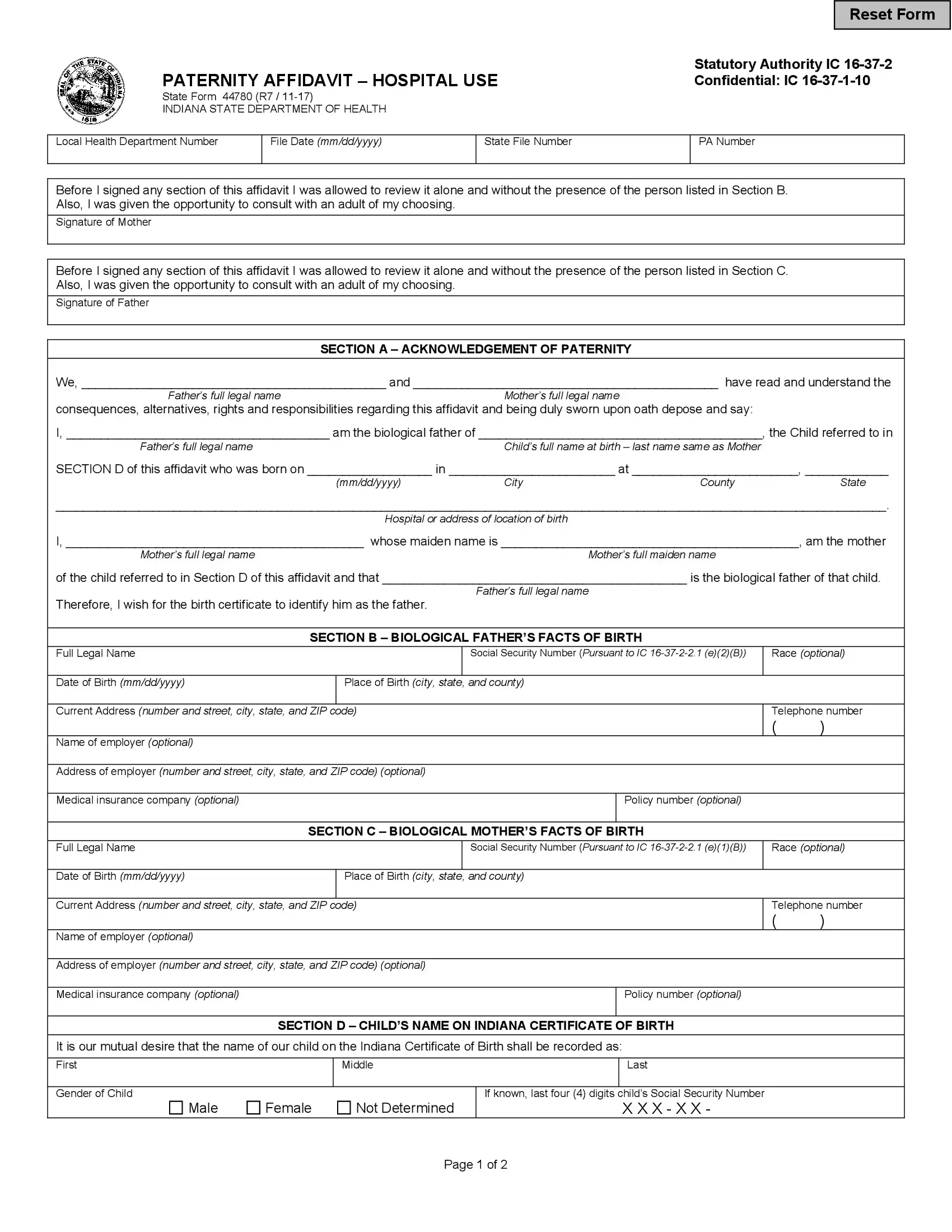
Indiana Paternity Affidavit (Form 44780) legally establishes the father of a child. This affidavit is typically used by unmarried couples who want to establish paternity voluntarily. It requires the signature of both the mother and the child’s father and any other required information, such as the social security numbers of both parents. Once this form has been completed and signed, the father is legally recognized as the child’s father and has the rights and responsibilities that come with that designation.
An Indiana affidavit is a written statement of facts that the person making it swears to. That person is called the affiant, and the affidavit records who the affiant is and what they are stating. Affidavits are legal papers that people use to back up a claim, confirm a detail or support an application, so it helps to keep every fact clear and specific.
Most Indiana affidavit forms follow the same basic layout. Knowing the parts makes it easier to fill in any Indiana affidavit template:
People often prepare an Indiana affidavit when they want to place an important fact on record in their own words. The most common reasons for these legal papers fall into a few groups, and the right affidavit form depends on which group your situation belongs to.
Affidavits are named after the fact they confirm. The table below lists common types of Indiana affidavit forms and what each one is about, so you can pick the template that fits your situation.
| Affidavit type | What it confirms |
|---|---|
| General affidavit | Any fact that you want to put in writing and swear to. |
| Affidavit of ownership | That you own a specific item or piece of property. |
| Affidavit of non-military service | That a person is not serving in the military. |
| Affidavit of descent | A relationship to a person who has died. |
| Affidavit of residence | The address where a person lives. |
| Paternity affidavit (Form 44780) | Who a child's father is. |
| Indiana small estate affidavit | Property left behind by a person who has died. |
Not sure which Indiana affidavit form fits? Start from the fact you want to confirm. If it is about who owns something, look at the affidavit of ownership form.
If it is about a person who has died, the small estate affidavit or the affidavit of descent may be the closer match. If none of them fits, a general affidavit lets you add your own facts.
You can build an Indiana affidavit with FormsPal in a few minutes. The online form asks simple questions and turns your answers into a finished legal paper, and you can save your progress and come back later.
Clear sentences are short and specific. The examples below use made-up names and addresses, so replace them with the facts that apply to you. Each example states one fact and leaves out opinions and guesses.
Notice that each sentence contains a single fact. Short sentences are easier to understand and easier to verify against your records.
Strong facts answer a few essential questions. Before writing each sentence, confirm that it tells the reader who, what, where and when. This keeps every line specific and prevents the reader from guessing what you mean.
A clear affidavit is easier for the reader to follow and easier for you to check. These simple habits help you avoid typos and keep the legal paper tidy, whether you use the online form or fill in an official PDF.
Downloaded one of the official PDF templates? Fill it in with the FormsPal PDF editor and review the result before you print.
A legal affidavit is a written statement of facts that the person making it swears to. In Indiana, people use affidavits to confirm things like identity, address, ownership and family ties.
Start with the fact you want to confirm. Choose the affidavit form that names that fact, such as ownership, residence or a relationship. If none fits, build a general affidavit and add your own facts.
A general affidavit form covers any fact you want to state. An affidavit of ownership form focuses on one topic, which is who owns a specific item or piece of property.
Start with the official Indiana affidavit forms listed above, or build a general affidavit form online with FormsPal. Either way you get a legal paper you can save, download and print.
Yes. Click Create My Document, answer a few questions in the FormsPal builder, then save, download and print your affidavit.
Yes. FormsPal lets you save your progress and finish on any device, so you can come back when you have the missing names, dates or addresses.
Gather these items before you open the form:
Keep a signed copy with your other legal papers. Store a digital copy as well, so you can find it quickly later.
General information, not legal or tax advice.
