
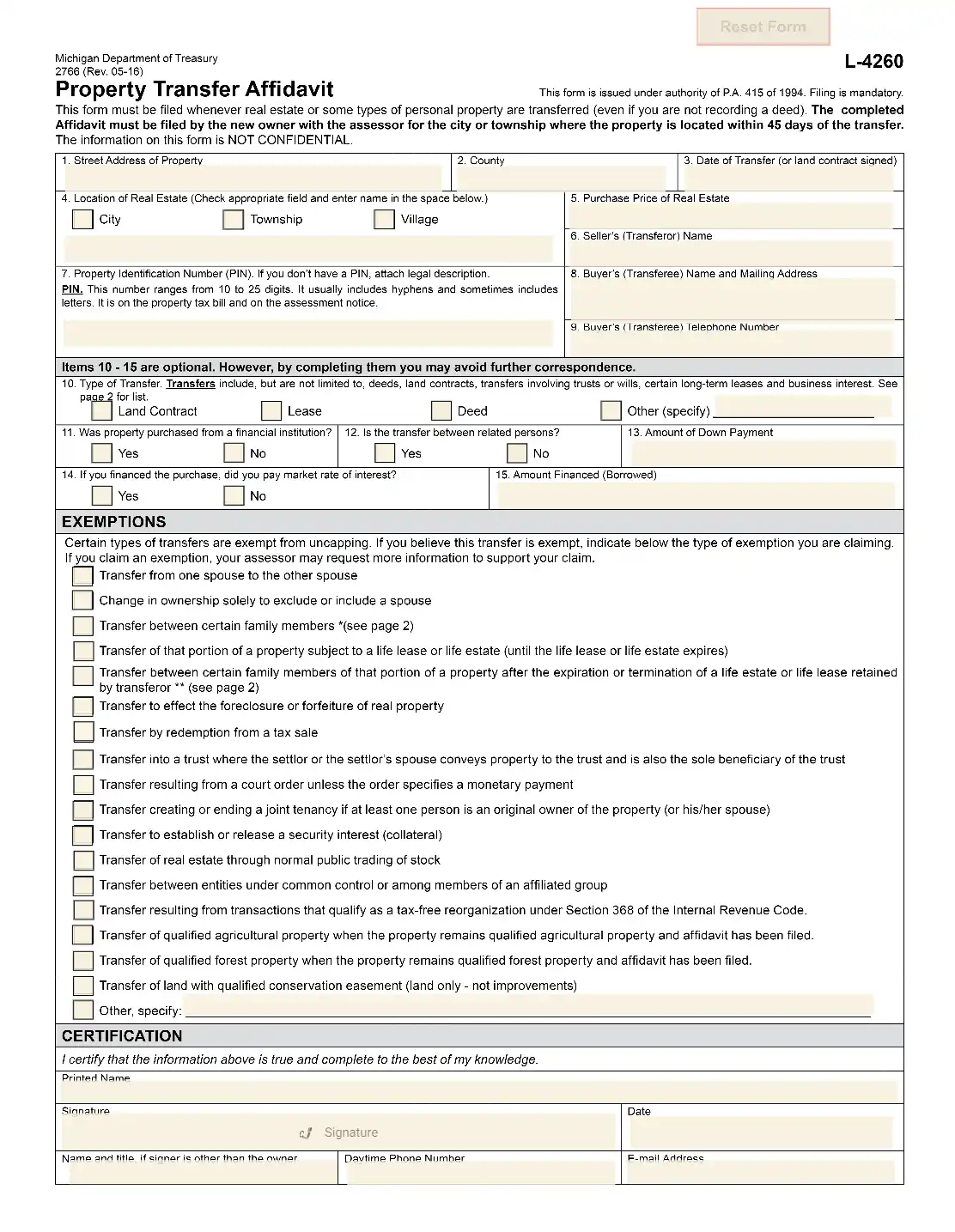
The Michigan property transfer affidavit (Form L-4260) is a one-page form for property transfers. It records the basic details of the deal, such as the address, the price and the type of transfer. Have the property address, the price, the property ID number and the contact details of both sides ready before you start filling it in.
Last Updated: October 2026. This guide is reviewed and updated regularly to reflect current law. If you notice an error or outdated information, please contact us.
It is a one-page document created by the deal parties where they outline some info about the deal. In Michigan, it is mandatory to prepare such a record for every single real property transfer that occurs. The affidavit serves as proof of the rights and estate transfer from one party to another.
If you have real property in Michigan or anywhere in the United States and decide to sell or pass it to another individual, such a deal should be accompanied by several legal documents. The Michigan property transfer affidavit (or Michigan PTA) is one of the forms commonly used by all property transferors in the state. Without it, you cannot legally complete the property transfer procedure.
In each such form, one may discover:
And other vital details that are required by the local norms and rules.
It is worth mentioning that the Michigan property transfer affidavit is a compulsory record that has to be prepared any time an estate transfer occurs in the state, and this transfer also involves the ownership change. So, if the property is given to someone else and a former owner declines any rights to use it, remember that the parties must make their own affidavit and register it.
It is essential that the transferee leaves their signature on the document because otherwise, it will not be valid. Also, if you wish, you may ask a notary to verify the form and sign it; however, you are not obliged to do so by law when preparing such an affidavit in the state of Michigan.
If you need to create the Michigan PTA, you must know that your form should be performed in compliance with the local and federal laws. To find out what chapter and section of Michigan Compiled Laws you have to check, proceed to our review’s following part.
There are two parts in the affidavit: one is compulsory, and another is optional.
In the first part, you will give the basics about your deal; without the required data, it is not possible to register your form. The second part can be omitted; however, it is strongly recommended to fill it out because the assessing officer in Michigan may have various questions that can vanish if the section is complete with data.
The property transfer form is regulated by the Michigan Compiled Laws. People who are interested in the regulation and legal peculiarities may check Chapter 211 (Sections 211.27, 211.764, and 211.8 specifically). There, you can check all the requirements that the form, the transferor, and the transferee should meet and find out about all the fines one may get for not obeying the laws.
For instance, if the transferee fails to submit their record to the assessor who should register it, the fine can go up to $200 USD. For each day of delay, the transferee will most likely get a fine of five dollars. Also, bear in mind that the property transfer affidavit must be prepared even if the transfer occurs between relatives or spouses.
The rule, however, concerns the property that is not used for commercial purposes but for living. For those who operate commercial estate, rules may vary. Do not forget to check the relevant laws and regulations before you decide to sign any Michigan PTA (regardless of whether it is for commercial estate or an apartment where you plan to live).
Section 211.27a of the Michigan Compiled Laws obliges each transferee to register their form in a certain term: you should turn to the local assessor within 45 days from the date when your deal was completed. In this case, “local assessor” means that the assessor is located in the same area as the property in question.
Keep these points in mind:
Filling in the form goes faster when you work through it in order. The seven steps below follow the layout of the first page, from the warning at the top to the official instructions on the second page.
If you have questions about the form, ask a lawyer or another specialist who works with legal forms. You must not insert anything in the form or file it if you have doubts about the template’s content.
The form has two sheets. Fill in the first one. The second sheet holds the official instructions.
You can generate the template with our form builder in a few clicks, or download the official form from the Michigan State Tax Commission website. Finding the template on the official site can take a while.
Read the Warning
The first thing on the page is a warning for everyone who fills in this form. Read it carefully. These sentences remind you that anytime you pass your property to someone else in Michigan, this document has to be created. Even if you do not plan to record a deed, you still need this affidavit to conclude the deal.
Another requirement is that you have to pass this document to the local assessor no later than 45 days from the deal day. Lastly, the notice warns you that any info you add to this template is not confidential.
Proceed to the Filling Out Process
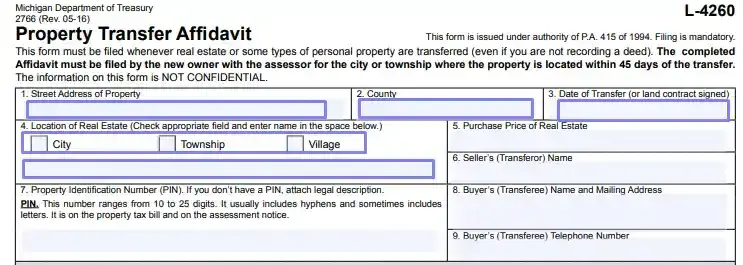
Start with the address of the transferred property. Enter the street address on the first line and the county on the second. Then add the date of the deal, which is either the date the contract for the land was signed or the transfer date. Next, mark whether the property is in a city, village or township, and write the name of that place below.
Add Details about the Property and Parties
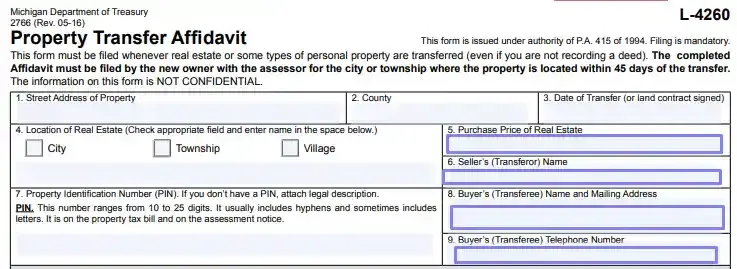
Next, add basic details about the property and both sides of the deal. It includes the property’s purchase price, the transferor and transferee’s names, the transferee’s valid phone number and email address, and the property identification number (or PIN).
Some properties do not have that number. In this case, you can use a legal description instead.
Complete Optional Sections (If Needed)
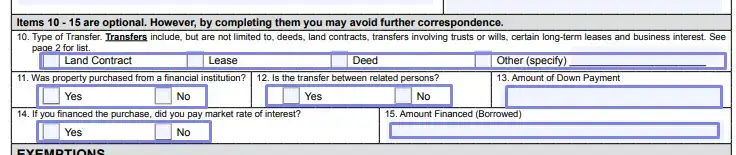
The form’s second part is optional: precisely, lines from 10 to 15 are not mandatory, and you can skip them if you like.
Although some people prefer not to spend time on completing lines that they are allowed to omit, we strongly recommend you to spend a couple of minutes and go through each line. It may make your life much easier in the future because the one who will register your document may have questions; they will be able to find the answers in this section without contacting you.
On line 10, pick the transfer type. The form offers these options:
Choose one of them that suits your case and mark it with a tick or cross. If you select “other,” enter the type in the line nearby.
Next, say on line 11 whether the property was bought from a financial institution. On line 12, say whether the parties are relatives. If there was a down payment, enter the amount on line 13. Line 14 asks about the interest rate, and line 15 asks for the amount financed (borrowed).
Check the “Exemptions” Section
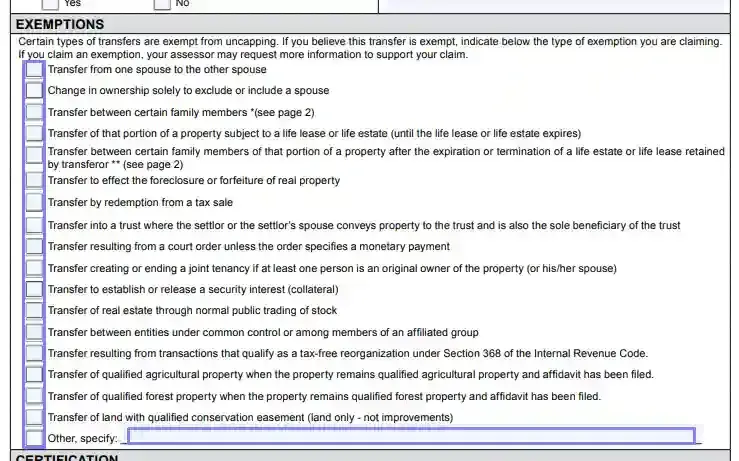
In Michigan, some transfer types can be exempt from uncapping; there is a large table showing various conditions that allow you to consider your deal an exemption.
Among such exemptions are, for example, transfers between one spouse and another, transfers into a trust on certain conditions, transfer of qualified forest or agricultural property on specific terms, and so on. In total, there are 18 conditions, and you should check all of them carefully. If any of them applies to your situation, check the box that fits with a tick or cross.
Sign the Document
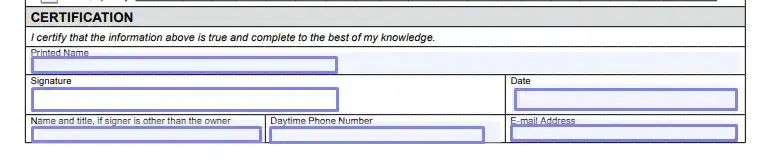
The first page’s last section requires you to sign the form and leave some additional data about you.
Write your full legal name, the date of signing, your email address, and phone number. If the property’s owner and the document’s signer are different people, you have to leave the signer’s full name in the relevant field. Lastly, place your signature on the designated line.
Read the Official Instructions
The form has two pages, and the first one is the page you fill in. The second page holds guidelines and notes for everyone who signs the form. Also, you can see a set of phrases from the current laws that are enforceable in the state of Michigan. Read all of the notes carefully and check that your answers match them.
As you already know, state law prescribes that you should submit your signed affidavit to the local assessor. The assessor will register your affidavit and make your deal legitimate. Please keep in mind that you have 45 days from the day when the form is signed. If you fail to file your record within this term, a fine will follow.
You can find the list of assessing officers in Michigan on the Michigan Department of Treasury website. The same site has other contact details and tells you whom to ask if you have questions about the form or the transfer.
In some cases, the assessor may request additional documentation related to your Michigan PTA. So, be ready to provide all the needed records to the authorities.
Looking for a different document? See the full list of affidavit forms.
The form has two pages. The first page is the one you fill in, with the property details, the parties, the optional lines and the signature. The second page holds the official guidelines and notes.
Have the property address and county, the date of the deal, the price and the property ID number in front of you. Add the names and contact details of both sides. Check that both names match the IDs.
Some properties do not have one. In that case, the form lets you give a legal description instead.
Use line 10. The options are deed, lease, land contract and other. If you pick other, write the type on the line next to it.
Yes. Keep a signed copy with your own records.
The official form is also available on the Michigan State Tax Commission website.
General information, not legal or tax advice.
