
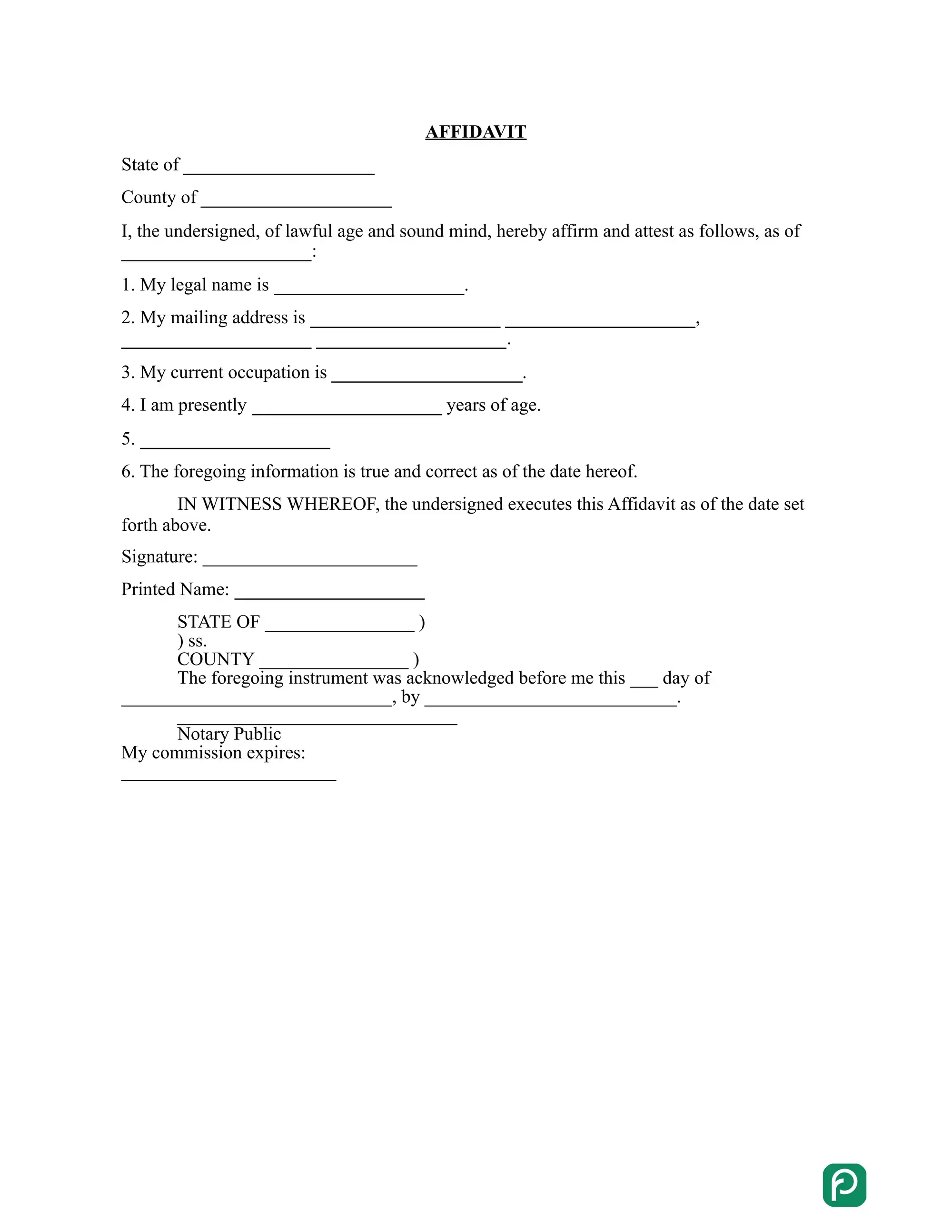
An affidavit is a written document in which a person states facts and signs the statement, and Ohio affidavit forms give you a template for it. They are commonly used to provide evidence in court or administrative hearings. These affidavit forms can be used for various purposes, including proving small claims court cases, establishing ownership, and proving residency. Use the builder below to create your own affidavit, then save, print and sign it.
Last Updated: October 2026. This guide is reviewed and updated regularly to reflect current law. If you notice an error or outdated information, please contact us.
Build Your Document
Answer a few simple questions to make your document in minutes
Save and Print
Save progress and finish on any device, download and print anytime
Sign and Use
Your valid, lawyer-approved document is ready
Ohio affidavit templates are available in different types, including a financial affidavit, affidavit of domicile, and affidavit of heirs. Each type fits a different situation, so pick the one that matches yours.
For example, if you are applying for a new job, you may be required to sign an affidavit of residency form to prove that you have lived in Ohio for a specified period. You can also use the official form below to prove that a person under 18 has completed 50 hours of supervised driving practice to apply for a driver’s license.
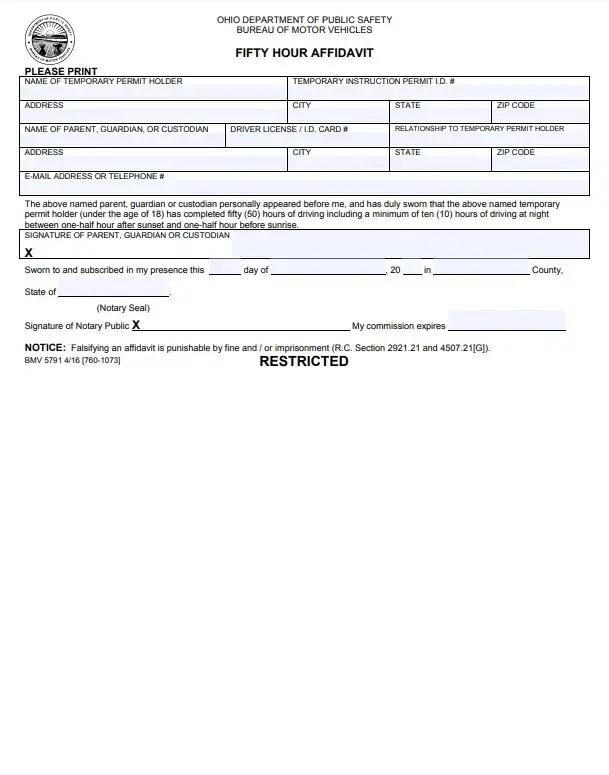
Ohio 50-Hour Affidavit proves a student has completed 50 hours of behind-the-wheel training in the Ohio driver education program. This form is required for Ohio residents applying for their driver’s licenses. The affidavit requires the signature of the student and the driver education instructor. It attests that the student has completed the required hours of the state’s Graduated Driver Licensing (GDL) program.
The person who makes an affidavit is called the affiant. The affiant signs the document to confirm that the facts are true. Most affidavits are short, with the affiant’s details at the top, the facts in numbered paragraphs and a signature line at the end.
Because the document only holds facts, clear and specific wording matters more than length. Write what you know yourself, and leave out guesses and opinions.
You can build your affidavit in a few minutes with the FormsPal template. Answer the questions one at a time, and the builder places your answers into the finished document. The steps below walk through the process.
Good statements are short, specific and written in the first person. Each one covers a single fact, so the reader can follow your account without guessing. The examples below use made-up names and addresses to show the difference.
| Vague | Specific |
|---|---|
| I live nearby and saw the car recently. | I live at 123 Main Street. On June 3, I saw a blue car parked in front of my house at 6 p.m. |
| The package arrived late. | The package ordered by Anna Baker arrived on June 10, five days after the date in the confirmation email. |
A short review catches most mistakes. Read the finished document from top to bottom, and compare each detail with your records before you download it. If something looks off, fix it in the builder and download the final copy again.
Yes. Answer a few questions in the FormsPal builder and it prepares the document for you. You can save your progress and finish later on any device. When you are done, download the PDF.
Start with the reason you need the statement. If a school, employer or office asked you for the document, ask them which type they want, then choose the matching template.
Have the full names and addresses of everyone named in the affidavit, the dates involved and the facts you want to state. Keep any related papers nearby so you can copy details correctly.
Yes. After you finish the builder, download the PDF and send it to any home or office printer.
Keep the signed original in a safe place with your other important papers. Store a scan or a photo of it where you can find it quickly.
General information, not legal or tax advice.
