
A New Jersey trailer bill of sale is a written record that a trailer changed hands. It names the seller and buyer, describes the trailer, and states the price and date of sale. The New Jersey Motor Vehicle Commission (MVC) says the seller signs the title and gives the buyer a bill of sale with it.[1]
Last Updated: October 2026. This guide is reviewed and updated regularly to reflect current New Jersey law. If you notice an error or outdated information, please contact us.
Build Your Document
Answer a few simple questions to make your document in minutes
Save and Print
Save progress and finish on any device, download and print anytime
Sign and Use
Your valid, lawyer-approved document is ready
In a New Jersey trailer sale, the seller signs the seller's section on the back of the title. The seller then gives the title to the buyer, along with a bill of sale. The MVC lists what that bill of sale includes.[1]
Sign in the seller's section of the reverse side of the title and give it to the buyer, along with a bill of sale including the following information: buyer's name and address; date of sale; mileage odometer reading (see below); and sale price.
In plain words, the MVC lists these items for the bill of sale:
The buyer also needs the former title, with the assignment section on the back completed and signed by the previous owner.[2]
A trailer sale in New Jersey comes down to two handoffs. The seller signs the title and hands it over with a bill of sale. The buyer then goes to a motor vehicle agency to transfer the title.[1]
If you are the seller, do the following:
If you are the buyer, you visit a motor vehicle agency and take these steps:[1]
A New Jersey title or a dealer reassigned title must be transferred within 10 working days from the date of sale.[1] You can count those days with our deadline calculator.
If a lien holder has a lien on the trailer, the original title will be sent to the lien holder.[2] In practice, ask the seller whether any loan on the trailer is paid off before you hand over the money.
Our trailer bill of sale guide goes deeper on what the document covers. You can also browse more New Jersey bill of sale templates or read our bill of sale guide.
Trailers and semi-trailers that weigh less than 2,500 lbs., manufactured or homemade, must be registered but are exempt from titling. A trailer that weighs more than 2,500 lbs. unladen must be titled.[3]
For registration, privately used trailers, house-type semi-trailers and private utilities fall in the "other non-commercial motor vehicles" category (Code 22).[3]
Trailer registrations are due for renewal in March, and every registration is issued with a March 31 expiration date regardless of the month of purchase.[4]
You can create a free New Jersey trailer bill of sale on FormsPal. Answer a few questions online, or download the PDF and fill it out on your computer with our online PDF editor. Then print it, and have both sides sign it. Check the buyer's ID so you know the name and address you write down are accurate.
| Document Name | New Jersey Trailer Bill of Sale Form |
| Other Name | New Jersey Utility Trailer Bill of Sale |
| Relevant Link | New Jersey Motor Vehicle Commission |
| Avg. Time to Fill Out | 8 minutes |
| # of Fillable Fields | 57 |
| Available Formats | Adobe PDF |
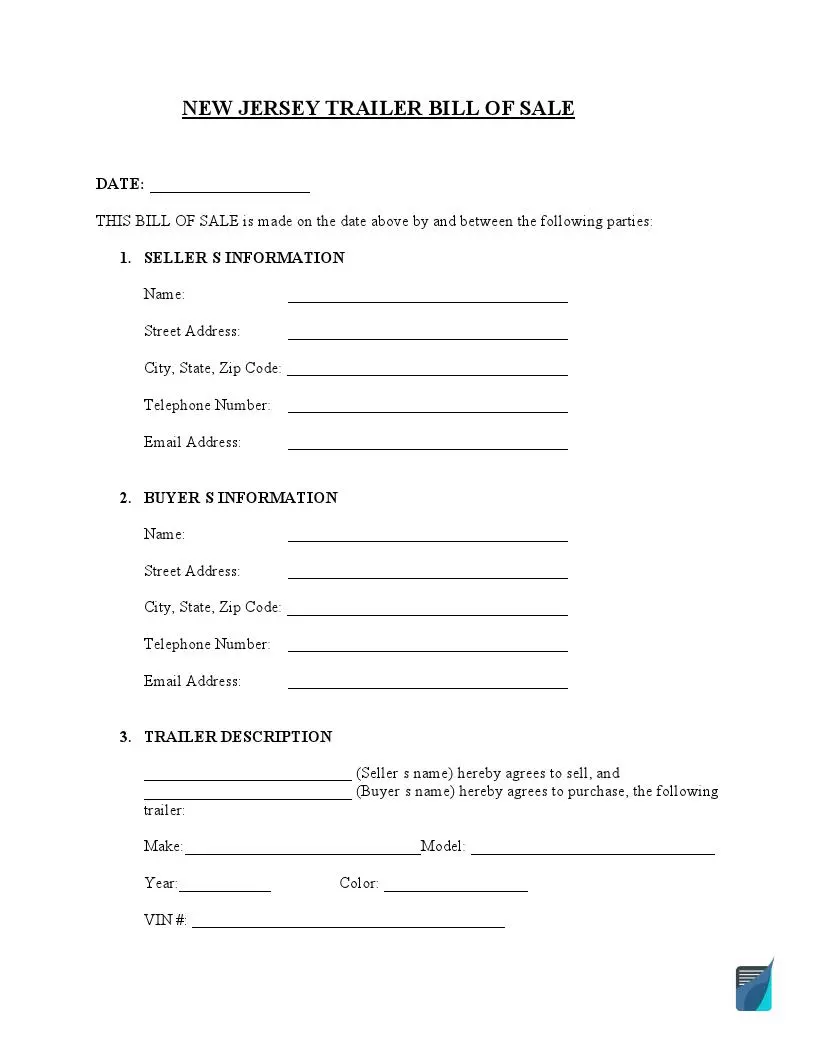
Our template has 57 fillable fields. The PDF contains the seller, buyer and trailer details, the price and payment options, taxes, signatures and a notary block. The 12 steps below follow the form's own order, from the date line on page 1 to page 4.
The screenshots under each step show the FormsPal New Jersey trailer bill of sale template filled with sample entries in blue, so you can see where each answer goes. The names, addresses, dates and amounts are examples only.

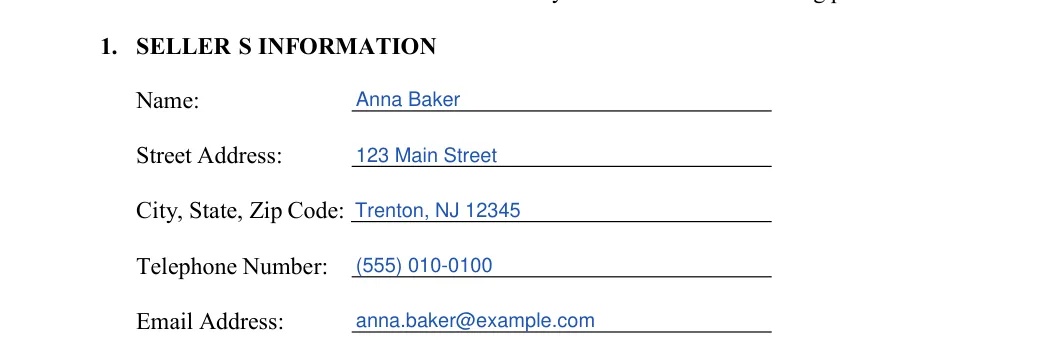
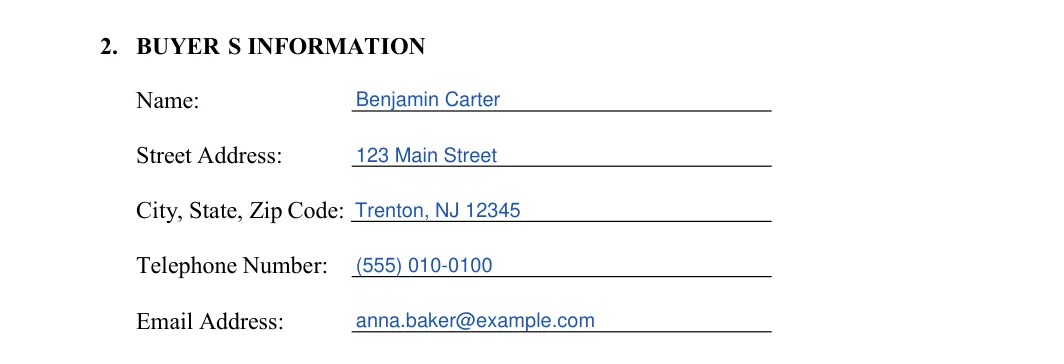

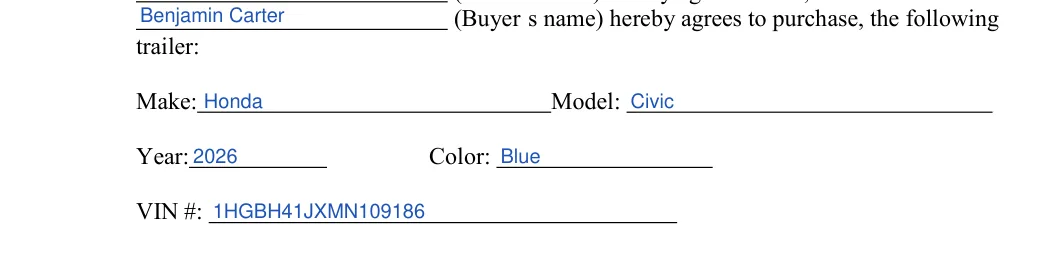

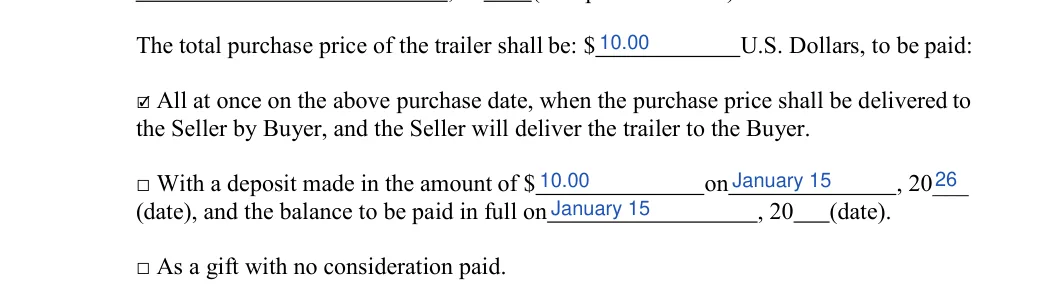

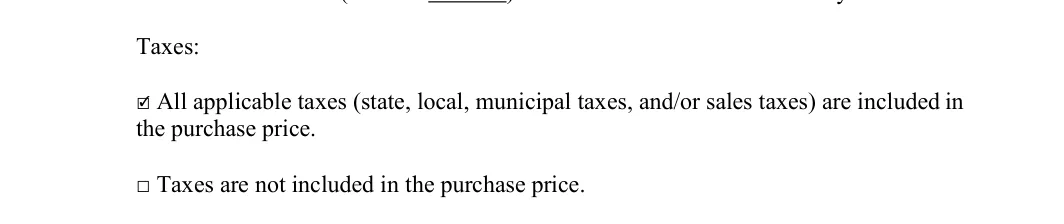
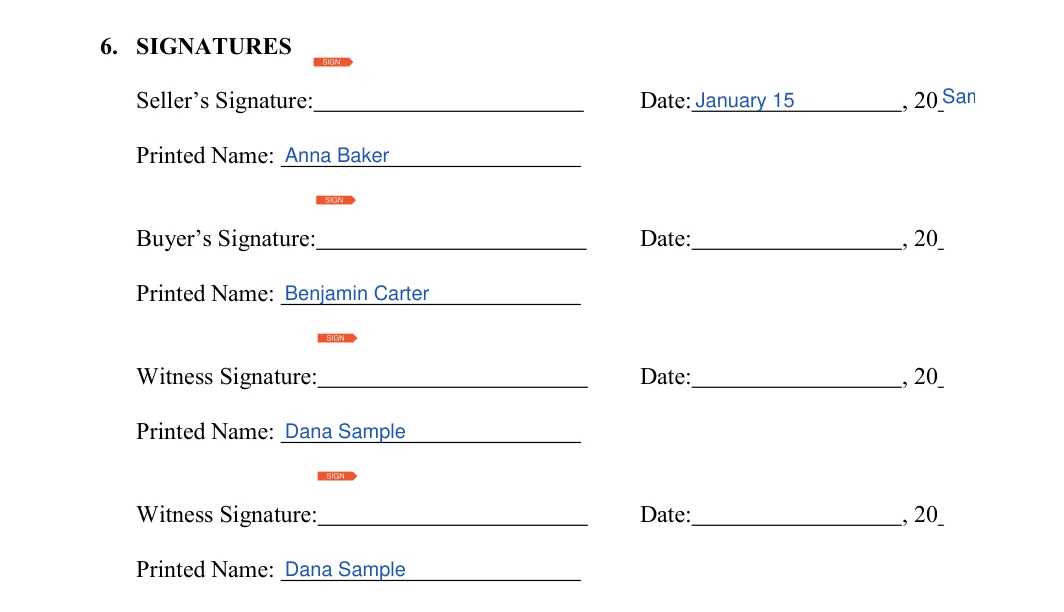
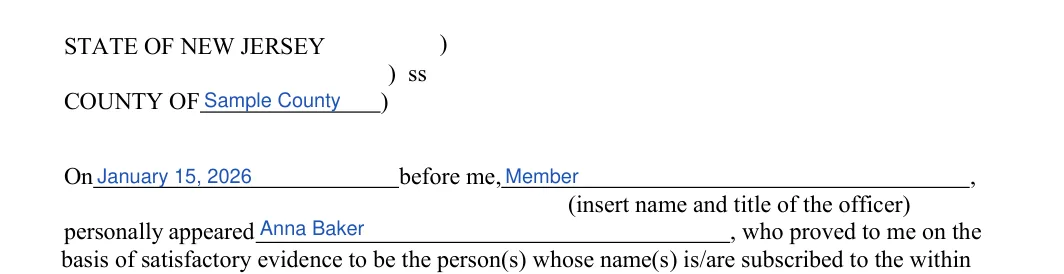

Section 5 of the template has no blanks. It says the seller owns the trailer, that no liens or encumbrances are on it, and that the sale is "as is" with no warranties. Read it before you sign. After you sign, give the buyer the original and keep a photocopy for your records.
The rules for a trailer sale come down to the title. The buyer visits a motor vehicle agency to transfer the title, completes the vehicle registration application (Form BA-49) if it applies, and receives the license plates.[1] The former title needs its assignment section completed and signed by the previous owner, and the original title will be sent to any lien holder.[2]
The MVC points to two things:
New Jersey has no statute that requires a bill of sale to be notarized. Page 4 of our template has an acknowledgment block for a notary or other officer to complete. If you need a separate one, FormsPal also has a free notary acknowledgment form.
General information, not legal or tax advice.
