
Updated:
A breach of contract cease and desist letter is a written demand. It names the broken contract terms, asks for a fix and sets a date for a written reply. It suits anyone owed work, goods or payment, especially after friendly reminders fail.
This guide explains each part of the letter, how to write and send it, what can happen next, and gives a short sample.
Key facts
Build Your Document
Answer a few simple questions to make your document in minutes
Save and Print
Save progress and finish on any device, download and print anytime
Sign and Use
Your valid, lawyer-approved document is ready
A breach of contract cease and desist letter is a formal written notice that tells the other party which contract term they broke, what harm it caused and what they should do to fix it by a set date.
The letter is usually the first step toward resolving a broken contract. It puts the dispute in writing before either side spends money on lawyers or a lawsuit. A calm, factual letter often settles the matter on its own.
A breach of contract is when the terms and conditions set by a contract have not been met. In many cases, one party has failed to do or provide something they promised. "Cease and desist" means stop the conduct and do not start it again; in a contract dispute, the letter also asks the other party to put things right.
A material breach is a serious violation of a contract and harms at least one of the parties. It goes to the heart of the deal, such as goods that never arrive or a payment that is never made. When a material breach occurs, the non-breaching party may not have to continue to follow the agreement.
A minor breach is a smaller slip, such as a short delay that causes little harm. A letter can address either kind, but the fix it asks for should match the size of the problem. Whether a given breach counts as material depends on the contract and the facts, so a lawyer is the right person to judge a close case.
A breach of contract takes many forms, from an unpaid invoice to shared secrets, and each one below is a broken promise that a breach letter can address:
A breach of contract letter fits a breach you can prove with the contract and your own documents, after an informal request has failed and before any lawsuit is filed.
The letter lists at least one way to resolve the issue, so the sender should be ready to meet or talk with the other party. When you send this letter you should be prepared for any result, from mediation to court.
A breach letter helps most when the facts are clear, the other party has gone quiet and the sender wants the dispute in writing:
A breach of contract letter covers broken promises inside an agreement. Other problems call for a different notice:
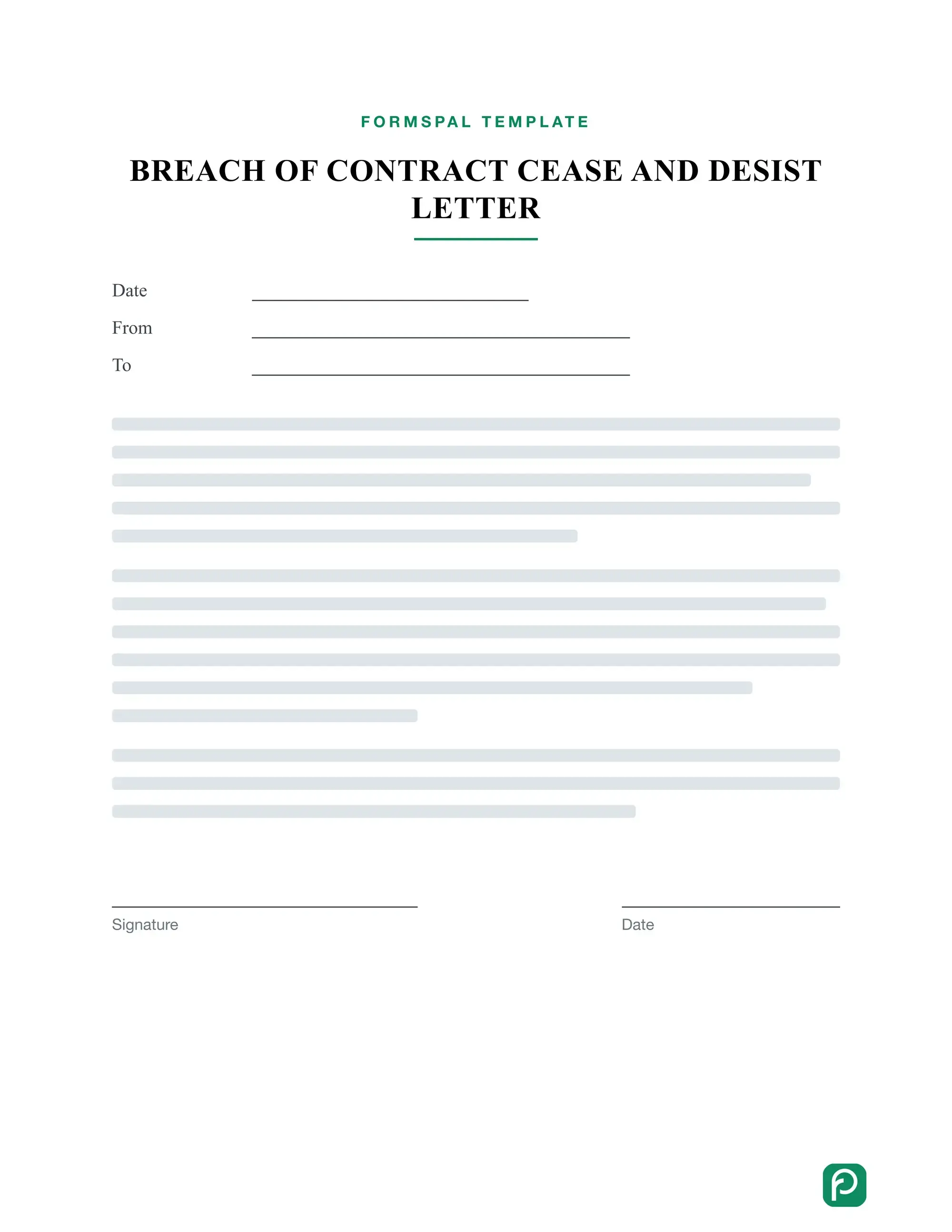
A breach of contract letter includes six parts: the sender, the recipient, the date, the description of the breach, the fix requested with a reply date, and the signature.
The breach description is the core of the letter: it ties a specific contract term to a specific event, with dates, amounts and names, so the reader can check every point against the agreement.
Name the section or clause that was broken. Then write what happened in order. For example, write "The invoice dated June 1 was not paid" instead of "You never pay on time." Mention the proof you hold, such as emails, invoices, delivery notes or photos, without attaching originals.
The requested fix, often called the cure, tells the other party exactly what ends the dispute: pay the balance, deliver the goods, finish the work, return property or stop the conduct.
A breach of contract letter can offer many different solutions to the breach. Common choices include:
The resolution you want will depend on the agreement and the relationship you have with the other party. Some contracts set their own notice and cure steps; read yours and follow them in the letter.
The reply date gives the other party a clear deadline of your choosing to answer in writing, so both sides know when the letter has gone unanswered.
Write the date itself, such as a calendar day, rather than a phrase like "soon". If your contract names a period to cure a breach, use a reply date that respects it.
A breach of contract letter is written from the contract outward: the sender reads the agreement, gathers proof, then states the facts and the fix in plain words.
A breach of contract letter reads best in a formal, factual tone that a mediator, a judge or the other party can follow without taking offense. This letter should not be written in a demanding or accusing tone. It should be formal and businesslike.
A judge or mediator may read it later, so write only what you can prove. Having a formal matter-of-fact tone will also preserve any business relationship that you have with the other party.
Most weak breach letters miss a key detail, overstate the facts or leave the sender without proof of what was sent and when:
A breach of contract letter is best sent by a method that gives you a receipt, so you can show when the other party received it.
A final check before mailing catches the wrong name, date or address that would weaken an otherwise sound letter:
After the letter arrives, the other party fixes the breach, answers with a counter offer, or stays silent, and each answer leads to a different next step for the sender.
A reply to a breach of contract letter usually accepts the fix, offers a different one or disputes the breach, and each answer deserves a careful read against the contract. The receiving party will respond to your letter through a lawyer or communicate themselves. Replies come in different ways: some people answer by email, some call, and some reply through a lawyer.
Read each reply with the contract in front of you, and note anything that matches the fix you asked for. If the other party offers a different solution, you can accept it, make a counter offer or ask for time to think.
Put any deal you reach in writing and have both sides sign it.
A letter with no answer leaves the next step to the sender: a second notice, an offer of mediation, or a meeting with a lawyer about a claim. If the receiving party does not respond, legal counsel can help you proceed further.
The sample below shows the order of a short breach letter: the contract and its date, the broken terms, the fix requested and a polite close. All names and dates in it are made up.
Dear John Doe,
The purpose of this letter is to inform you of a breach of the terms of the contract signed between you and me on the 18th of March 2021. According to the contract, you have violated the following particulars, including revealing confidential information and business plans.
For these reasons, we hold you responsible for proceeding in acts that have directly violated the terms of the agreement. We ask that you work to fix this violation and uphold the original contract. Please confirm in writing by April 15, 2021 the steps you will take. Further legal proceedings may be initiated if you fail to do so.
Sincerely,
John Rogers
The sample is short on purpose. It names the contract and the date it was signed, points to the terms that were broken, asks for a fix and ends with a polite close. Your own letter can follow the same order and add the clause number, the harm in figures and the proof you hold.
A cease and desist letter is a formal demand from one party to another, not an order from a judge. It puts your position in writing and shows that you raised the breach before taking any further step.
A letter can backfire when it overstates the facts, threatens steps the sender will not take or admits a fault. An angry letter can also end a business relationship that a calm one might have saved.
Ignoring a breach of contract letter leaves the decision with the sender, who may offer mediation or speak with a lawyer about a claim. The recipient is better served by reading the contract and replying in writing, with a lawyer's help if the claim is serious.
Whether a lawsuit is worth it depends on the amount at stake, the proof you hold and the cost of a lawyer's time. A letter is a cheaper first step, and a lawyer can weigh the claim before you go further.
A breach of contract letter can be written and signed by the party who was harmed. A lawyer's review helps when the amount is large, the contract is complex or you expect a lawsuit.
Send it by Certified Mail with Return Receipt and keep the receipt with your signed copy. If you also send it by email, save the sent message.
General information, not legal or tax advice.
