
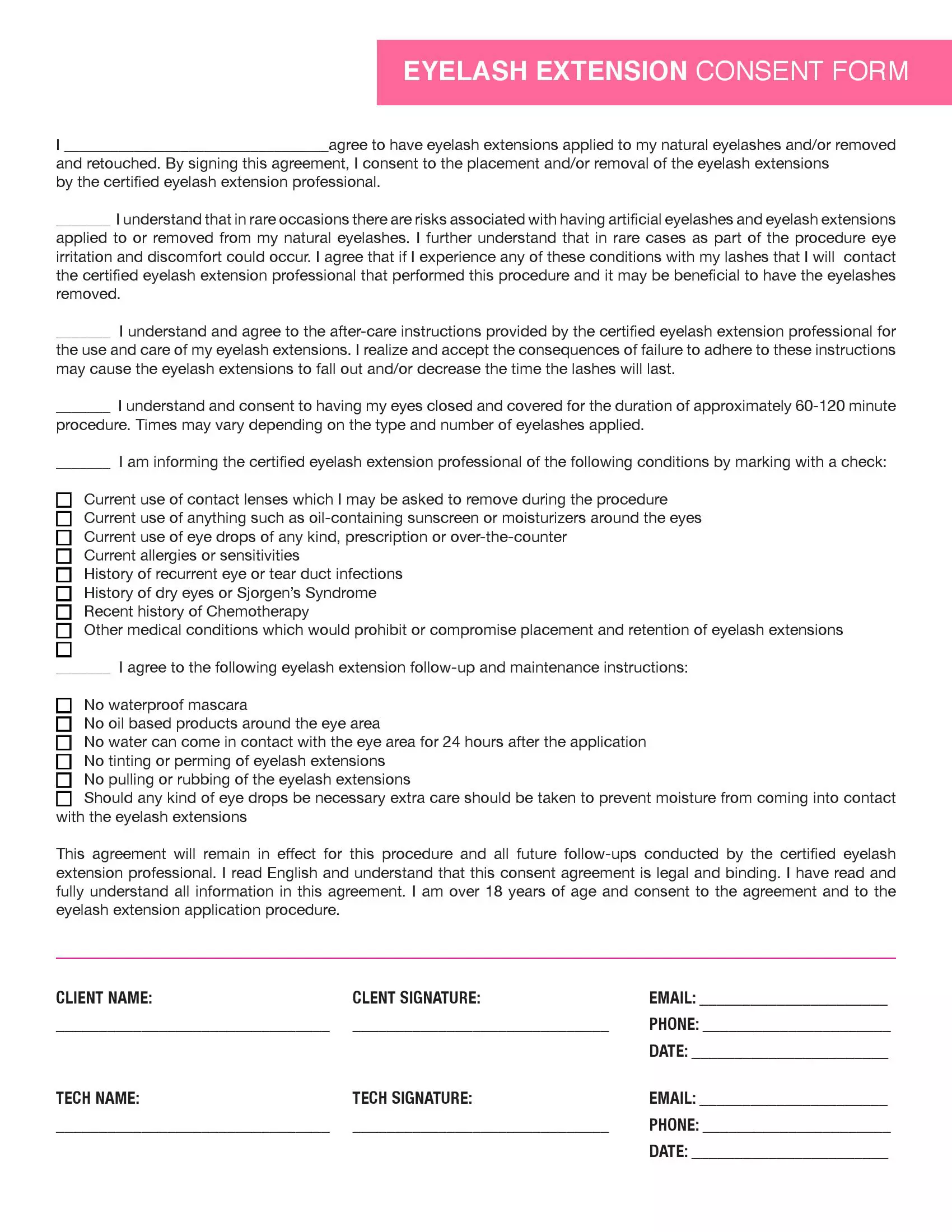
An eyelash extension consent form is a written record that a customer understands the treatment and agrees to it before the lash artist starts. It also collects the customer’s health information, lash preferences and confirmation of the aftercare instructions. Salon owners and lash artists use this kind of consent form to keep expectations clear and to show customers that the studio takes their safety seriously.
Last Updated: October 2026. This guide is reviewed and updated regularly to reflect current law. If you notice an error or outdated information, please contact us.
A lash extension consent form is a short document that a customer reads and signs before a lash artist applies the extensions. It records the customer’s name, health information such as allergies and sensitive skin, and confirmation of the aftercare instructions. Studios often adapt the template to their own services and products.
Beauty studios with other services often keep a matching form for each one, such as a facial consent form or a waxing consent form. Studios that share before-and-after pictures often add a separate photo release form to the client file.
A signed consent form gives a lash studio a clear record of what each customer was told and what they agreed to. It also gives the client time to read about the products, the process and the aftercare before the first lash is applied.
A signed form can help you avoid:
The form is also a way to get to know the customer. Ask about the lash style, length and curl they prefer so the work matches what they want. A personal approach helps studios raise the value of their services and keep clients coming back.
By the way, in addition to the consent form, the specialist should obtain a license for eyelash extension in some states. For example, in Texas, the professionals in the beauty industry have to be educated in this sphere and certified with a license. That is why the specialist should check the requirements of the state for this business before starting it.
Go through the form with each client before the treatment starts. A short talk about their health, their preferences and what to expect makes the process clear and helps the customer feel comfortable signing.
A well-informed client is a partner in the process. When the answers are clear, the terms you agree on are easier to follow.
Health questions help you spot anything that could affect the treatment or the way the lashes are applied. Many studios collect the answers on the consent form itself, and some use a separate client health form. Ask in a calm, private spot so the client can answer openly.
The aftercare talk is the last thing to cover before the customer signs. Keep it short and give the client the main points in plain words, so they remember what matters once they leave the studio. A printed note to take home also helps.
The form is quick to complete, even for someone who has never seen it before. It takes about 5 minutes and gives both the customer and the lash artist a written record of the treatment. Here are the five parts of the form, in order:
In the first line of the form, the client must write in his or her full name and then read the content of the consent.
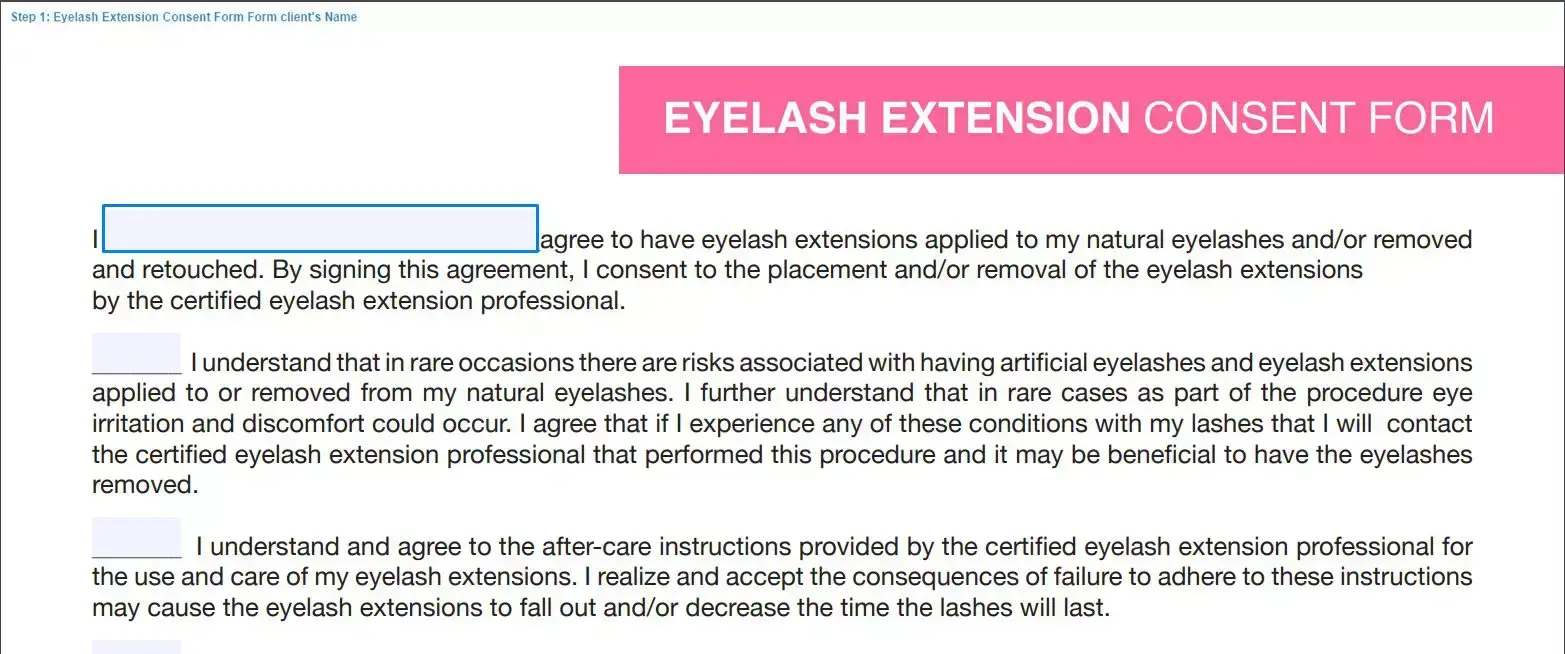
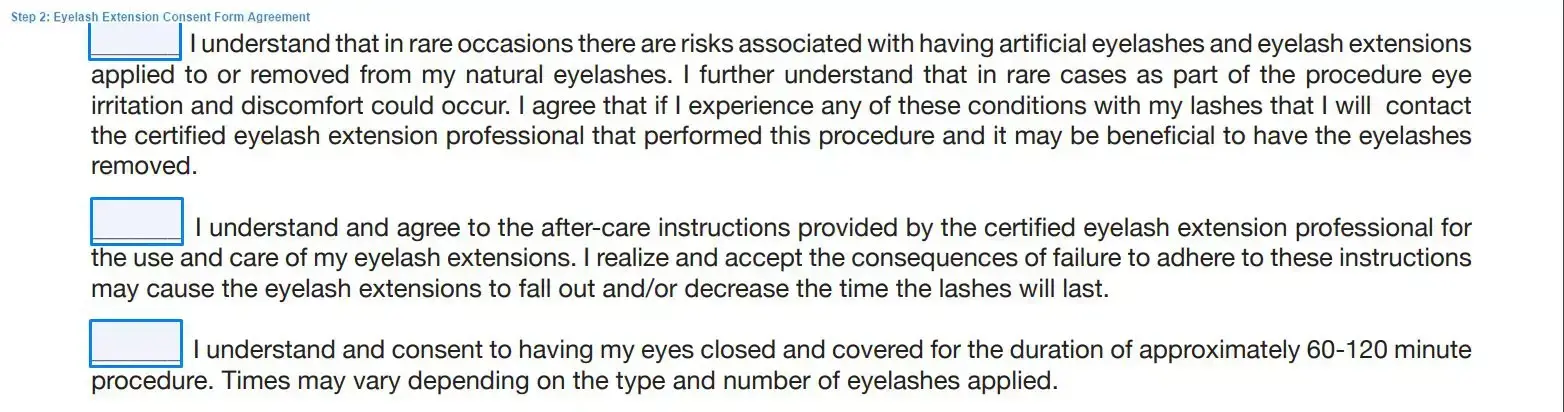
In the next three paragraphs, the client marks the fields he or she agrees with. Read the text carefully, so that the meaning of each statement is clear.
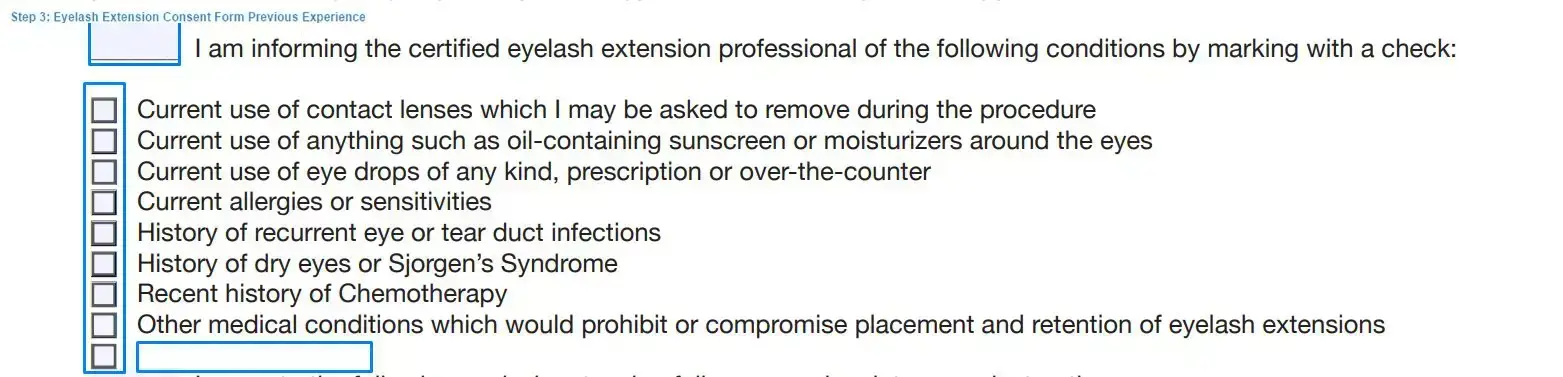
In the next lines, the client puts a checkmark in each box that applies to him or her. This section contains info about possible medical limitations and other things that can be affected by eyelash extension. Also, if the client has additional contradictions related to the procedure, they should be written in this section.
The client confirms that he or she understands the aftercare instructions for the eyelashes and agrees to follow them.

When the form is completed, both customer and the professional must sign the form. Each person also adds an e-mail address and a phone number. These make it easy to reach each other if an issue comes up after the treatment. Write the date of signing on the form too.
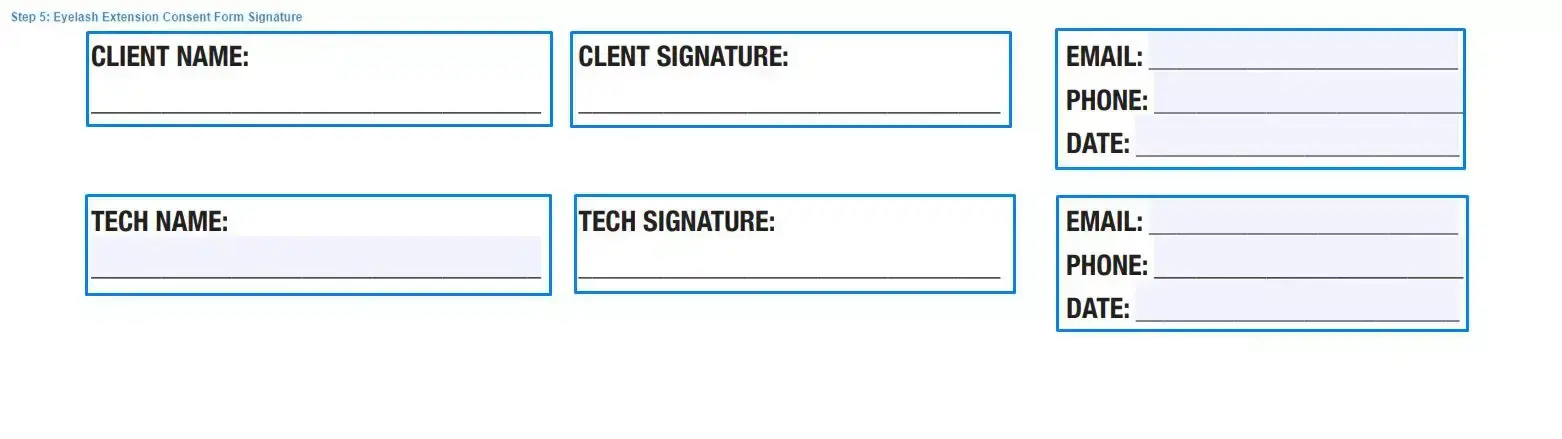
Once the form is signed, the lash artist can start the treatment. The answers on the form show the client’s preferences, so the work can follow them.
Here is how a completed form might look in a lash studio. The names and answers below are made up, so replace them with your own client’s information before you use the form.
| Part of the form | Sample entry |
|---|---|
| Client’s full name | Anna Baker |
| Procedure | Classic lash set |
| Allergies or sensitive skin | Sensitive to latex |
| Previous lash treatments | None |
| Aftercare instructions | Read and confirmed |
| Contact information | anna@example.com, 555-0100 |
Most problems with a consent form come from small gaps. A quick check before the treatment starts takes a minute and keeps the record useful. Watch out for these slips:
A little preparation makes the eyelash extension appointment calmer for the customer and for the lash artist. The consent form works best when it is part of a steady routine, so the same steps happen at every visit and nothing is skipped when the studio is busy.
The template is built around five parts, from the client’s name to the signatures and the date. Each part is a short block with boxes to mark or lines to fill in, and the list below shows them in order:
The client completes the personal and health sections. The lash artist reads the answers, talks through any questions and adds a signature.
Explain the steps, the products you plan to use, the possible side effects and the aftercare. Ask about allergies, sensitive skin and earlier lash treatments, then answer any questions.
About 5 minutes. Plan a few extra minutes if you want to talk through the health questions together.
Yes. Download the PDF and fill it in with the FormsPal PDF editor, then print it or save a copy for the client’s file.
Keep a signed copy with the customer’s record, and give the customer a copy if they ask for one.
General information, not legal or tax advice.
