
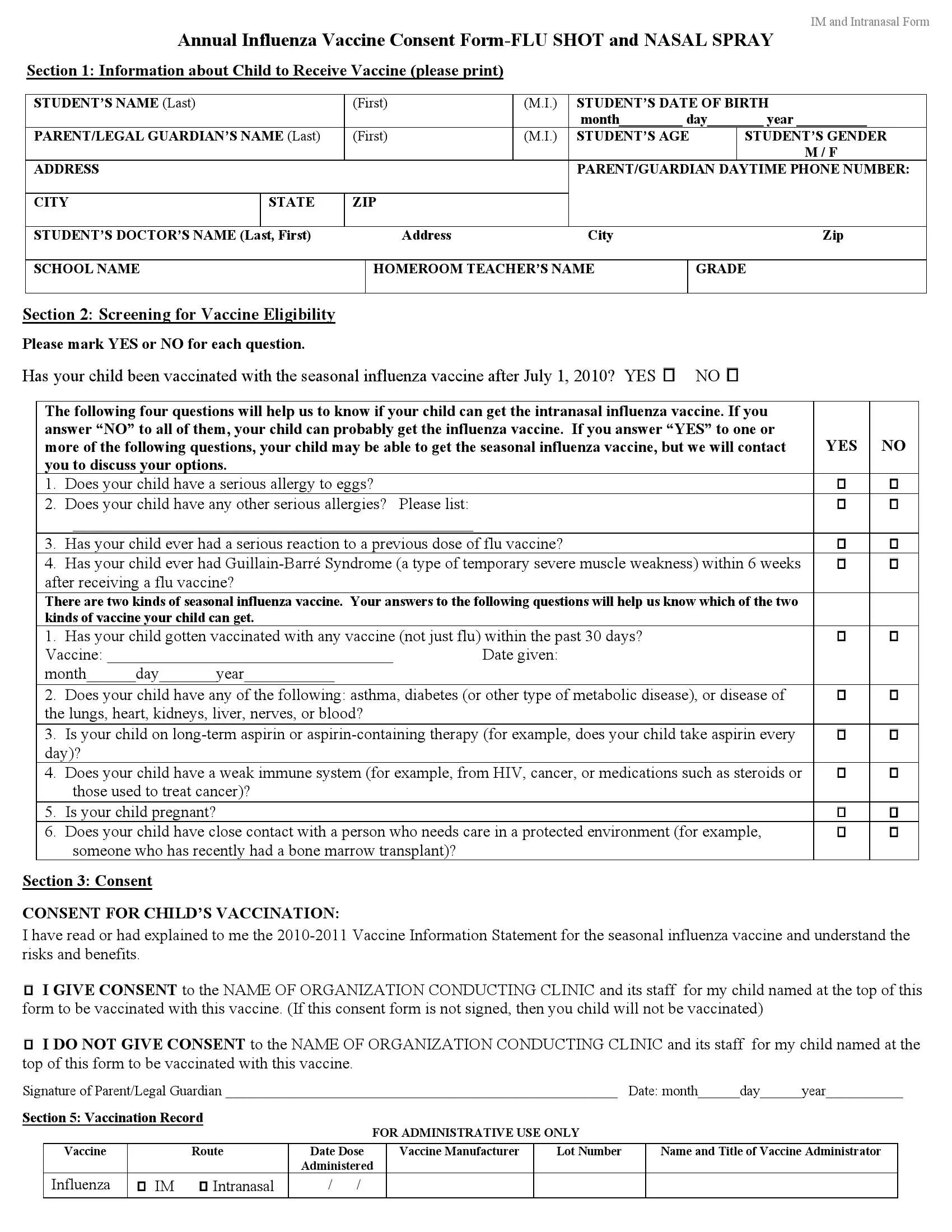
A parental flu shot consent form is a signed permission slip that lets your child get the flu vaccine or nasal spray. It records the child's details, the answers to a few health questions and a parent or guardian's signature. Vaccination can protect children from the serious complications of flu, and this form is how you say yes to it.
Last Updated: October 2026. This guide is reviewed and updated regularly to reflect current law. If you notice an error or outdated information, please contact us.
Flu, or influenza, is a very contagious disease that spreads across the country every cold season. For most people it is not dangerous. Without underlying health conditions, they usually have only mild symptoms such as fatigue, chills, muscle aches, a sore throat or a runny nose.
Flu can be a serious threat for some groups:
For them, flu can lead to bronchitis, pneumonia and other complications that put people in the hospital or even in intensive care. CDC reports that thousands of people in the country die from influenza each year.
The good news is that vaccination can protect vulnerable groups, especially children. To vaccinate your child, fill out and sign a flu shot consent form. The task is not hard, and the steps below walk you through it.
The flu shot consent form has three parts for you to complete and one section that is only for the clinic. Follow the steps below in order, and keep a signed copy of the form for your records. Each step shows what to write and what to check before you sign.
Start with the first section of the form. The information is pretty usual:
The second section of the form is very important because here, you can find the questions that can reveal that a child is not eligible for vaccination.
The questions cover health conditions. For example, the form asks whether your child ever had a bad reaction to any vaccine or has had GBS (Guillain-Barré Syndrome). One question also asks about pregnancy, so it is better to talk with your child before the vaccination.
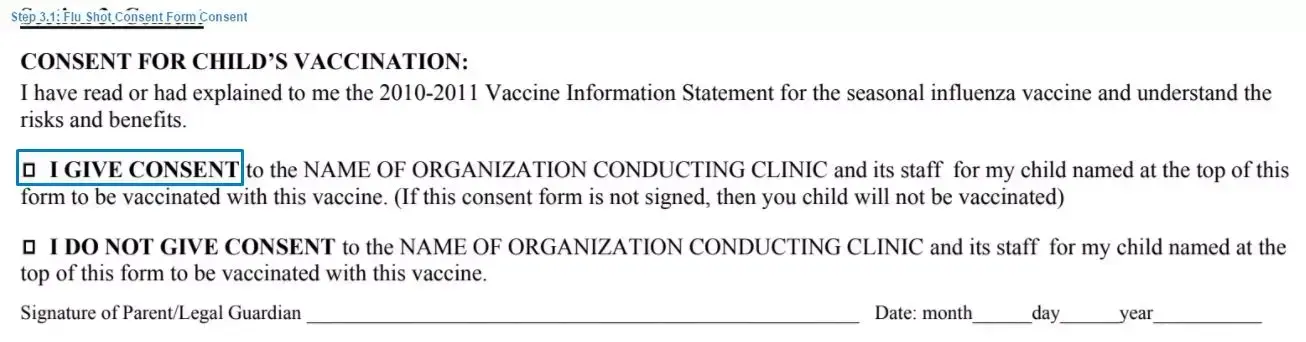
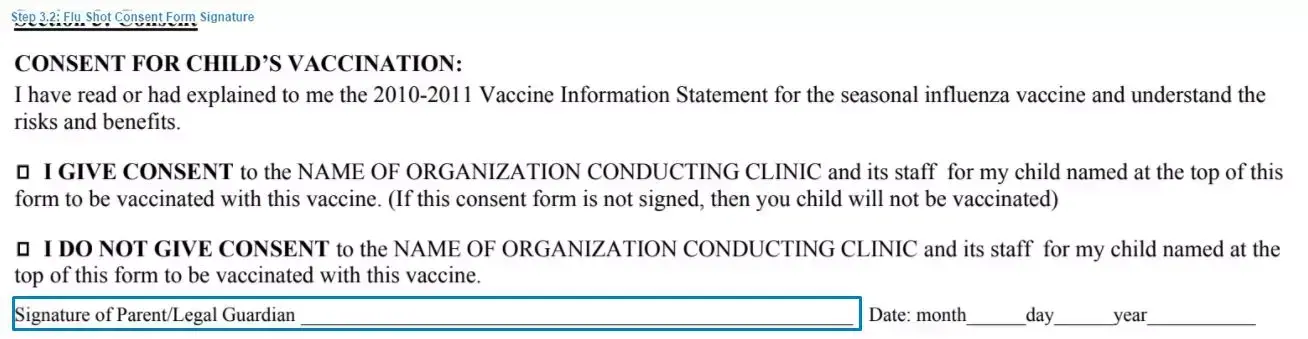
In the third step, you give consent for the vaccination.
In order to do so, you are required to mark a box next to the text “I give consent” and put your signature and the date in a special place below.
Also, there is one more section in this form, but it is only for administrative use only, so you should not write anything there.
While it is proven that vaccination is a safe and effective way to protect a child from the most severe symptoms of influenza, your child may have a reaction. It helps to know the possible reactions in advance so you are prepared.
The most widespread reactions after a flu vaccine are:
The most dangerous adverse reaction but at the same time the least common is the possibility of developing Guillain-Barré Syndrome; however, here, we must outline that such an adverse reaction is very rare and that this illness is curable.
Your child may faint right after the shot. This is a common effect, and in most cases it has no consequences.
The most severe reaction is an allergic one, so check whether your child has any allergies before the shot.
If a severe adverse reaction developed after you and your child have already left a vaccination facility you must immediately call 9-1-1 and report to them that patient was recently vaccinated.
Small slips are easy to make and easy to avoid. Read through the whole form once more before you hand it in. Check these points against what you wrote in each of the three steps above:
A flu shot consent form gives your permission for your child to get the flu vaccine or nasal spray. Most parents want to know who signs it, what the health questions mean and which side effects are common.
The form asks for the name of the parent or guardian who is giving consent. That person marks the consent box and adds a signature and the date.
The second section asks about your child's health, such as any past bad reaction to a vaccine or a history of GBS. It also has a question about pregnancy. Answer every question honestly and talk with your child first if you are unsure.
Redness, swelling and soreness where the shot was injected are the most widespread. Headache and fever may also happen. Some children faint right after the shot, and in most cases it has no consequences.
A few quick checks before you go:
General information, not legal or tax advice.
