
Updated:
Get Form Now
The Red Cross parental consent form is a document that should be completed by the parents of the children who donate their blood. It is obligatory to fill out if the state laws do not allow students to donate blood without the consent of their parents. Signing it confirms that the family has read the information about the donation.
Both parents and children need to know the details about the donation procedures and be aware of possible consequences. When the student participates in blood donation, his or her parents have to provide their agreement for this activity. It is required for people who are:
Without confirmation from parents or guardians, the procedure cannot be executed. The main idea of signing the Red Cross parental consent form is to encourage donors to spend time exploring this activity. Participants need to understand the whole process and purpose of blood donation.
By signing the form, parents verify the organization of the blood donation activity, that their child is ready for it, and that they know the meaning of the procedure.
As a parent, you should be sure that your children get acquainted with the materials provided by the Red Cross. Children and their parents have to read the information presented on the website of the Red Cross and prove it by signing the form.
If you have any questions regarding the donation procedure or the validity of the form, you can always contact the Red Cross and ask them. However, all the needed information is presented on the official website of this organization and in the form itself. Read the consent form carefully to understand the donation procedure better.
A parental consent form for blood donation is easy to fill out as it does not require you to provide any personal information except your name. Take the steps below one at a time and read each line before you write.
Read the information about the different donation technologies and decide whether you agree to apheresis. As it is written in the form, this technology is not preferred for females 16-17 years old. If you do not want this technology used for your child, put a checkmark in the box.
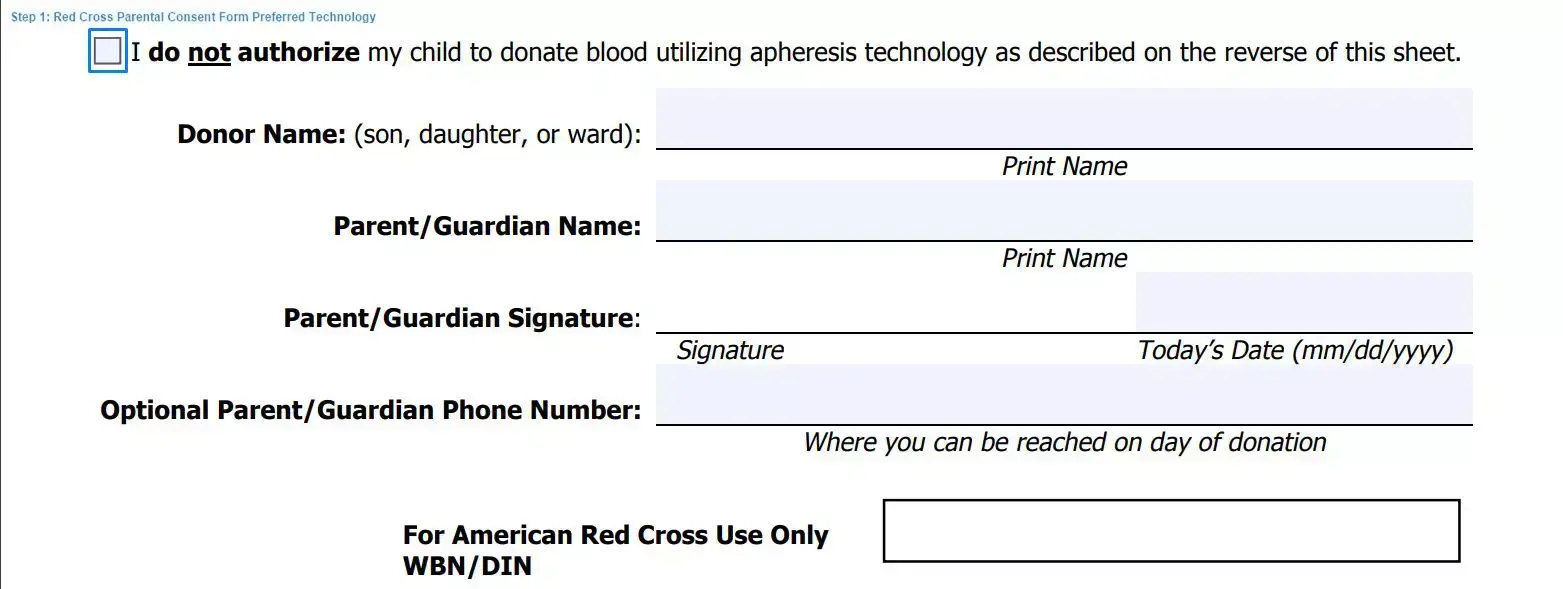
Enter the name of the person who will donate the blood.
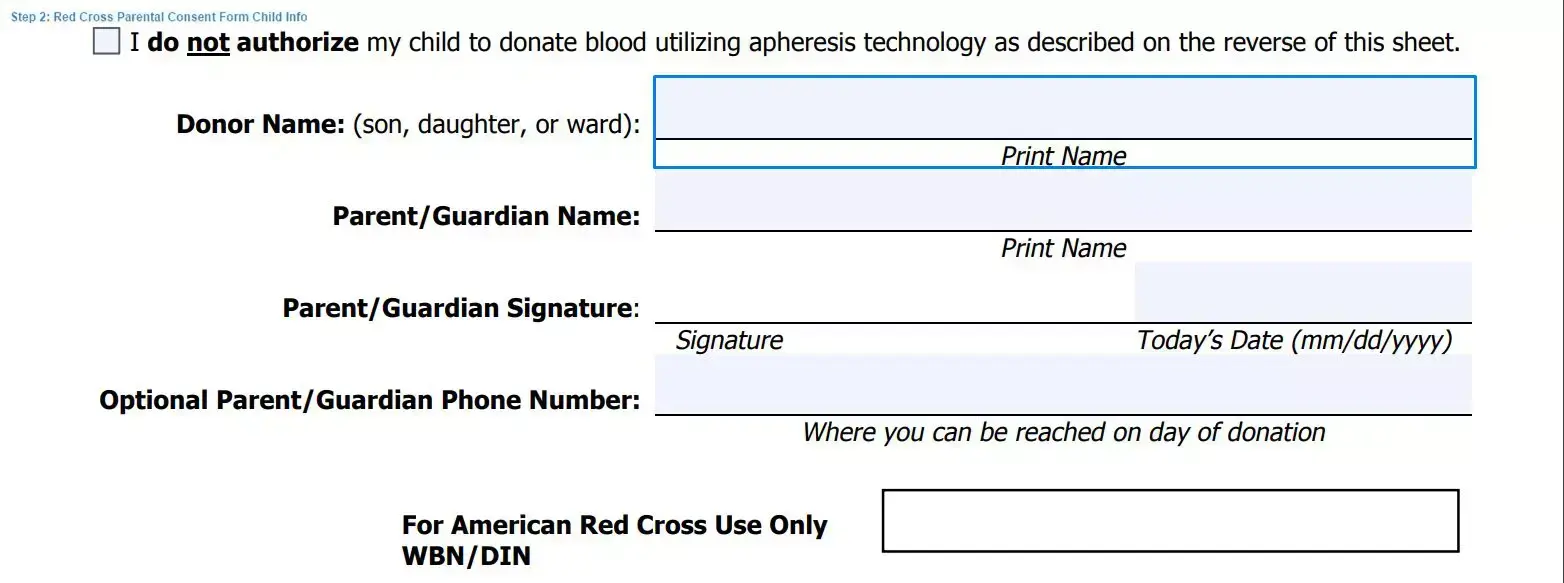
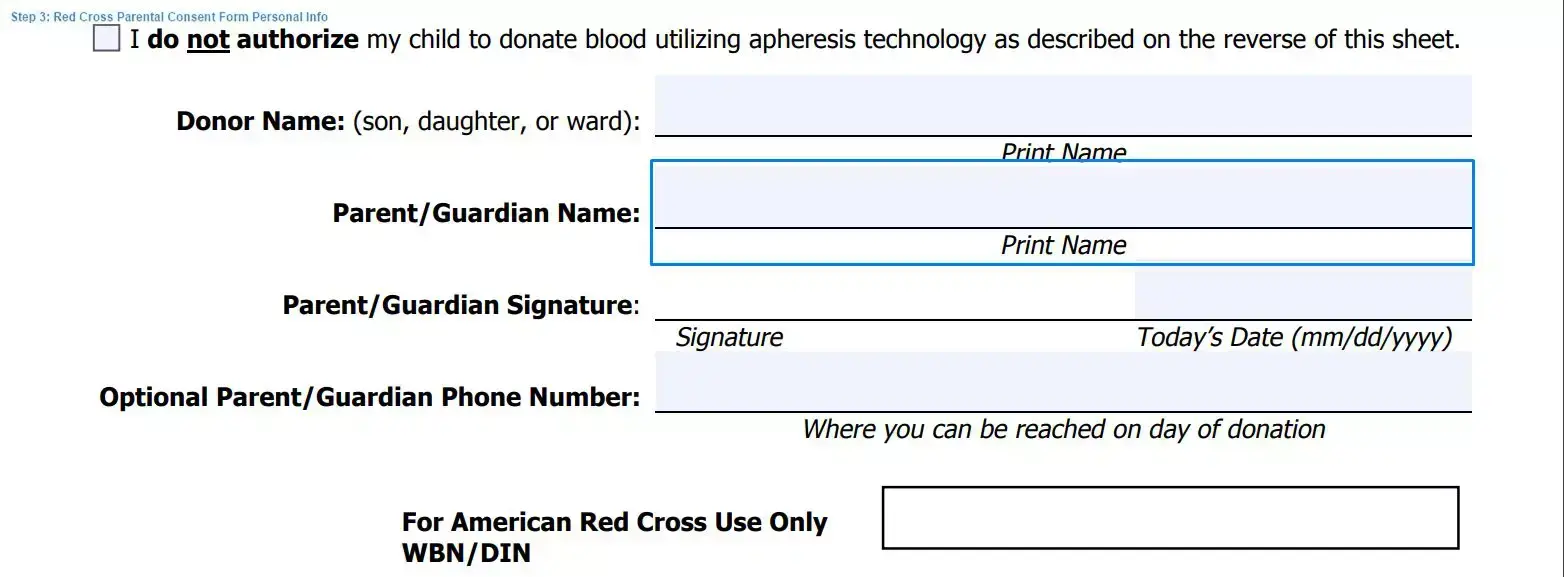
Enter your name on the next line. Make sure that you are eligible to sign the form. Thus, you should be a parent or guardian of the donating children.
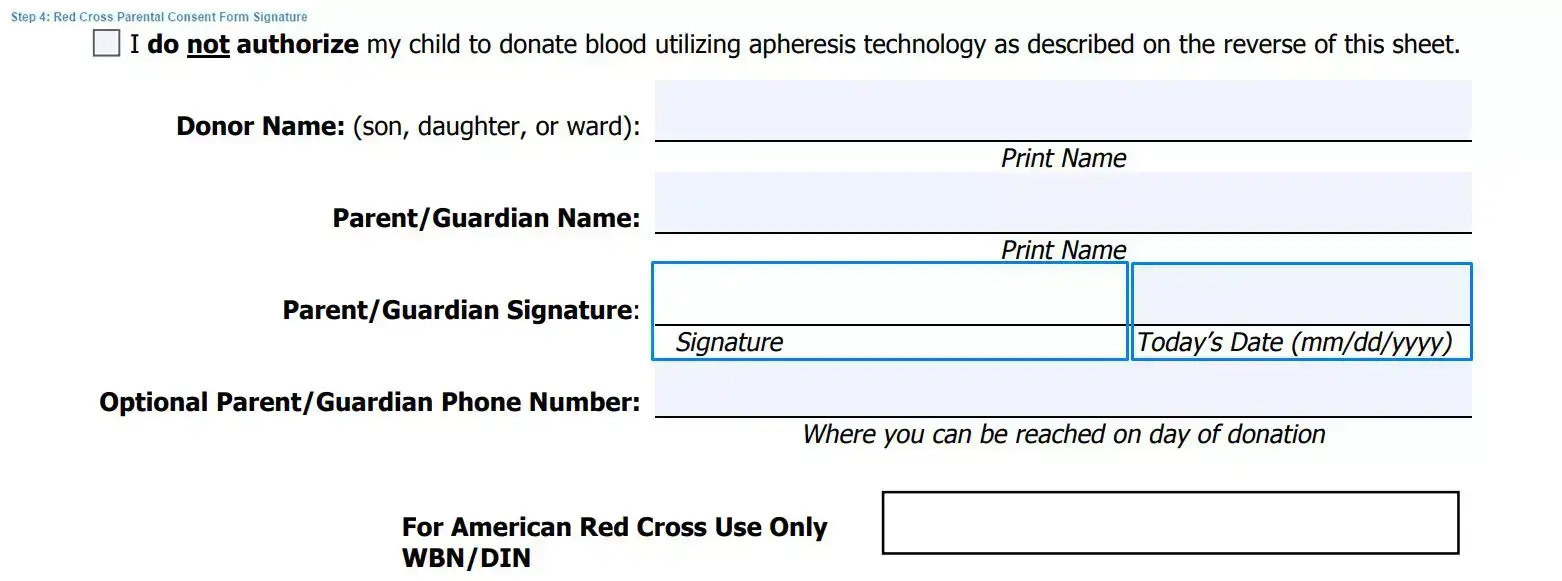
Sign to confirm that you have read the recommended materials about the donation process and that you allow your child to become a blood donor. Then add the date of signing.
If you want to share your phone number for emergencies, write it in the space provided. The Red Cross can then reach you if your child feels unwell after the donation.
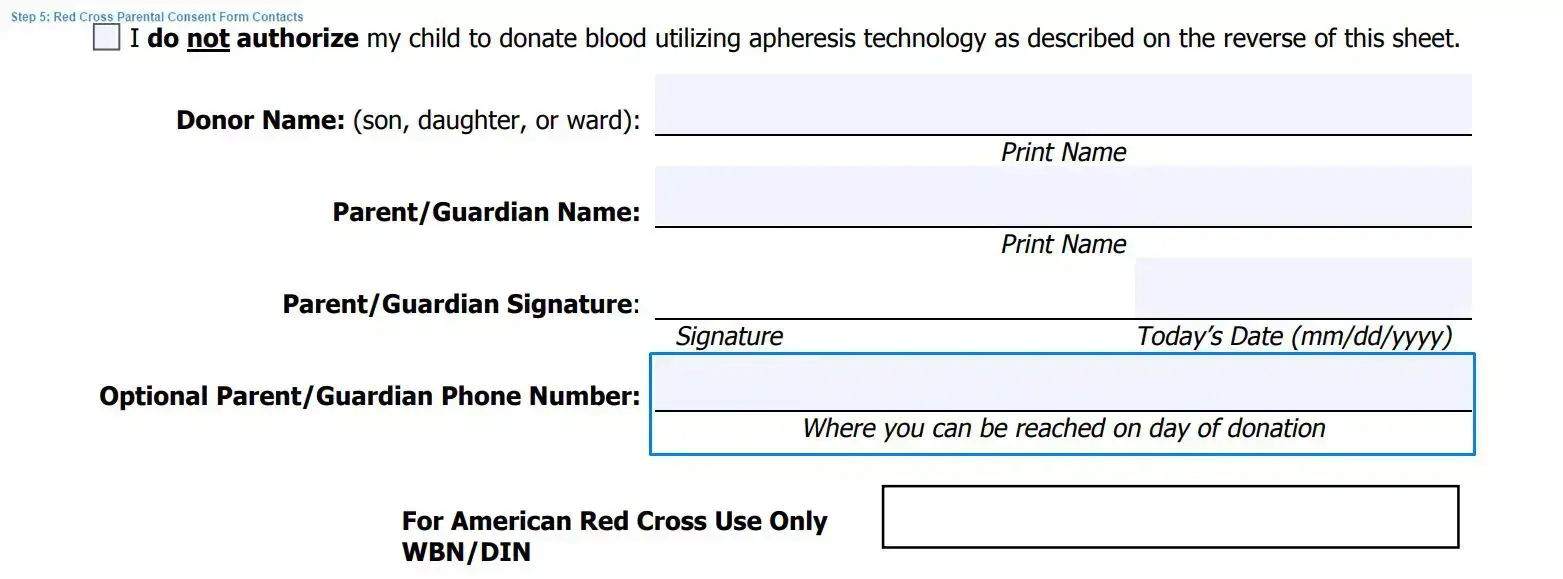
Here is a sample of how the entries can look. The names and the phone number are made up.
| Part of the document | Example entry |
|---|---|
| Technology box | Checked only if you do not want apheresis used |
| Your child's name | Ben Baker |
| Your name | Anna Baker |
| Signature line | Anna Baker's signature and the day of signing |
| Phone number | (555) 010-0123 |
When you finish, read everything once more. The donation relates to your child's health, so take a few minutes to check every line before you hand it in:
Small slips are easy to make on a blood donation consent document, and each one is easy to avoid. Read through this list before you sign, and check your answers against it when you finish.
Parents and guardians of young blood donors often have the same few questions about signing. Most of them are about what to write, where to find more information and what to do after signing.
It has a checkbox for the donation technology and lines for your child's name and your name. It also has a signature line and a space for your phone number. The steps above show each part in order.
The Red Cross website has a page for student donors, and the document itself also describes the donation. If you still have questions, you can contact the Red Cross.
Read each line once more and check every entry. Then keep a signed copy for your records, and hand in the original.
General information, not legal or tax advice.
