
A Texas lady bird deed, also called an enhanced life estate deed, is a deed that lets the owner (the grantor) name a beneficiary. The beneficiary receives the property at the owner's death. This FormsPal template is ready to fill in, print and sign, with two witness blocks and a notary acknowledgment.
Last Updated: October 2026. This guide is reviewed and updated regularly to reflect current Texas law. If you notice an error or outdated information, please contact us.
Build Your Document
Answer a few simple questions to make your document in minutes
Save and Print
Save progress and finish on any device, download and print anytime
Sign and Use
Your valid, lawyer-approved document is ready
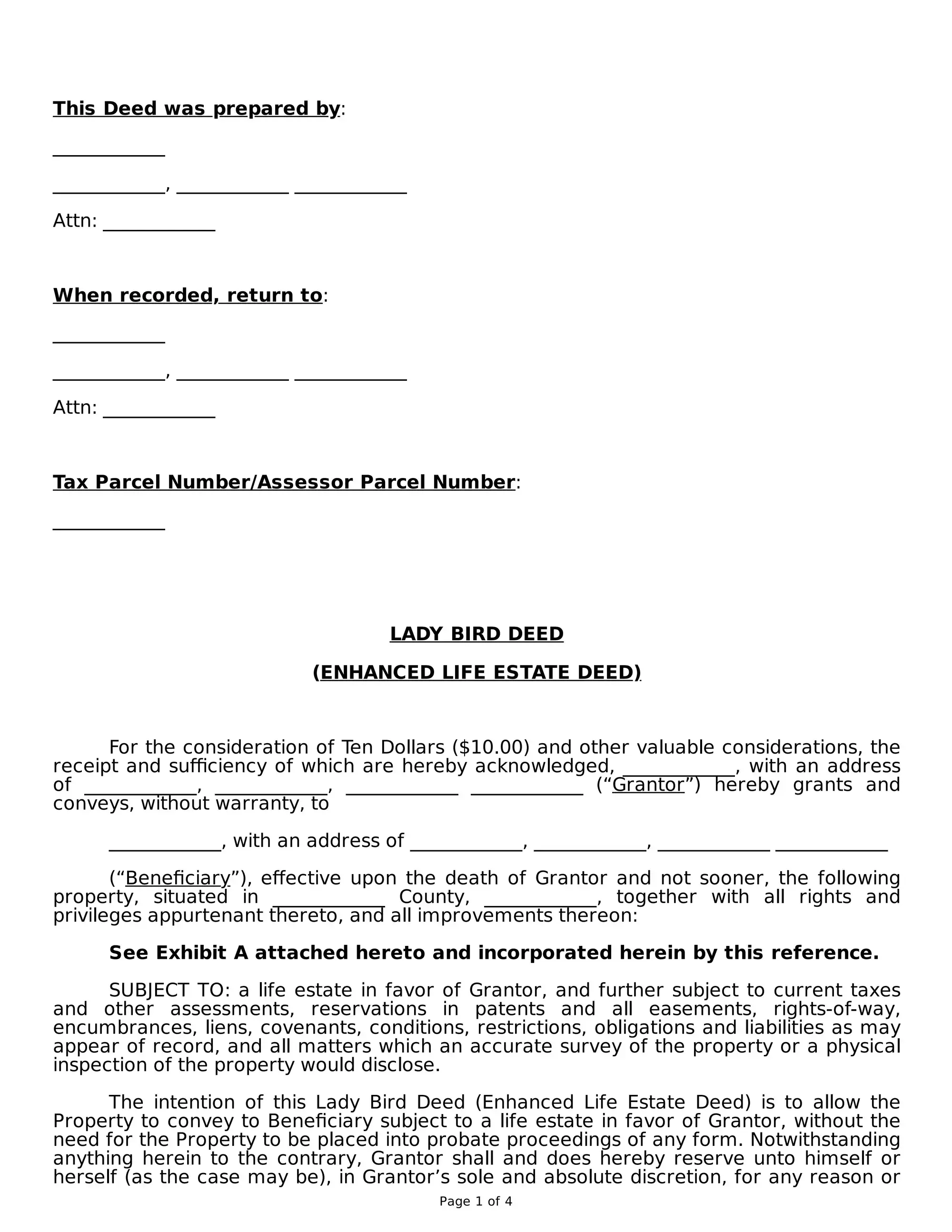
The FormsPal Texas template is titled Lady Bird Deed (Enhanced Life Estate Deed). It runs four pages and has a grantor, a beneficiary, two witness blocks, a notary acknowledgment and a legal description exhibit. Its main terms are:
The template states that the property is meant to pass to the beneficiary subject to a life estate in favor of the grantor. It is meant to do so without the need for the property to be placed into probate proceedings of any form. That describes what the template says, not how a court or a county office will treat a lady bird deed.
Other states have their own lady bird deeds in the lady bird deed hub, and you can browse all deed forms on FormsPal.
Texas has no statute that recognizes the lady bird deed or sets its effect. The doctrine is common law, not statutory. Texas does have general deed rules on writing, signing, acknowledging and recording a deed. Those rules are covered below, and each one names its source.
Texas has no statute on whether an owner who keeps control of the property can sell or revoke a lady bird deed without the beneficiary. That doctrine is also common law, not statutory.
A different rule applies to every deed that conveys land. Under Tex. Prop. Code 5.021, a conveyance of an estate of inheritance, a freehold, or an estate for more than one year in land must be in writing. The conveyor, or the conveyor's agent authorized in writing, must subscribe and deliver it.[2.2]
The lady bird deed template has these signing parts on pages 2 and 3:
Texas lets a deed be recorded when the grantor signs and acknowledges it in front of two or more credible subscribing witnesses. It also allows an acknowledgment before an officer authorized to take acknowledgments or oaths.[3]
Tex. Prop. Code 12.001(b) sets two conditions for recording a deed that conveys real property. Here is the statute in its own words:
An instrument conveying real property may not be recorded unless: (1) it is signed and acknowledged or sworn to by the grantor in the presence of two or more credible subscribing witnesses or acknowledged or sworn to before and certified by an officer authorized to take acknowledgements or oaths, as applicable; and (2) any individual presenting the instrument in person for recording presents a photo identification to the county clerk as required by Section 191.010 , Local Government Code.
In plain words, a Texas lady bird deed needs a proper signature and acknowledgment. Anyone who brings it to the county clerk in person must show photo identification.[3]
Under Tex. Prop. Code 13.001(a), a conveyance of real property is void as to a creditor or to a later buyer who pays a valuable consideration without notice. That is the result unless the deed has been acknowledged, sworn to, or proved and filed for record as the law requires.[4]
Under Tex. Prop. Code 13.001(b), an unrecorded deed is still binding on a party to the deed.[4.1]
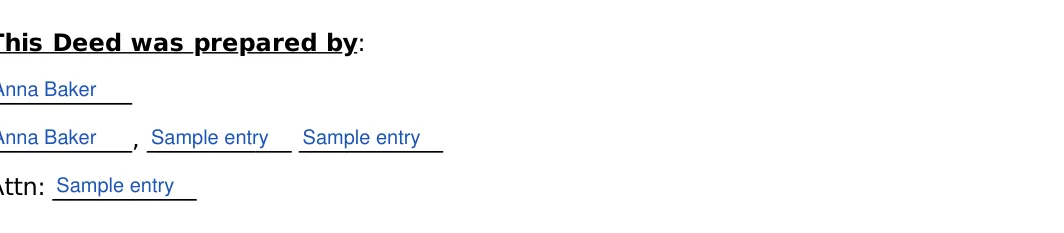
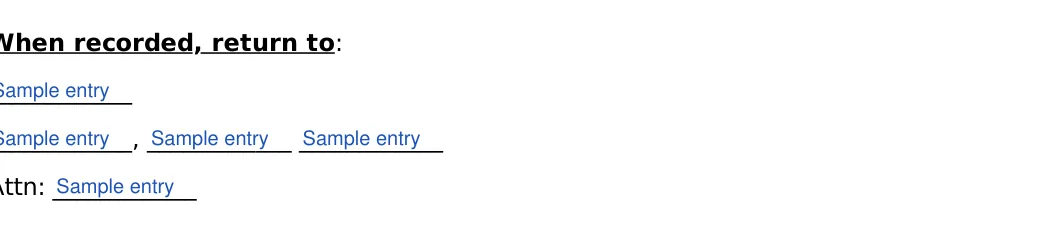
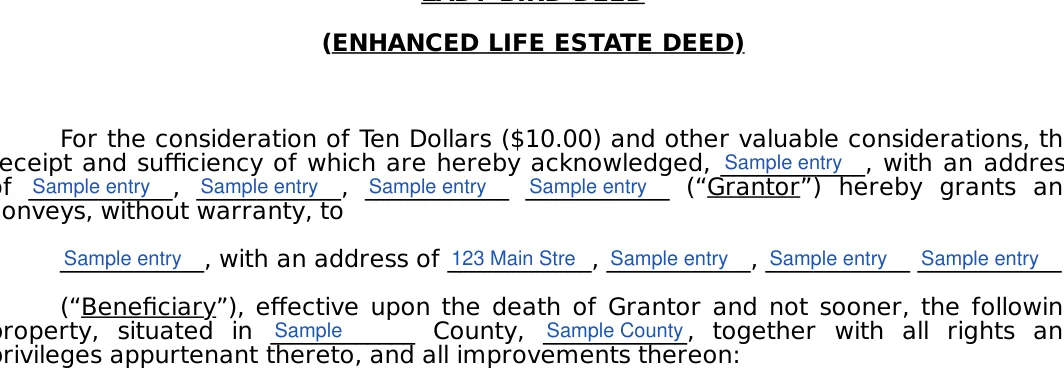
To fill out the Texas lady bird deed, complete the preparer and return details, the parcel number, the grantor and beneficiary information, the date, the signatures and the legal description. The filling-out process below follows the template's own order on pages 1 to 4. Download the PDF or Word file, then fill it in on screen with the FormsPal PDF editor or print it.
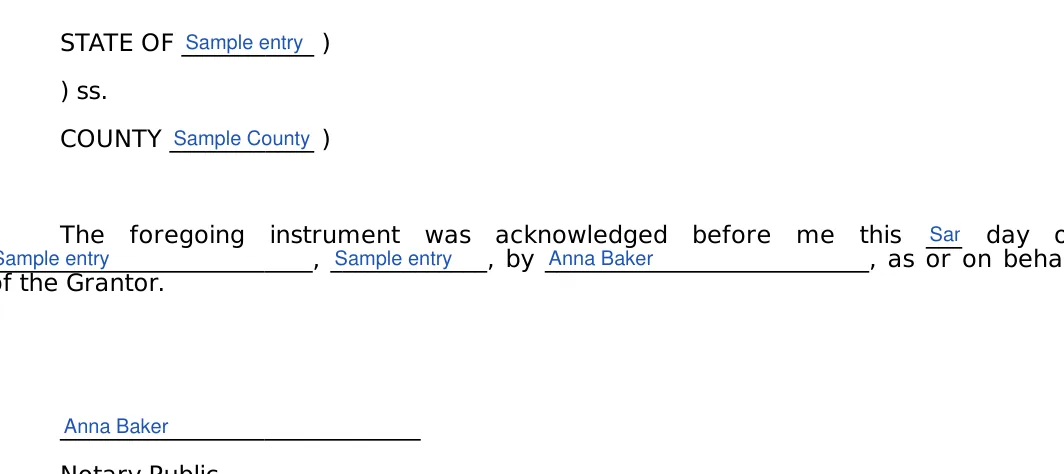
The screenshots under each step show the FormsPal Texas lady bird deed template filled with sample entries in blue, so you can see where each answer goes. The names, addresses, dates and amounts are examples only.







Yes. A conveyance of an estate of inheritance, a freehold, or an estate for more than one year in land must be in writing. The conveyor, or the conveyor's agent authorized in writing, must subscribe and deliver it.[2.2]
A transfer on death deed means a deed authorized under the Texas transfer on death deed chapter. It does not refer to any other deed that transfers an interest in real property on the death of an individual.[1.1]
No. That chapter does not affect any method of transferring real property otherwise permitted under the laws of Texas.[1.2]
Texas sets two conditions before a deed that conveys real property can be recorded:
Not unless it was acknowledged, sworn to, or proved and filed for record as the law requires. Without that, the deed is void as to a creditor or to a later purchaser who pays a valuable consideration without notice.[4]
No, not for property originally conveyed to the life tenant. A life tenant may retain that property as life tenancy property without being subject to the fiduciary duties of a trustee.[2.1]
General information, not legal or tax advice.
Unless noted otherwise, the sources below are from the Texas Family Code, published by the Texas Legislature Online.
