
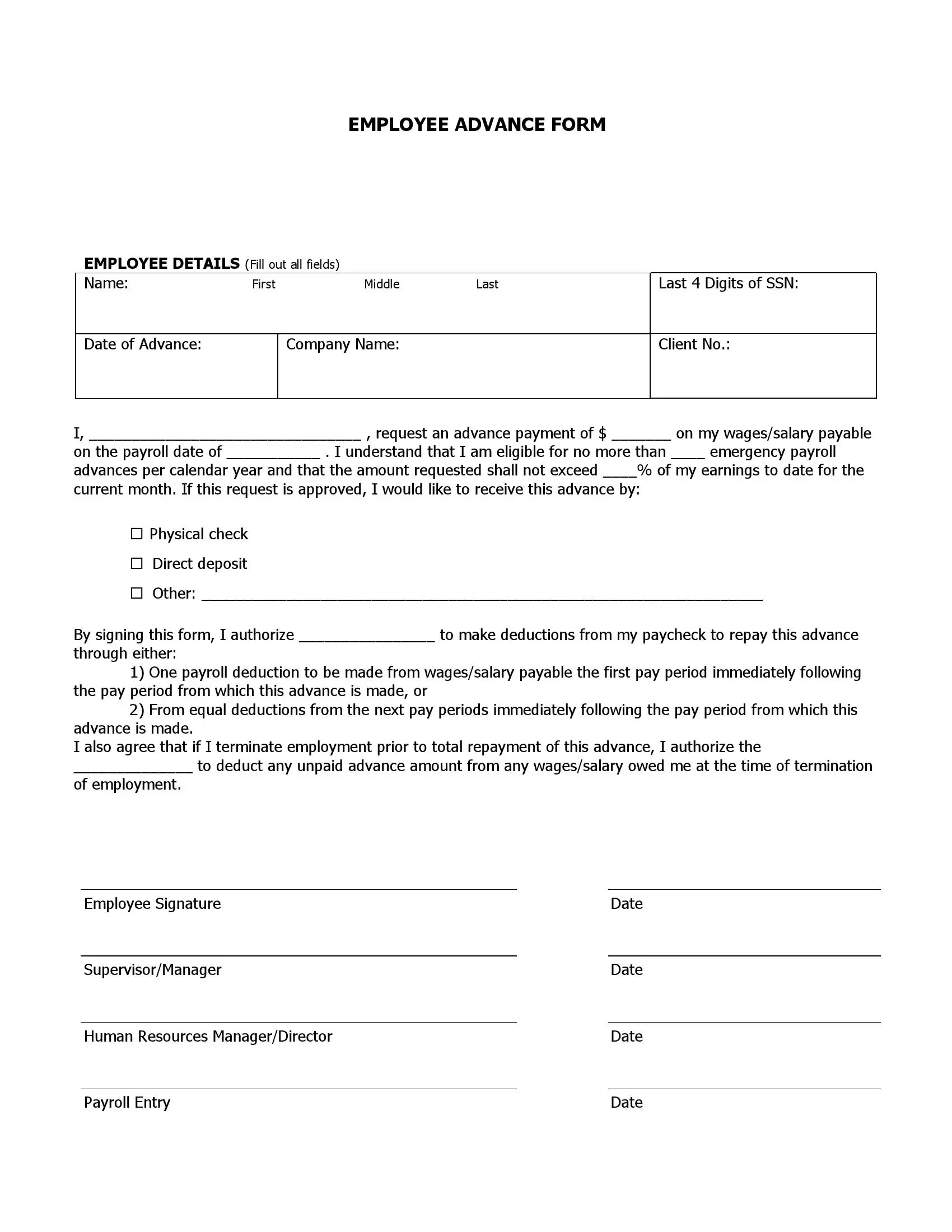
An employee advance form is a written request that an employee gives to an employer to receive part of their pay before the regular payroll date. It records your name, the amount of the payroll advance, the payment method, and how the money will be repaid through deductions from your wages.
Last Updated: October 2026. This guide is reviewed and updated regularly to reflect current law. If you notice an error or outdated information, please contact us.
An employee advance form turns a spoken conversation into a clear, written advance request. You fill it in, sign it, and give it to your supervisor, who reviews the request. The form outlines four essential points:
Many employees prefer getting a loan from their employer instead of going to a bank and asking for credit there. There are multiple reasons to do so: for instance, you do not have to pay any interest rates when getting an advance payment from your company.
Also, getting money from your employer is typically easier than getting it from a bank. This is especially true if you have worked there for a year or more and are seen as a trustworthy employee.
The advance form is a document that you complete and sign to make your request official and in writing. In it, you write your personal details, the sum you are asking for, and the payment method that suits you. Your application will then be reviewed and either approved or not. Employees keep a written record of the request, and employers get the information they need to decide.
Not all employees can request an advance whenever they like. Every employer sets its own rules and policy for the “employee-employer” relationship, including whether employees can ask for a loan at all. Use the form when your employer allows advances and you have a clear purpose for the funds, such as an unexpected expense.
For example, in some entities, you are allowed to request the advance money no more than twice per calendar year. Also, there are different loan types: some companies offer only temporary loans, while others provide permanent ones.
Before you ask for your first advance payment, read your employer’s norms and rules. If something is unclear, turn to the human resources department. Your coworkers there can explain how often you can ask for money, what the limit is on the amount, and the terms of repayment. The amount you may receive usually depends on your salary.
Before you move on to the guide on how to fill out the employee advance template, read a few practical tips related to the request. They help you decide whether to ask, who to talk to first, and how to keep your relationship with your employer in good shape.
Now that you know the tips, you are ready to prepare the document.
Download the template and fill it in with the FormsPal PDF editor. The steps below follow the five parts of the employee advance form in order. Each step outlines what to write, so you can complete every section with confidence.
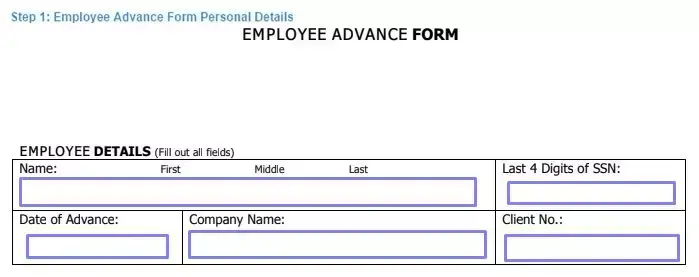
As an employee who seeks an advance payment, enter your personal details in the first part of the form. Add the following information to the template:
Below the chart with your personal info, you will see a statement with blank lines. This statement expresses your need for an advance payment, so fill it out with some details about yourself and the payment.
Line by line, write your full name again, the sum in US dollars, and the payroll date. Then indicate the number of emergency payroll advances you are eligible for during the current calendar year. Add the allowed percentage of your earnings that the sum should comply with.

Select the preferred payment method for the case that your company’s management approves your request. The form offers three options: a physical check, a direct deposit, or an “other” field where you can specify a method that is more convenient than the two above-mentioned options.

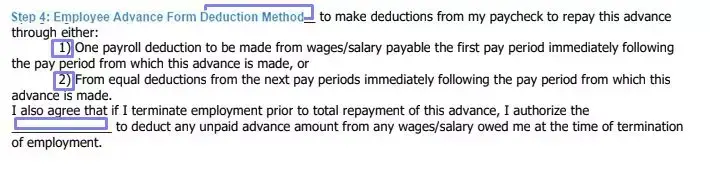
In the following part, you choose how the deductions from your wages will be made to repay the advance. There are two possible options, and you must pick one that fits you more. Write the name of the person you authorize to make deductions in the designated blank line.
Below, you will see another statement where you can also appoint a person who will be able to deduct unpaid advances from your wages if you somehow decide to quit the job.
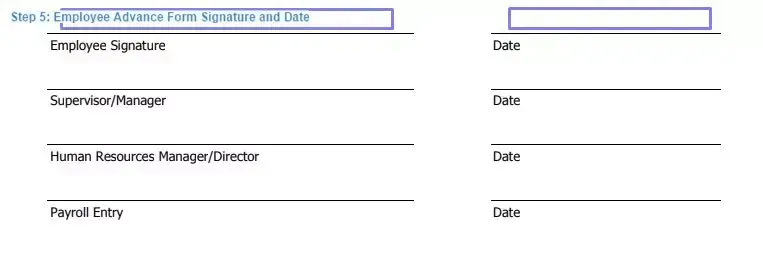
After all parts of the template are filled out, you can sign the document. Place your signature in the relevant line and insert the current date nearby.
When the form is signed, pass it to your supervisor. They will review your request and your document. If everything seems acceptable to them, they will sign and date the form together with the human resources manager, and you will then get the money you asked for.
A complete request is easier for your supervisor to review. The template has a line for each detail, so you can fill them in one by one. Include these essential details in your request:
The form lets you choose how deductions from your wages repay the advance, and you name the person who makes the deductions. Ask your human resources department about the repayment terms your employer uses before you send the request, and keep a note of those terms for your records.
Your supervisor reviews the signed form first. If everything looks acceptable, the supervisor signs and dates it together with the human resources manager. Each employer has its own process, so ask human resources if you are not sure who handles requests from employees.
The amount depends on your employer’s policy and usually on your salary. Check with human resources for the limit and any related terms before you fill in the sum, and ask only for the funds you actually need.
The form offers a physical check, a direct deposit, or an “other” field where you can name a different method. Pick the one that is most convenient for you and that your employer can use.
General information, not legal or tax advice.
