

A reference check form is a short questionnaire that a hiring manager sends to a candidate’s former employer, manager, or coworker. It confirms work history and asks how the candidate performed on the job. This fillable template keeps the answers in one document, so you can skip long phone calls. Fill it in online or print it.
Last Updated: October 2026. This guide is reviewed and updated regularly to reflect current law. If you notice an error or outdated information, please contact us.
A reference check is a step in the hiring process where the employer asks for details about the applicant’s past work. The answers come from people who worked with the applicant, such as a former director, supervisor, or coworker. A formal document lets the employer collect those answers in writing, without a phone call or a meeting.
Reference checks used to happen by phone or in person. Those conversations still help. A written form makes reference checks easier when the people involved are in different places, and it leaves both sides with a record.
The main purpose of the reference check is to reveal the professional characteristics of the new employee. A reference check form usually covers:
Ask the reference to back up each rating with a short example.
In short, a reference check form lets hiring teams and recruiters learn about a candidate’s achievements and character by reading one filled-in document.
The form also helps candidates. They do not need to travel to the company’s office, and they do not need to worry about making a nervous first impression.
A reference check works in one of two ways. Either the candidate asks a former supervisor to fill in the form, or the new employer sends the form to the former employer directly. Both routes end the same way, with a completed form in the hiring team’s hands.
In the past, a reference check meant a long phone call. The interviewer had to keep the conversation going and check the answers on the spot, which was inconvenient for both people. With a form, both sides can take their time. The applicant can send the form online, and the HR team can review it from anywhere.
The initial template of the form already has some common questions about the applicant’s characteristics. For example, “Were there any performance issues? Please explain” and “What are the candidate’s weak points?” You can change the questions to fit the role. The new employer can also ask the previous one about other qualities of the applicant.
If the candidate sends the request, the process looks like this:
In another situation, the potential employer should get consent from the candidate to contact their former employer to get the reference check. After that, the potential employer creates a list of questions to send to the former one and waits for a reply.
Employment verification is the process during which the future employer verifies the candidate’s working experience and achievements with a previous employer. A reference check goes one step further and asks the former employer for an opinion of the worker. Many employers know the first method better, so the two are easy to mix up.
The main distinction between the two approaches is that the reference check takes less time and effort to complete.
| Reference check | Employment verification | |
|---|---|---|
| What it confirms | Skills, character, and the former employer’s opinion | Job title, dates of work, and achievements |
| How it is done | A written form that the reference fills in | A phone call or a long testimonial |
| Effort for the former employer | Low | High |
| Best for | Judging how the candidate works with others | Checking the facts on a resume |
If you only need to confirm dates and job titles, the employment verification form is the better fit.
Reference checks are a modern way to evaluate candidates, and they have clear advantages for both sides of the hiring process. They save time, make the first meeting easier, and give the employer a fuller picture of the applicant.
Good questions make reference checks more useful. Skip any question that does not apply to the role. Ask about facts first, then about skills and teamwork, and finish with an open question. Here are sample questions you can add to the template or swap in for the ones it has.
A short checklist keeps your reference checks organized and helps you hire with confidence:
To fill the Reference Check document correctly, follow the steps below. The reference, usually a former supervisor or coworker, completes the form. Open the template in the FormsPal PDF editor to fill it in on your screen, or print it and fill it in by hand.
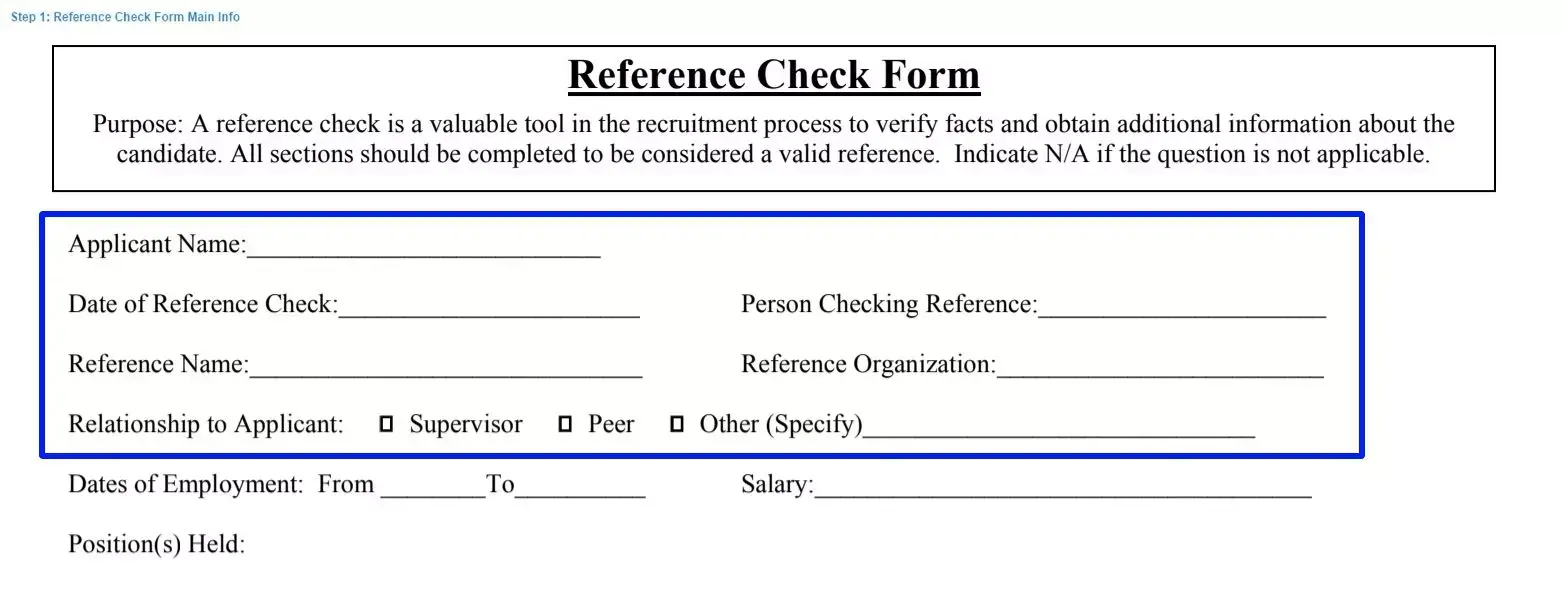
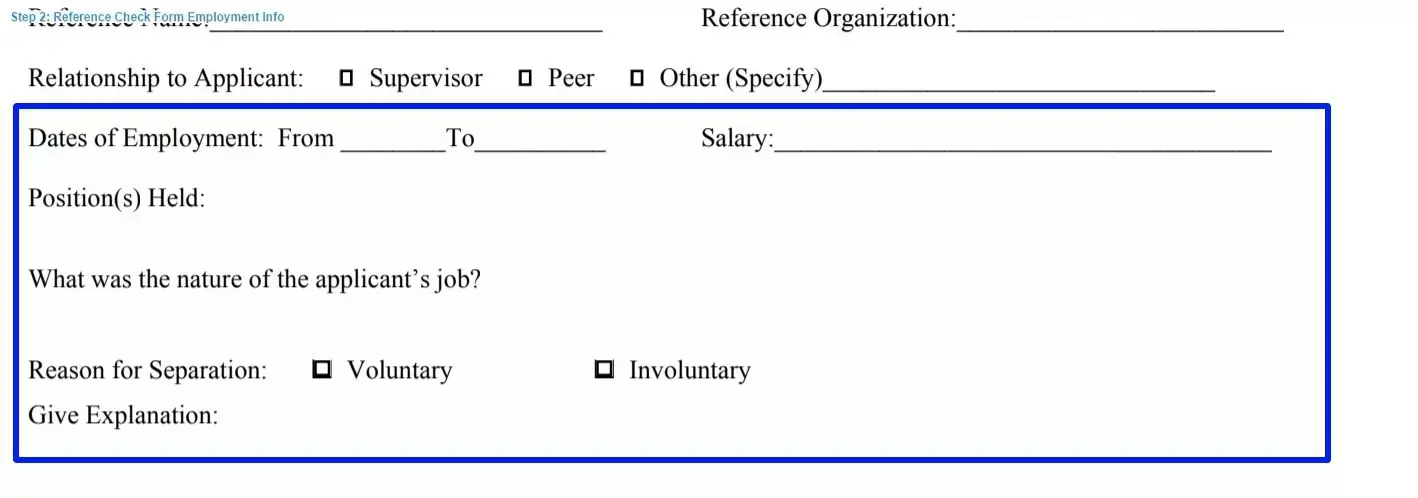
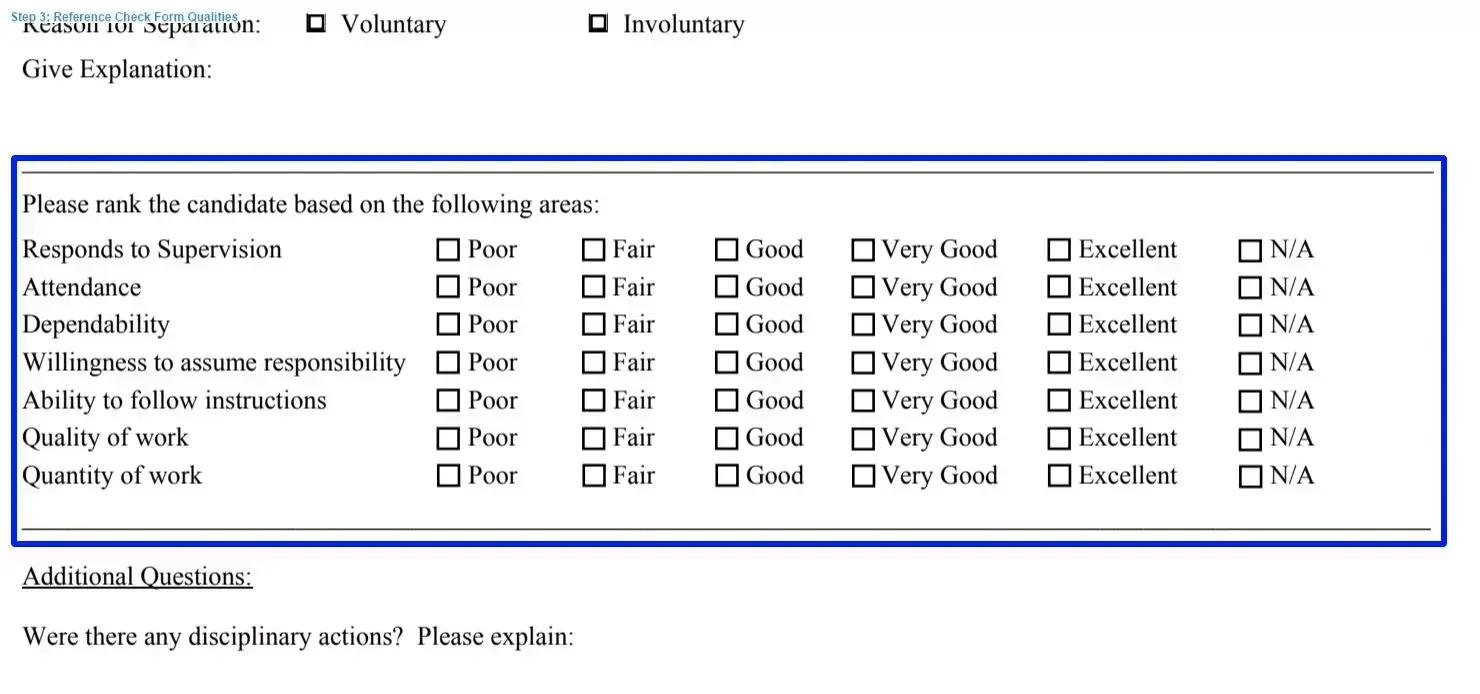
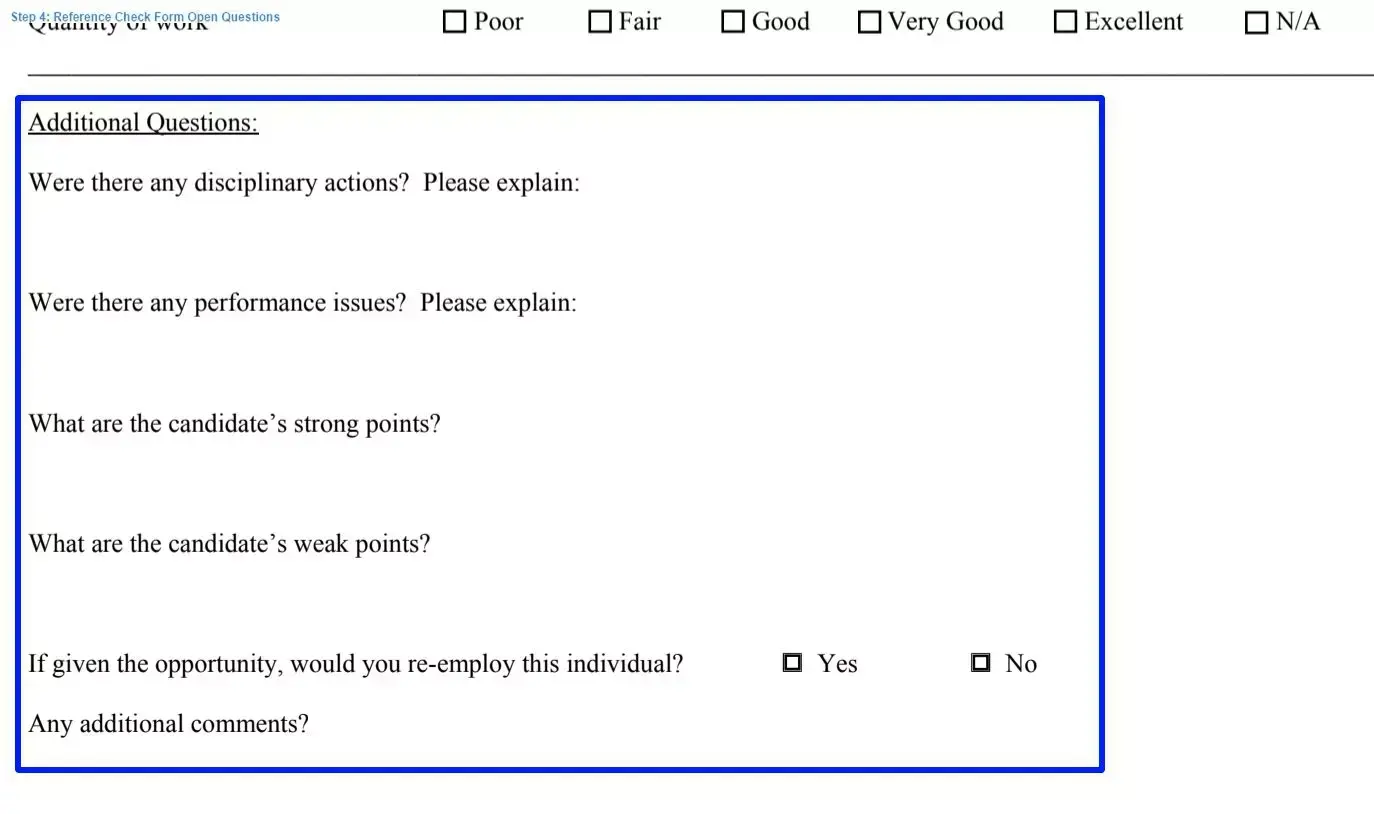
A former supervisor, director, or coworker of the applicant fills it out. The applicant can ask this person directly, or the new employer can send the form. The reference rates the applicant’s qualities and answers the open questions.
Yes. The template has common questions, such as performance issues and weak points, and you can edit them. You can also change the characteristics in the ratings table so they match the job you are hiring for.
A verification check confirms facts such as the job title and the dates of work. A reference check also asks for the former employer’s opinion of the candidate’s skills and character. It takes less time to complete than a long call or testimonial.
Go through the completed form in a few simple steps:
Yes. Open the fillable template, type your answers into the fields, and save the file. You can also print the form and fill it in by hand.
General information, not legal or tax advice.
