
Letter of Intent for Promotion

A letter of intent for promotion is a document that an employee sends to the top management of the company to say they want to take a higher position there. By using this letter, a person shows that they are ready to take more responsibilities, which should consequently increase their salary or wages. Some promotions are offered on the employer’s initiative, but sending a formal request still increases the chances of being considered a good fit for the new position.

Last Updated: October 2026. This guide is reviewed and updated regularly to reflect current law. If you notice an error or outdated information, please contact us.
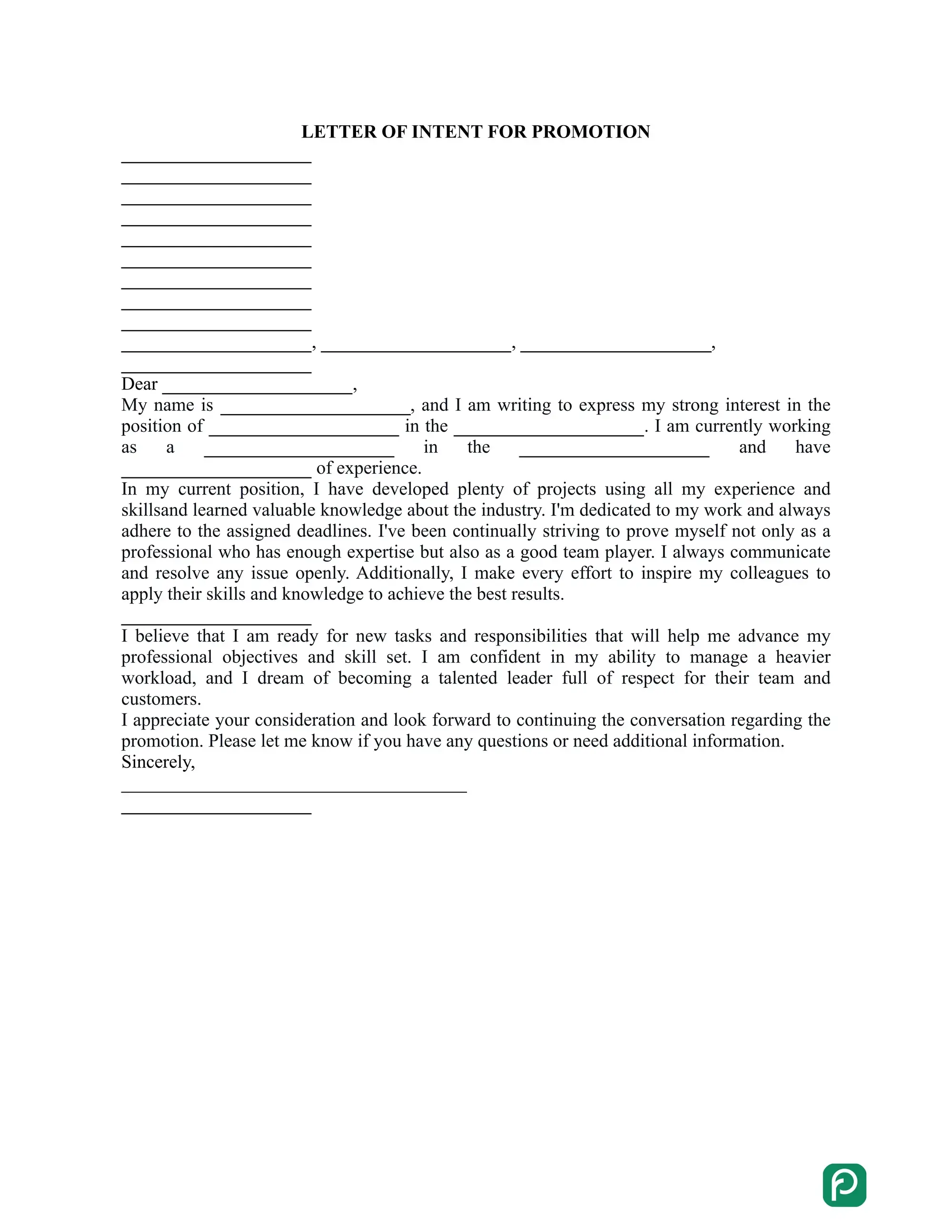
Letter of intent for promotion preview

Create a Personalized Letter of Intent for Promotion Form online in under 5 minutes!

Build Your Document

Answer a few simple questions to make your document in minutes

Save and Print

Save progress and finish on any device, download and print anytime

Sign and Use

Your valid, lawyer-approved document is ready

Asking for Promotion: Three Essential Steps

It is important to send a request for promotion in a respectful manner to increase the chances of being considered as a perfect candidate for the position. Some tips will help you with that:

  1. Evaluate your worth in the market. Some online resources will help you see what average salary or wages a person with your qualifications and training in your area might expect. It will help you understand what values you might have in the eyes of your employer and give you an idea of whether or not your promotion pursuits are reasonable.
  2. Choose the right timing. Wait until an opening exists at your organization to apply for it. Also make sure that you have worked a significant amount of time at the organization. Connections with your colleagues also matter. Another thing that might help you achieve success is sending a request in advance of your soon-to-be work anniversary or performance evaluation.
  3. Write a letter of intent. The letter should clearly state what job you are requesting. Even if you think that your management already knows your work record and significant achievements, you should still elaborate on that in the LOI.

After you write your letter of intent, wait until your employer sets up a meeting to discuss your career opportunities, and keep in mind that a thoughtful request takes time to review. If you don’t get a response for several days after you deliver it, get in touch with your employer. Make sure they got your request and are ready to discuss it in person.

What Should You Include in a Promotion Letter?

A strong letter of intent is short, specific, and easy to scan, because it tells your manager who you are, which job you want, and why you are ready for it. Put the most important facts near the top of the page. Include these items:

  • Your current job title, your team, and how long you have held your current job
  • The exact position you want, and the department it belongs to if you know it
  • Two or three results with numbers, such as sales growth or hours saved
  • Skills and training that prepare you for the new responsibilities
  • How you plan to contribute to the goals of the business in the new role
  • Your contact details and a polite request for a meeting

Keep the tone professional and positive, and focus on what you can add to the team instead of what you feel you are owed.

A letter of intent for a job has some similarities with a cover letter, but it is intended to let an applicant get an internal job which should be available at the time of crafting the letter. Like a cover letter, a LOI will summarize an applicant’s job qualifications, detailed description of career achievements, and career prospects for the future.

How to Fill Out a Letter of Intent

This kind of letter is a short document written in a formal yet friendly style. Aim for one page and keep a signed copy for your records, then follow these five steps to fill it out properly.

  1. Information about the employee and effective date. In the top left corner of the letter, write down your name, address, and contact information such as phone number and email. After that, include an effective date of the letter.
  2. Information about the hiring manager. Next, beneath information about you, include the information about the recipient, typically the hiring manager of the company. Write their name, company name, and address.
  3. Opening. Start with the greeting. Write the purpose of your letter: who you are in the company and what position you intend to apply for. Then, elaborate on your achievements and qualifications. It would be great to include any numbers that the company achieved with your help. At the end of the opening paragraph, write a sentence that would support what you have said before.
  4. Main body. The purpose of the main body is to tell your reasons for pursuing a new position. Tell how your old role prepared you for a new position. Explain how promotion would help you reach your career goals. As a final argument, write how you could bring additional value to your employer by getting a new role.
  5. Closing. At the end of the letter, show your gratitude for consideration of your letter of intent. Express your interest in the role and your commitment to the team, and say that the person in charge may call you at the contact number you gave. Try to end the letter on a positive note. Include an appropriate closing statement and put your signature.

Before you send the letter, read it once more and check that names, titles, and dates are correct and that the contact details match your current ones.

Tips for a Convincing Promotion Request

A promotion request works best when it is easy to read and easy to say yes to. These tips help you present your experience clearly, show commitment to the team, and make the next step obvious for the person who reads your letter.

  1. Lead with results. Describe what changed because of your work, using numbers such as customers served, revenue added, or time saved on a project.
  2. Match the opening. Pick the skills and background that fit the new job, and leave out details that do not support your request.
  3. Connect your goals to the business. Explain how your growth in the new role helps the team and the organization, not only yourself.
  4. Keep a confident, courteous tone. Show interest in the role and thank the reader, and avoid pressure or complaints about your current duties.
  5. Ask for a conversation. Close by offering to discuss your qualifications and suggest a convenient time to meet.
  6. Ask someone to review it. A trusted colleague or mentor can catch typos and point out unclear sentences before you send the letter.

Sample Letter of Intent

The sample below shows how a finished letter can look. It uses made-up names and details, so replace them with your own information. Notice how the first paragraph names the role and each later paragraph adds one clear point.

To: Terry Nord
Director of Sales Department
Global Leadership Group
Texas

April 4, 2021

From: Mila Ontario
8058 East Clinton Drive
Mesquite, TX 75149
Email: mila.o@gmail.com
Phone number: +12456634481

Dear Mr. Nord,

I have come to know about the Sales Manager position in the Global Leadership Group that has opened recently. Therefore, I am writing this letter to apply for the post.

I am currently working at Global Leadership Group as a Sales Representative. I have three years of experience, during which I was responsible for handling the customers, opening new accounts, increasing customer retention rates, and much more.

Within these three years, I came up with several methods to improve the sales team’s performance. In addition to that, I took several employee training sessions on effective sales that allowed me to enhance my performance rates. It helped me win two awards for the best employee of the year.

I look forward to hearing from you and the opportunity to discuss my qualifications and interest in this position. Please contact me at your earliest convenience at the email or phone number mentioned at the top of this letter. Thank you for your consideration.

Sincerely,
Mila Ontario

This sample works for a few reasons:

  • It names the open position in the first paragraph.
  • It backs up the request with three years of experience and two awards.
  • It lists what the writer did, such as handling customers and improving sales team performance.
  • It ends with a polite request to talk and clear contact details.

How to Send Your Letter and Follow Up

Once the letter is ready, choose a delivery method that suits your workplace and keep a record of when you sent it. A clear follow-up plan demonstrates professionalism and genuine commitment to the role, without placing unnecessary pressure on your manager or the rest of the team.

  • Send it by email with a short subject line, such as a request for consideration for the Sales Manager position.
  • Hand over a printed copy in person if that is how your team usually shares documents, and keep a signed copy for your files.
  • Mention the letter at your next one-on-one meeting if you already have one scheduled, so the conversation can start naturally.
  • Wait a few days, then send a brief and friendly message to check that your request arrived safely.
  • Prepare two or three talking points for the meeting, such as your key skills, your results, and how you want to contribute to the goals of the new role.
  • Download a copy of the finished letter for your own records, so you can refer back to it during later discussions about your professional development.

Thank your manager for their time after the discussion, and keep the tone positive whatever the outcome. Treating the whole process as a conversation about your professional growth helps both sides understand what happens next.

Frequently Asked Questions

Writers usually have a few practical questions before they send a promotion request, such as when to send it and who should receive it. These short answers cover the basics before you begin drafting your own letter.

What is a letter of intent for promotion?

It is a formal letter that tells senior management you want a higher role and explains why you are ready for it. It lists your experience, achievements, and goals, and it asks for a meeting to talk about next steps.

When is the best time to send it?

Send it after a position opens in your company and you have worked there long enough to show results. Some people choose the weeks before a work anniversary or performance evaluation, because the employer is already thinking about their progress.

How long should the letter be?

One page is enough for most requests. Use short paragraphs, name the role you want, and keep only the achievements that match it.

Who should I address the letter to?

Address it to a named person, typically the hiring manager or the head of the department with the open position. If you are unsure, ask a colleague for the right name.

How is it different from a cover letter?

A cover letter usually goes with a resume to apply for a job. A promotion letter is sent from inside the company, so it can focus on your record there and on the next role you want.

Can I create my letter online?

Yes. Select Create My Document at the top of this page and answer a few questions to build your letter. Then download and print it, or compare it with the sample letter above to see how a finished letter can look.

What Should a Person Pursuing a Promotion Not Do?

There are certain things that will make your promotion much less likely to happen. Most of them come down to timing, tone, and the way you compare yourself with others. Check this list before you send your letter. These are:

  • Asking for a higher salary by using the pay of other colleagues as an example
  • Sending a request when a company has faced a serious crisis
  • Showing excessive emotions in a letter of intent or during a face-to-face meeting with the employer
  • Using the fact that you are a friend or relative of someone in the company as an argument for the promotion
  • Waiting for the employer’s initiative and not sending a letter of intent at all

If you spot one of these in your draft, rewrite that part before you send it, and stay with facts about your own work and results.

General information, not legal or tax advice.

Jennifer M. Settles
Jennifer M. Settles
Author & Attorney
With over 25 years of experience as a business and transactional attorney, Jennifer has mastered the craft of closing highly successful deals for her clients. Through her wide-ranging expertise in commercial contracts, real estate transactions, M&A and corporate law, Jennifer secures results that are second-to-none.
Published: May 13, 2022