
Updated:
An employee loan agreement template is a ready-made contract for a company that lends money to one of its employees. It records the loan amount, the interest, the repayment schedule and what happens if the employee leaves. Download the free template below or create your own online in a few minutes.

Build Your Document
Answer a few simple questions to make your document in minutes
Save and Print
Save progress and finish on any device, download and print anytime
Sign and Use
Your valid, lawyer-approved document is ready

An employee loan agreement is a contract to use when a company lends money to one of its employees. Employees may borrow money from a company if they need money for a large life expense like school tuition or buying a home.
They may also ask for a loan when they need money for emergencies such as for rent, car payments, or medical expenses. Regardless of the reason why an employee may borrow the money, they will be expected to pay back the loan with interest over a specified period of time.
An employee loan agreement can be used when an employee is borrowing money for any expense, whether it be large or small. If the employee is expected to pay back interest or pay certain monthly payments, there should also be an agreement for this. Use this type of loan agreement template any time an employee is borrowing money from their employer.
Like with any loan or financial lending, there are some pros and cons for both parties. Both are taking a risk when borrowing or lending money. Think about how the loan will affect your working relationship before you agree to it.
One of the main benefits is that loaning an employee money helps you get to know that person better and will aid in forming better relationships with the employees. It helps you see them as real people and know their struggles.
It will also promote the company’s image. A company that is known for helping its employees and willing to be there when they are in need adds to the company’s reputation.
An employee who is experiencing financial burdens may be more likely to be distracted at work or feel overwhelmed. Both of these will hinder their work performance. Loaning money to help them get over the financial hurdle can increase their productivity.
There are risks to weigh as well.
Similar to the employer, the employee will have a better connection and relationship to their corporate office when borrowing money. They may also get to know their boss better and form closer relationships. The company lending money to them may also make them feel more confident and prouder about where they work. This can enhance their work productivity and reputation.
Taking away their financial burden can also make them feel better about going to work and give them a safe space to grow and flourish. It can also make them promote the company image to other people.
If they are unable to pay the money back, they may begin to feel embarrassed about talking to someone about it or may stop showing up to work. They might also feel like they are forced to quit and default on the loan. They will then lose their job and have a negative impact on their finances and credit score.
There are several steps you can take to begin loaning money to an employee. Some very important items need to be included in the employee loan agreement for it to be recorded correctly.
This will help the employer to know how much money is needed and what negotiations might need to be made. It will also help them to know what to include in the agreement and the financial struggles of the employee.
Some companies may already have policies in place that inform employees about what kind of loans they qualify for and the maximum amount of money they are entitled to. It should also cover the rules and process for applying for the loan and receiving the funds.
Most interest rates for loans above $10,000 are entitled to be charged the applicable federal rate (AFR). The company may need to do some research on the IRS website or discuss with their financial consultant what this number might be.
This is when you begin using the template and fill it in with the information that was discussed with the employee and other company members. Having a template allows the company to fill out the fields easier and will take less time each time there is a new borrower. Every loan agreement should have:
The employee and employer should both keep a record of the loan agreement on file. It should be kept in a secure place and be with the company’s books. If the loan will be paid back within a year, it is usually filed with the current assets. If it will take longer than a year to pay back, it will be considered a long-term asset.
Download the form from this page and fill it in with the FormsPal PDF editor, or print it and write by hand. These steps follow the Employee Loan Agreement template you can download here, in the order the form asks for each entry. Gather the names, the loan amount, the repayment plan and any other details before you start.
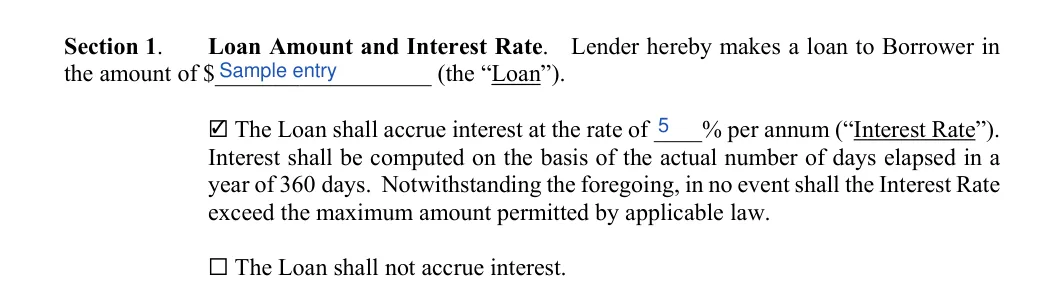
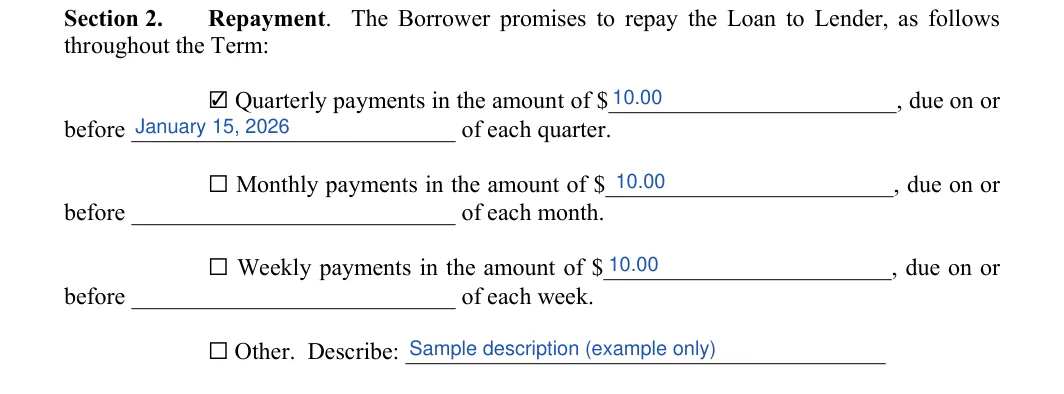
The screenshots under each step show the FormsPal Employee Loan Agreement template filled with sample entries in blue, so you can see where each answer goes. The names, addresses, dates and amounts are examples only.




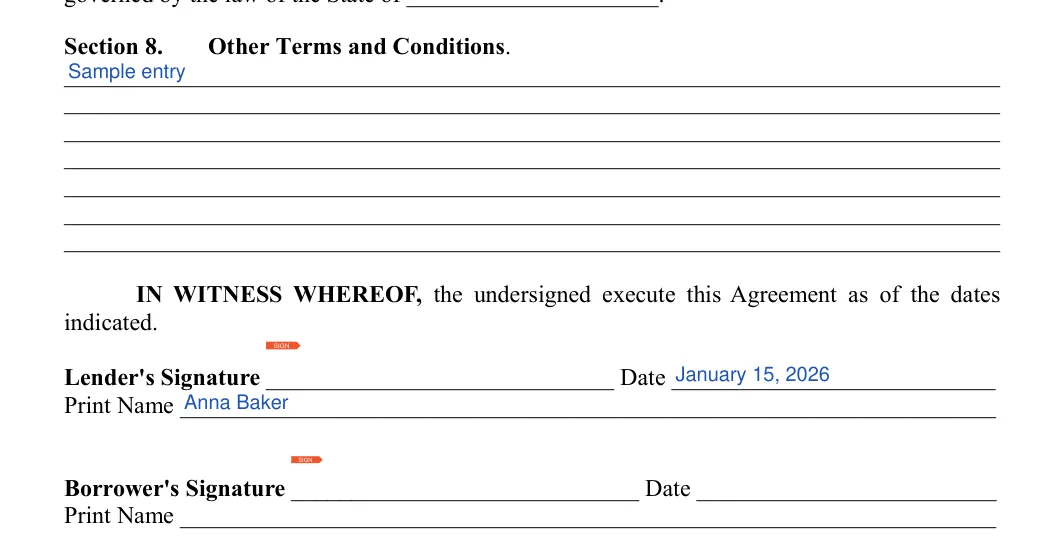
Once the entries are complete, signing is the last step. Go through the steps below in order, with the other side present if you can, so every question is settled before anyone signs.
The template has blanks and choices for the points below, and it ends with signature lines for both the Lender and the Borrower. The fill-out steps above walk through each blank.
Yes. Press the Create My Document button to answer a few questions and fill in the employee loan agreement template online, or download the form and complete it on your computer. You can print it and write by hand as well.
The template gives you two choices in Section 1. Tick the first box and enter a yearly interest rate, or tick the second box if the loan should not accrue interest.
Section 2 offers quarterly, monthly or weekly payments, and each one has room for the payment amount and a due date. There is also an Other option where you describe a different plan.
The template includes a section on the end of employment and one on default. Employers and employees should read both before signing, so each side knows how the loan is handled if the job ends.
General information, not legal or tax advice.
