
A personal guarantee is a written agreement in which one person promises to repay another person's loan if the borrower cannot. Use this free personal guarantee template to create the form online or to download it as a fillable PDF.
Last Updated: October 2026. This guide is reviewed and updated regularly to reflect current law. If you notice an error or outdated information, please contact us.
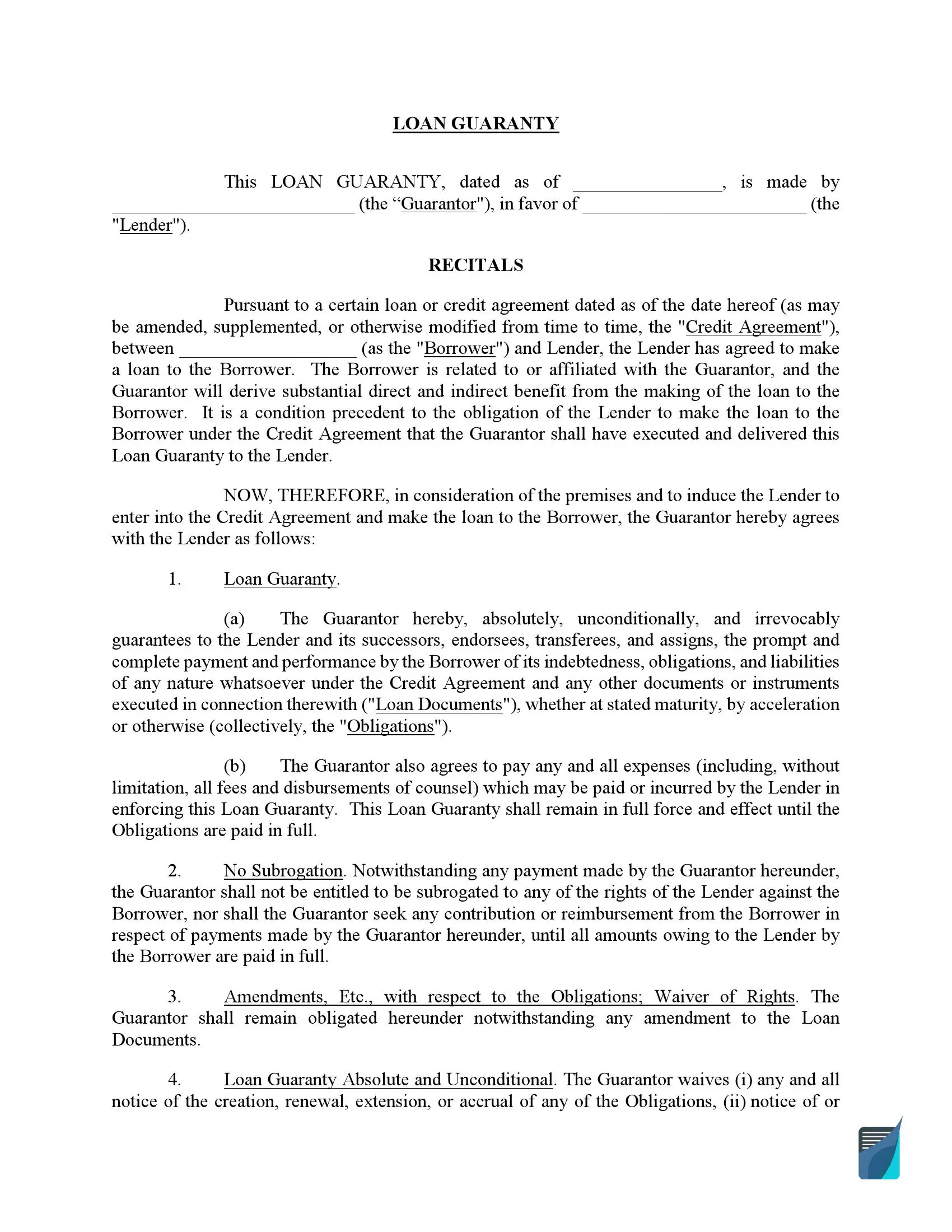
Build Your Document
Answer a few simple questions to make your document in minutes
Save and Print
Save progress and finish on any device, download and print anytime
Sign and Use
Your valid, lawyer-approved document is ready

This loan agreement template allows a person to take responsibility for a loan in the case that the original borrower stops making payments or can’t pay back the loan. Getting a personal loan is usually much easier when there is a guarantor because the lender may feel more confident in lending money knowing there are two people that can get their money back from.
Three people take part in a loan personal guarantee:
If you need a guarantor for a loan or have been asked to be a guarantor for a loan, you might want to know exactly what it is and what you are required to do. Using an agreement template can help you know the risks and procedures for loan guarantees.
Sometimes certain lenders or loan amounts may require a guarantor. In this case, the lender might not fully trust the borrower to pay the money back and they want to make sure there is a backup plan in case the borrower begins to default on the loan.
The personal guarantor is held responsible for paying the loan or a percentage of the loan back to the lending company. If you are being asked to be a personal guarantor for someone, ensure that you trust them and you are willing to cover them if they need it.
Remember that a lender can also take the guarantor’s assets as collateral or resell them for money if the guarantor doesn’t begin to make payments within a specified time. If the guarantor and borrower have a personal relationship, they might also be in charge of following up with the borrower and trying to get some of the money for the lender.
Overall, a loan personal guarantee can be a big responsibility depending on the individual or the company.
Anna Baker asks a bank for a loan to open a bakery. The bank would like a second person to back the loan, so Anna's friend Ben Carter agrees to act as guarantor. Ben reads the loan agreement first, asks the bank how the loan terms work, and keeps a copy of everything he signs.
There are a few types of personal guarantees. The first one is a limited guarantee. This allows creditors to collect a definite monetary amount or a certain percentage of the principal’s remaining balance. This is usually used if several different people will pay back parts of the loan or debt for the borrower.
An unlimited guarantee gives the principal full liability for the full remaining balance of the loan. In this case, if a borrower or business is not able to make their payments and commitments to their loan, the lender is entitled to get the full remaining balance.
Personal guarantees are more common for certain types of companies or individuals. Sometimes you might also need a personal guarantee just because the loan company asks you for one. Always make sure you know why the company is asking for a personal guarantee.
If you have been asked to be a guarantor, remember that all your personal information will be given to the other person or company. Make sure that they are reputable and you are comfortable giving your information out.
Before you agree to back a loan, ask the lender:
Trading companies often need personal guarantees because they do business with so many different organizations. They also do various business transactions. They use a personal guarantee document to ensure that they comply with all the terms and conditions put into the agreement. The entity that signs the document is in charge of ensuring that they comply with all the stipulations laid out in the agreement.
Many insurance providers will ask for a personal guarantee so that the applicant’s payments will still be received if they do not retain insurance coverage. Some insurance providers will even ask for several personal guarantees.
In this case, the personal guarantee will serve as a witness that the person being hired is of good character and their employment application is correct. The guarantor may also verify the person’s strengths and weaknesses and attest to how they worked in their previous company. It’s simple to verify the applicant’s claims and background.
This is used for people who are renting out property and who want to ensure they will get their rent money. A personal guarantor will have to pay any dues or rent payments that are late or not paid for. The form will give all the personal information to the landlord so they can contact the guarantor in case there is a problem with payment or past due fees.
A loan personal guarantee has some basic components that need to be completed to ensure that the agreement is complete and can be used lawfully. Make sure you read all the components first before you sign anything and ensure that you agree with all the terms and conditions that are being set forth.
Before you hand over the finished form, check these points:
All the personal loan details need to be laid out clearly. This includes the total loan amount balance, the state in which the loan was given, the interest amount, and any other important details. The state needs to be included because each state has different lending standards.
Here all of the personal details of the lender need to be included. These are the full name, phone number, email address, and mailing address.
Like the lender, all the borrower details need to be written in the template. They need to include the full name, mailing address, phone number, and email address.
In the personal loan guarantee template, the guarantor’s details need to be included as well so that the lender or company can contact them if they need to receive payment or have other financial issues with the borrower. You will need to include the full name, phone number, email address, and mailing address.
This will be the date that the template is being written or the day that the agreement is taking place.
Each personal loan guarantee form will need several signatures to make it valid. It will need the borrower’s signature, the lender’s signature, and the guarantor’s signature.
The steps below follow the FormsPal template, from the date at the top of the form to the lender's signature block on the last page. Have the names of everyone involved ready before you start.
The screenshots under each step show the FormsPal Personal Guarantee template filled with sample entries in blue, so you can see where each answer goes. The names, addresses, dates and amounts are examples only.



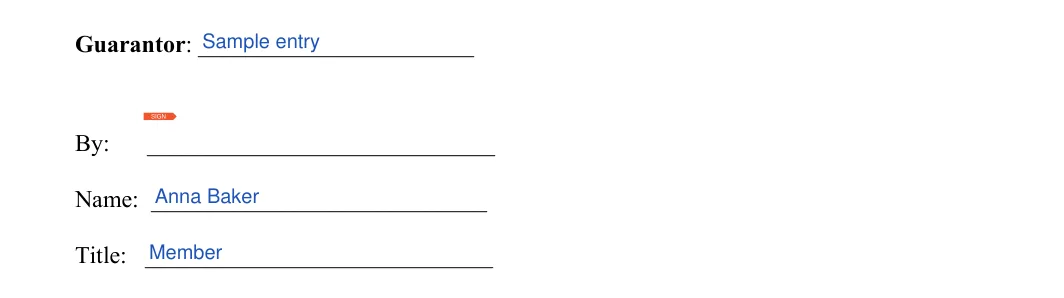
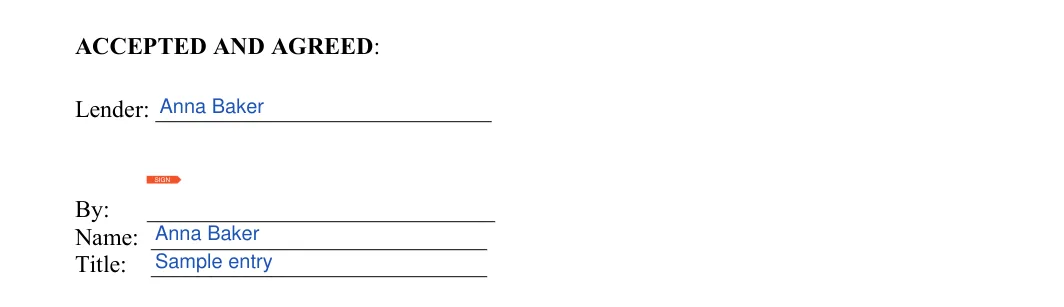
Once the template is filled in, the last steps are signing and storing it. Print the finished form, gather the people who sign, and go through the steps below in order. Keep the signed pages together in one place.
It is a signed agreement in which one person promises to cover a borrower's loan if the borrower cannot pay it. The form puts that promise in writing in favor of the lender, so everyone can see who agreed to what.
The borrower receives the loan and repays it. The guarantor is the person who promises to cover the loan if the borrower cannot. Both names appear in the loan paperwork, so the lender knows who agreed to what and how to reach each person.
Yes. Use the button at the top of the page to create your form, answer a few simple questions about the loan terms and the people involved, then save or print the result. You can also download the PDF and fill it in with the FormsPal PDF editor.
Keep the loan paperwork next to you so it is easy to match each entry. Have these items ready:
Read it slowly from start to finish and write down your questions for the lender. If the draft is a PDF, you can ask questions about the PDF to understand the agreement first.
Keep the signed pages together with the loan agreement and any information the lender gave you. A paper copy in a safe place and a scan on your device make it easy to find the financial paperwork later.
The template runs three pages and has 13 fillable fields. They cover the date, the parties, the state, and the signature blocks on the last page.
General information, not legal or tax advice.
