
Agreement Vacate Premises Form PDF Details

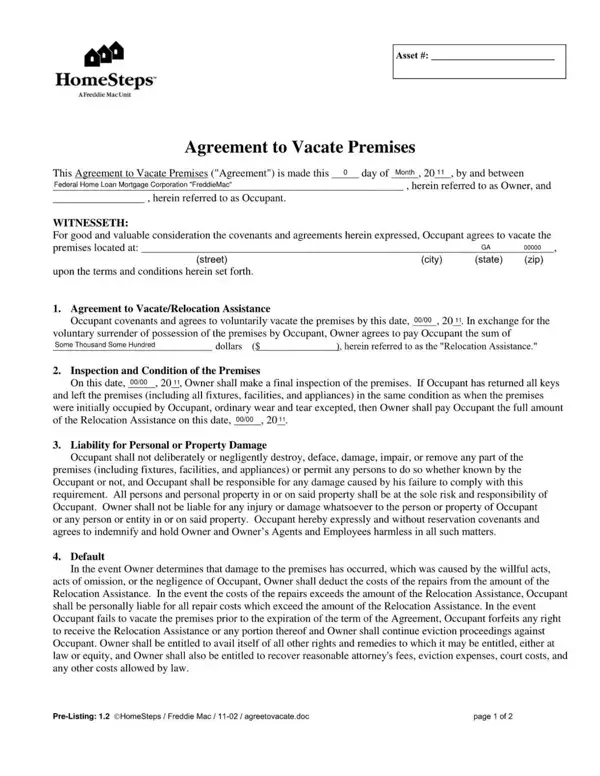
The Agreement to Vacate Premises form is a legal document that both landlords and tenants sign to record the terms for ending a tenancy. It covers the agreed move-out date, the condition the property must be left in, outstanding rent obligations, utility transfers, and any arrangements regarding the security deposit or damage deductions. By putting these terms in writing, both parties have a clear record that helps prevent disputes at the end of the tenancy.

This form is different from a standard eviction notice. A landlord files an eviction notice when a tenant refuses to comply with lease terms or leave voluntarily. The agreement to vacate is a voluntary document, signed when both parties mutually agree on the move-out terms. If a tenant needs to vacate within a shorter window, a 3-day notice to vacate may apply. For planned transitions, a 60-day notice to vacate gives both parties more time to prepare. Tenants who prefer a letter format can start with a letter of intent to vacate.

Completing the agreement correctly protects both parties. It provides a written record of what was agreed upon, which can be referenced if either party contests the move-out terms later. For tenants dealing with lease breaks, reviewing an early lease termination letter can clarify rights and obligations before signing any vacate agreement.

QuestionAnswer
Form NameAgreement Vacate Premises Form
Form Length1 pages
Fillable?Yes
Fillable fields19
Avg. time to fill out4 min 3 sec
Other namesmove out agreement template, move out contract, move out agreement letter, tenant agrees to vacate

How to Edit Agreement Vacate Premises Form Online for Free

Use FormsPal's online editor to fill out the Agreement to Vacate Premises form in minutes. No software installation is needed. Follow the steps below to complete the form accurately and ensure both parties have a clear, signed record of the move-out terms.

Steps to fill out the agreement to vacate premises form

  1. Enter the agreement date. Write the date on which both parties are signing the document.
  2. Identify the landlord and tenant. Include the full legal names of both parties and the address of the rental property.
  3. Set the move-out date. Specify the exact date by which the tenant agrees to fully vacate the property.
  4. Describe property condition requirements. Note any cleaning, repair, or restoration obligations the tenant must meet before leaving.
  5. Address financial responsibilities. Outline outstanding rent, utility balances, or damage amounts to be deducted from the security deposit.
  6. Sign and date the form. Both the landlord and tenant must sign the completed document to make it legally binding.

What the agreement to vacate premises form covers

The form includes sections for the move-out date, property condition requirements, rent and deposit terms, and utility arrangements. It acts as a mutual release, confirming that both parties agree to end the tenancy on the stated terms. For longer notice windows, a 60-day notice to vacate form can be used alongside this agreement to document the full process.

What is an agreement to vacate premises?

An agreement to vacate premises is a written document signed by both the landlord and the tenant that records the terms under which the tenant will leave a rental property. It prevents disputes by making the agreed conditions legally clear and documented.

Is the agreement to vacate the same as an eviction notice?

No. An eviction notice is a formal legal notice issued by a landlord when a tenant fails to comply with lease terms or pay rent. The agreement to vacate is a voluntary, mutual document signed by both parties when they agree to end the tenancy on specific terms.

When should both parties sign the agreement to vacate?

Both parties should sign as soon as they reach an agreement on the move-out date and conditions. Signing early gives the landlord and tenant enough time to meet their obligations before the vacate date arrives.

Can a tenant negotiate the terms of the agreement?

Yes. Before signing, a tenant can negotiate terms such as the move-out date, the return of the security deposit, or how repair costs will be handled. Any agreed changes should be included in the document before both parties sign.