
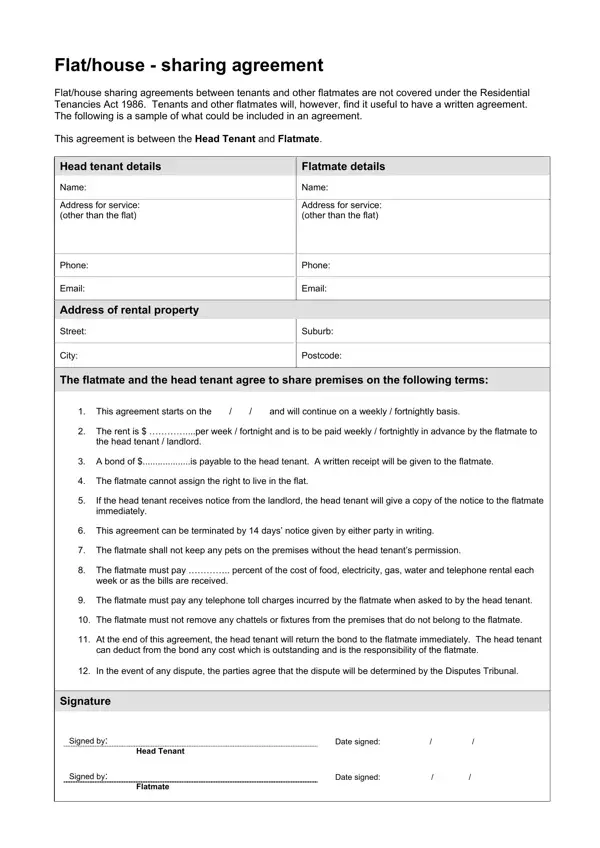
Living in a shared housing arrangement can provide financial benefits and camaraderie but also presents unique challenges that require clear communication and understanding among all parties involved. To navigate these potential challenges, having a house-sharing agreement is instrumental. This document details the relationship between tenants and their flatmates, who, while not covered under the Residential Tenancies Act 1986, stand to benefit significantly from such a written agreement. A typical agreement outlines the roles of the head tenant and flatmate, including personal details, the rental property's address, and the terms of the shared living arrangement. These terms usually cover the agreement's start date, rent amount and payment schedule, bond details, rights concerning subletting, and the procedures for receiving notices from the landlord, termination of the agreement, pet ownership, and sharing of expenses such as food and utilities. Furthermore, it stipulates how disputes will be resolved and the conditions under which the bond will be returned at the agreement's end. By clearly laying out these terms, a house-sharing agreement helps prevent misunderstandings and provides a solid foundation for a peaceful cohabitation experience.
| Question | Answer |
|---|---|
| Form Name | House Sharing Agreement Form |
| Form Length | 1 pages |
| Fillable? | No |
| Fillable fields | 0 |
| Avg. time to fill out | 15 sec |
| Other names | shared vacation home agreement, downloadable house share agreement, flat house sharing, flat agreement online |
House Sharing Agreement Form isn’t the one you’re looking for?