Please rate Arrl Radiogram

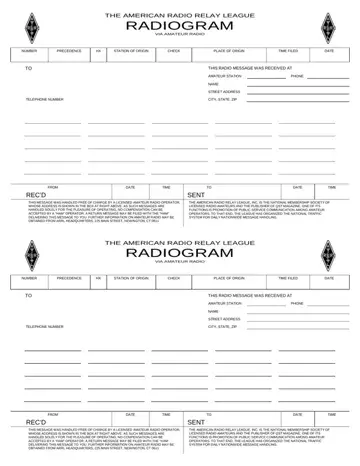
The ARRL Radiogram is the official message format of the National Traffic System, a coast-to-coast relay network maintained by licensed amateur radio operators. This standardized form makes it possible for a message to travel from one end of the country to the other through a chain of relay stations, with each operator recording the incoming message and passing it on to the next net.
Every radiogram follows the same message format, which has four main parts:
The precedence field in the preamble tells operators how urgently the message should be handled. The four precedence levels are:
Handling instructions are optional codes placed after the precedence in the preamble. Common HX codes include HXG (deliver by phone if possible), HXC (report date and time of delivery), and HXE (receiving station reply requested). These codes let the sender give specific delivery instructions without adding words to the message text.
The radiogram serves both routine and emergency communication purposes. During normal operations, amateur radio clubs use the form to practice message-passing skills and keep nets active. During declared emergencies or disasters, the radiogram becomes a critical tool for passing welfare messages, coordinating relief efforts, and supporting public service communications when other networks fail.
Related forms used in emergency communication include the Red Cross Message Worksheet and standard phone message slips. For broader emergency preparedness, see the emergency information card.
| Question | Answer |
|---|---|
| Form Name | ARRL Radiogram |
| Form Length | 1 pages |
| Fillable? | No |
| Fillable fields | 0 |
| Avg. time to fill out | 15 sec |
| Other names | arrl radiogram pdf, arrl radiogram blank, arrl radio gram, fillable radiogram form, arrl radiogram word doc, arrl formatted radiogram, ham radiogram form, NTS message form, arrl membership form |
Arrl Radiogram isn’t the one you’re looking for?
Please rate Arrl Radiogram