
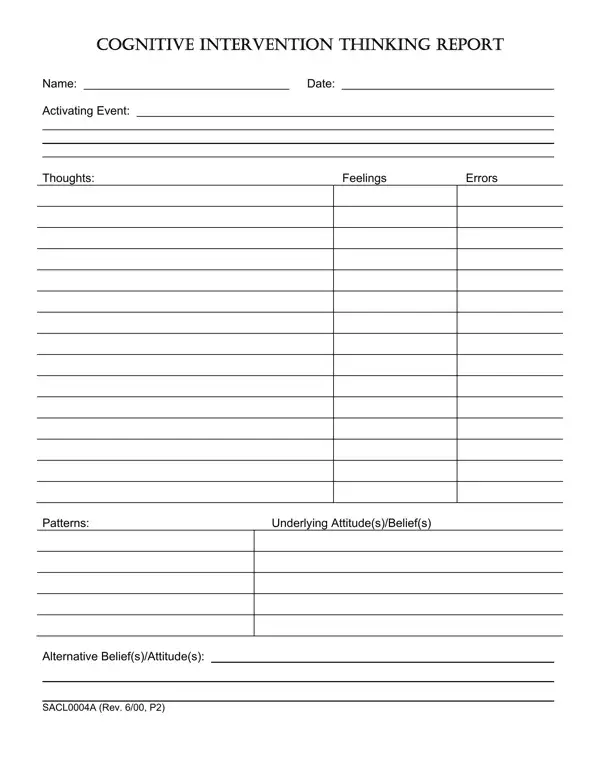
How to Fill Out Cognitive Intervention Thinking Report

Cognitive Intervention Thinking Report at a glance

What it is: Cognitive Intervention Thinking Report: Name, Date, Activating Event, Thoughts, Feelings and Errors.

A filled-in Cognitive Intervention Thinking Report example: a thinking report after a missed bus
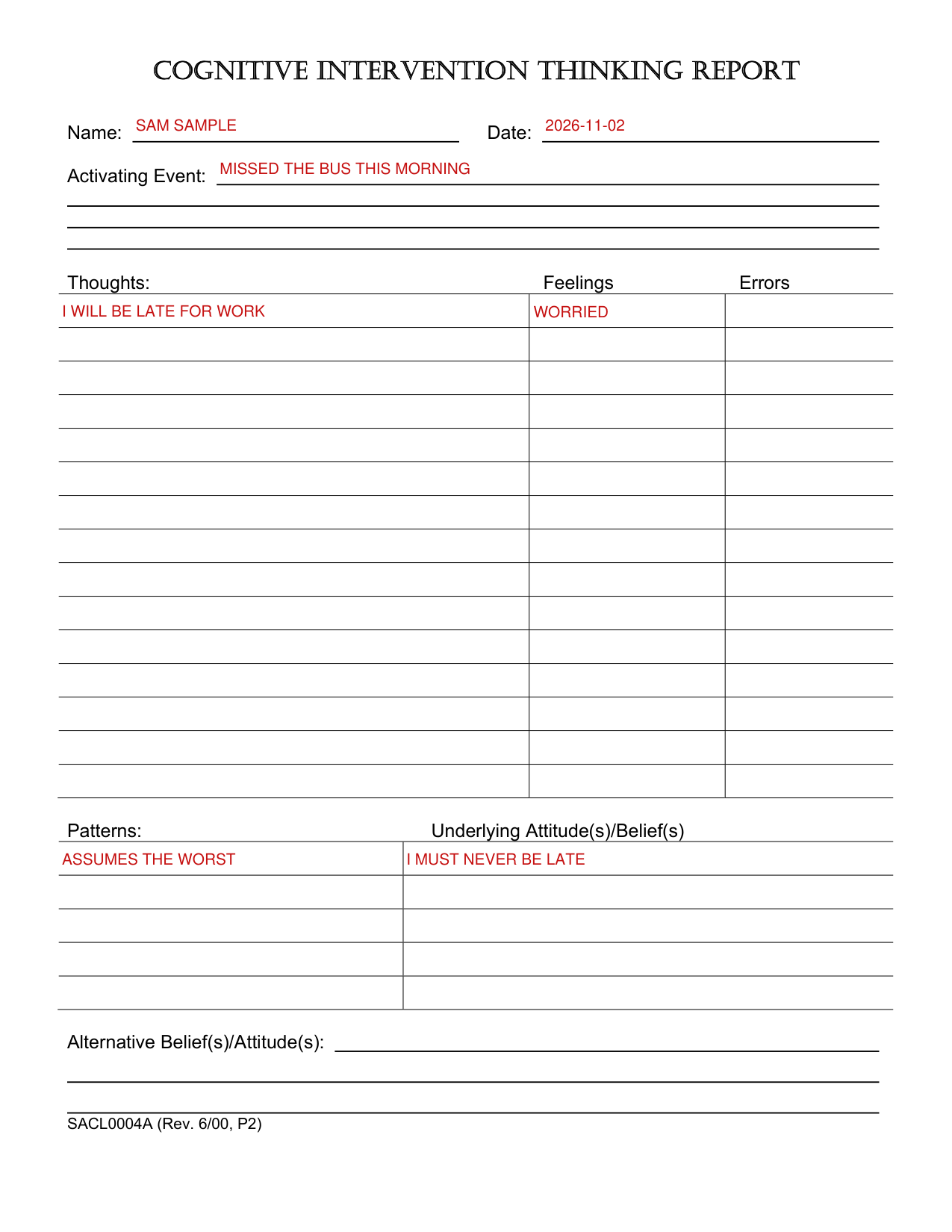
Cognitive Intervention Thinking Report example filled out, example: a thinking report after a missed bus
Sam Sample fills in the Cognitive Intervention Thinking Report. On 2026-11-02 Sam describes a missed bus, a thought, a feeling and a pattern. The picture shows the form; its names and figures are sample values.

How to fill out Cognitive Intervention Thinking Report, box by box

Activating Event

Cognitive Intervention Thinking Report example filled out, activating Event

Under Activating Event, write a brief, objective description of the situation.

Thoughts and Feelings
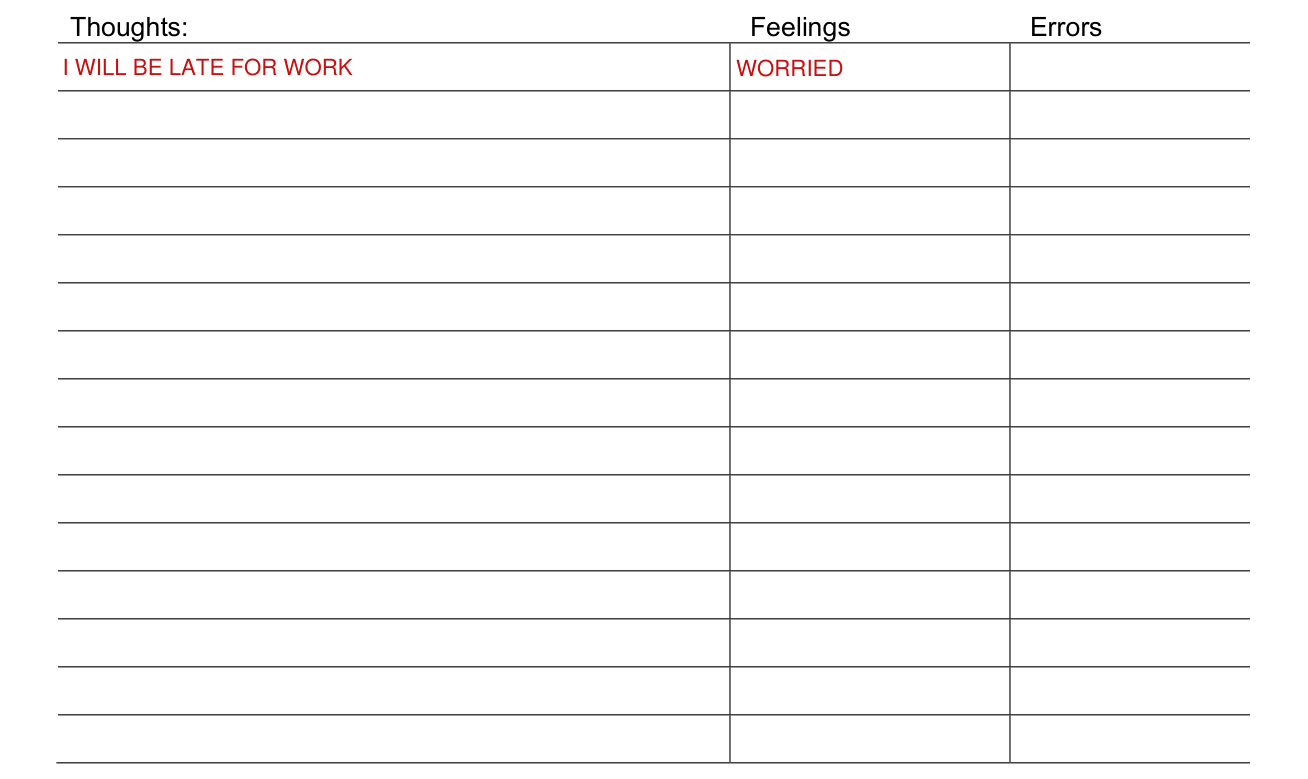
Cognitive Intervention Thinking Report example filled out, thoughts and Feelings

Under Thoughts, list all the thoughts you can remember.

Under Feelings, list all the feelings you can remember.

Patterns, Underlying Attitude(s)/Belief(s)
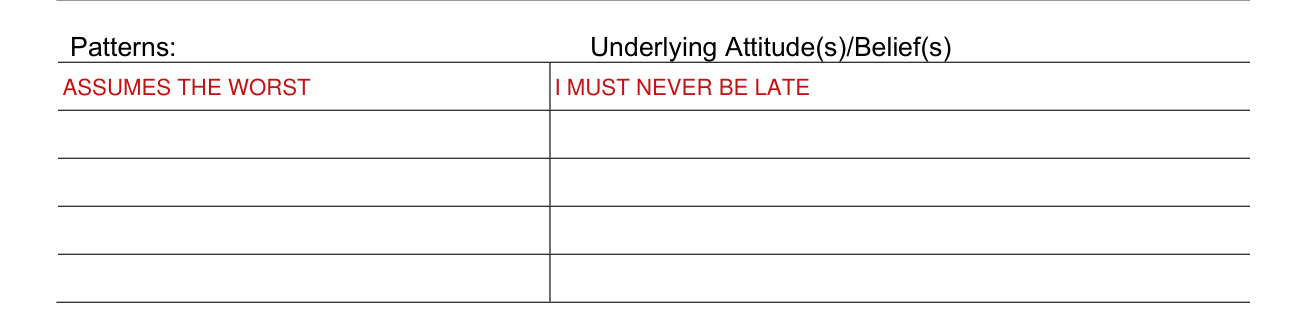
Cognitive Intervention Thinking Report example filled out, patterns, Underlying Attitude(s)/Belief(s)

Under Underlying Attitude(s)/Belief(s), state the underlying attitudes and beliefs that you had in this situation.

Sources

[1] Cognitive Intervention Thinking Report (Rev. 6/00) (the Official source link on this page).

Cognitive Thinking Reports Form PDF Details

The Cognitive Thinking Reports form is a foundational CBT tool that guides individuals through recording automatic thoughts, feelings, and cognitive distortions in response to a specific situation or activating event. Used in cognitive behavioral therapy sessions and self-directed practice, this thought record helps users examine six core areas: the triggering situation, immediate automatic thoughts, associated feelings and their intensity, identified thinking errors, core beliefs or attitudes, and alternative perspectives that lead to healthier responses. Common cognitive distortions addressed by this form include overgeneralization, catastrophizing, all-or-none thinking, mind reading, and emotional reasoning. By naming these thought patterns and comparing them against more balanced beliefs, individuals can begin the process of cognitive restructuring that is central to CBT. Therapists, school counselors, addiction recovery specialists, and individuals in self-directed therapy all rely on cognitive thinking reports as a structured journal for ongoing self-reflection. For related mental health worksheets, see the Simple Thought Record Sheet, the CBT 100 Form, or the Behavioral Health Assessment Form.

QuestionAnswer
Form NameCognitive Thinking Reports Form
Form Length2 pages
Fillable?Yes
Fillable fields61
Avg. time to fill out12 min 42 sec
Other namesthinking report template, cognitive thinking reports, cognitive intervention thinking report, thinking report pdf