
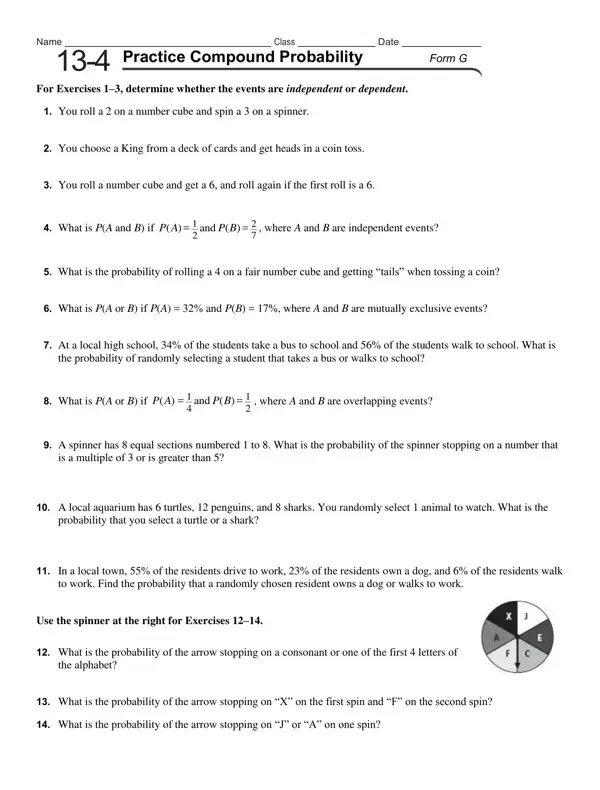
Compound probability is the likelihood that two or more events will both occur. The basic formula for two independent events is: P(A and B) = P(A) x P(B). For example, if the probability of rolling a 3 on a number cube is 1/6 and the probability of spinning red on a spinner is 1/4, then the compound probability of both outcomes happening is 1/6 x 1/4 = 1/24.
The Compound Probability 13-4 Practice Form G covers two fundamental event types. Independent events are events where the outcome of one does not affect the probability of the other, such as rolling a number cube and flipping a coin. Dependent events occur when the result of the first event changes the probability of the second event, such as selecting cards from a deck without replacing them.
This practice form also develops skills in working with mutually exclusive events, where only one outcome can occur at a time, and overlapping events, where more than one outcome can happen at once. Students work through real-world scenarios including predicting student transportation choices, selecting animals at an aquarium, and calculating the probability of combined random outcomes. This structured compound probability practice builds the statistical reasoning needed for algebra, statistics, and standardized test problems.
For more math practice resources, see the AP Statistics Chapter 9 Test Form for advanced probability problems, or the Advanced Math Worksheet for comprehensive algebra and statistics practice.
| Question | Answer |
|---|---|
| Form Name | Compound Probability 13 4 Form |
| Form Length | 1 pages |
| Fillable? | No |
| Fillable fields | 0 |
| Avg. time to fill out | 15 sec |
| Other names | 13 4 practice compound probability answers, 13 4 practice compound probability form k, 13 4 probabilities of compound events answers, 13 4 compound probability form g |
Compound Probability 13 4 Form isn’t the one you’re looking for?