
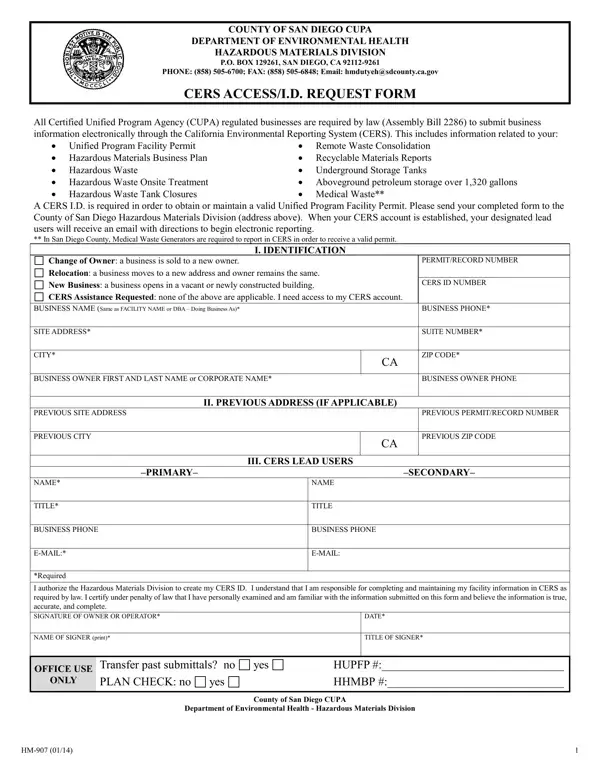
Cupa Form HM 907 PDF Details

Managing hazardous materials and ensuring compliance with environmental laws is a significant responsibility for businesses. In San Diego County, the process is organized through the CUPA HM 907, a key compliance document. Issued by the County of San Diego's Certified Unified Program Agency (CUPA) under the Department of Environmental Health Hazardous Materials Division, this document lets businesses enter data into the California Environmental Reporting System (CERS). Assembly Bill 2286 mandates electronic submission of business plans, hazardous waste management records, and storage tank data for regulated facilities across the county.

The unified program covers six compliance areas that may apply depending on your facility's operations:

Businesses storing regulated chemicals above state thresholds must submit reports through CERS to keep their Unified Program Facility Permit (UPFP) current. Key information required includes facility owner and operator contact details, an emergency response plan, a hazardous materials inventory, training records, and site maps showing storage locations. Facilities operating storage tanks must also provide tank registration and inspection records for the permit period.

By completing this form, businesses take a key step toward obtaining or maintaining a valid UPFP. The HM 907 also covers requirements for new business openings, relocation, or change of ownership. Establishing a CERS ID through this process reflects a business's active commitment to safeguarding environmental health and public safety in San Diego County. The CERS platform provides online services for tracking and updating hazardous waste generation records, tank inspection data, and site plans in one centralized location.

When filing for the first time, gather current hazardous waste inventories, tank permits, and emergency response documentation before submitting. The county program provides outreach services and compliance guidance to help businesses navigate the reporting process and stay current with California waste management and materials safety laws.

Failure to comply with reporting requirements may result in enforcement actions, fines, or suspension of the Unified Program Facility Permit. Businesses should review the thresholds established under the California Health and Safety Code to determine if program requirements apply. The CERS system allows businesses to track and update hazardous waste information, storage tank records, and site plans year-round. Annual or biennial renewals through CERS keep data current and maintain permit validity.

QuestionAnswer
Form NameCupa Form HM 907
Form Length1 pages
Fillable?No
Fillable fields0
Avg. time to fill out15 sec
Other namescers accessid request form, CUPA hazardous materials program form
Issued byCounty of San Diego CUPA, Dept. of Environmental Health

How to Edit Cupa Form Hm 907 Online for Free

You can complete this document using our PDF editor. Getting started is simple. Follow the steps below to fill out and download your form:

Step 1: Click the orange "Get Form" button above. It will open the editor so you can begin filling out your document.

Step 2: The editor lets you modify nearly any PDF. Add your own text, correct existing content, and add a signature. Most edits take only a few minutes.

Here is what to do when completing the form fields:

1. Begin with the essential blanks at the top. Include all required facility and program information before moving on.

Part # 1 in filling out Cupa Form Hm 907

2. After completing that section, enter the details in these fields: NAME, TITLE, BUSINESS PHONE, EMAIL, DATE, TITLE OF SIGNER, OFFICE USE ONLY, Transfer past submittals, PLAN, HUPFP, HMBP, Department of Environmental Health, and County of San Diego CUPA.

Completing part 2 in Cupa Form Hm 907

Review the OFFICE USE ONLY field carefully before finalizing the document.

Step 3: When finished, click "Done" to finalize your document. Start a 7-day free trial to download the completed form or send it by email. The document is also saved in your account for future edits. We do not sell or share any information you enter while using our site.

What Information Does the CUPA HM 907 Require?

The CUPA HM 907 collects program data across several regulatory categories. Businesses must provide contact information for facility owners and operators, along with business type and SIC code. The form covers hazardous waste records, storage tank registration, and emergency response planning:

  • Inventory of all regulated chemicals stored above California threshold quantities
  • Emergency response contacts and a written emergency response plan
  • Hazardous waste generator status and descriptions of each waste stream
  • Hazardous waste disposal methods and names of licensed disposal facilities
  • Underground and aboveground storage tank registration and inspection records
  • Site maps showing the exact storage locations for all regulated substances and waste
  • Training records documenting employee hazardous waste and emergency response training

Who Must Complete the CUPA HM 907?

Any San Diego County business that stores regulated chemicals above state thresholds must obtain a Unified Program Facility Permit (UPFP) and file through the program. This requirement applies across many sectors:

  • Manufacturers and industrial facilities handling process chemicals
  • Retail businesses storing regulated products in reportable quantities
  • Auto repair shops and body shops using solvents and paints
  • Dry cleaners using chemical cleaning agents
  • Medical and dental facilities generating hazardous waste from clinical activities
  • Agricultural operations with large pesticide or fuel storage
  • Laboratories generating hazardous waste from research or testing

Businesses must also file when opening a new facility, relocating, or transferring ownership. Annual or biennial CERS updates keep permit data current for hazardous waste and materials program requirements.

Related Hazardous Materials Documents

If you work with hazardous materials, you may also need other compliance documents. The Hazardous Bill of Lading is required when transporting hazardous goods by road. The Non-Hazardous Manifest tracks materials that do not meet hazardous thresholds but still require documentation. The Industrial Waste Manifest applies to industrial byproducts requiring controlled disposal. For facilities generating biomedical waste, the Biomedical Waste Operating Plan sets out waste management procedures required by California regulations.