Please rate D120 E Form

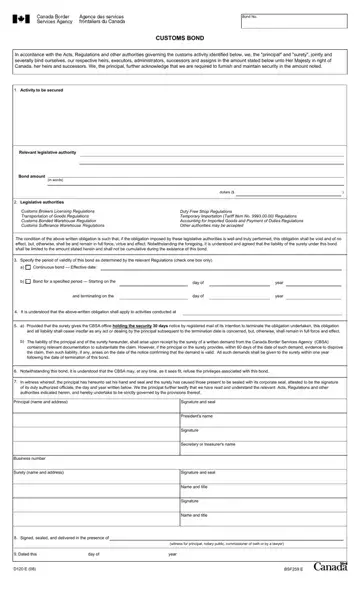
The D120 E form, also known as the Customs Bond, creates a legally binding agreement between the business importing goods (the principal) and their financial guarantor (the surety) and the Canadian government. Its purpose is to secure compliance with all customs duties, taxes, and obligations required by the Canadian Border Services Agency (CBSA).
The customs bond form identifies the specific activity being secured, references the Acts and Regulations governing that activity, and states the required bond amount. The principal formally acknowledges agreement with the terms set by applicable Canadian laws and CBSA authorities. The document also outlines the conditions under which the bond remains valid and the procedures for terminating the obligation, including any resulting liabilities.
A customs bond may be either continuous or for a specified period. A continuous bond takes effect on a stated date and stays active until the principal or surety provides termination notice. A bond for a specified period runs from one stated date to another, covering only the period listed on the form. Choosing the correct type depends on the nature and duration of the customs activity. If you also need to document the value of goods you are importing, see the Canada Customs Invoice.
Both the principal and the surety must sign the form with their names, addresses, and official seals. The principal supplies their business number and signature. The surety provides their organizational name, title, and signature. The document must be signed, sealed, and delivered before a notary to be valid. For other bond-related documents, see the application bond form.
| Question | Answer |
|---|---|
| Form Name | D120 E Form |
| Form Length | 1 pages |
| Fillable? | No |
| Fillable fields | 0 |
| Avg. time to fill out | 15 sec |
| Other names | hereunder, Sufferance, CBSA, executors |
D120 E Form isn’t the one you’re looking for?
Please rate D120 E Form