
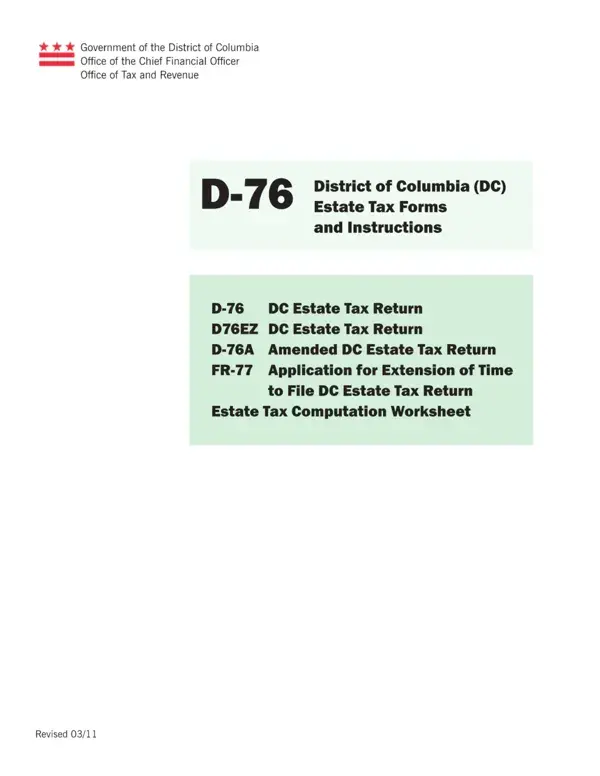
When someone passes away, managing financial affairs becomes a critical responsibility. In the District of Columbia, the D-76 estate tax return documents the deceased's total estate value and determines the tax owed. Executors must list all assets at fair market value on the date of death. These include real property, bank accounts, investment accounts, stocks, retirement funds, and personal belongings.
Estates that exceed the DC estate tax exemption threshold are required to file. The executor or personal representative bears full responsibility for gathering documentation, calculating the net taxable estate, and submitting the return on time. The D-76 covers every asset category, from DC real estate and financial accounts to business interests, giving the Office of Tax and Revenue a complete picture of the estate.
The return is due within nine months of the date of death. A six-month extension to file is available on request. Any tax owed must still be paid within the original nine-month period to avoid interest charges. Late filing and late payment penalties can substantially increase the total amount due. Consulting an estate attorney or CPA is strongly recommended when assets are complex or the estate is large. The implications of this document extend beyond immediate tax concerns, potentially affecting the financial well-being of beneficiaries and the timely settlement of the estate.
| Question | Answer |
|---|---|
| Form Name | Dc Estate Tax Return Form D 76 |
| Form Length | 16 pages |
| Fillable? | No |
| Fillable fields | 0 |
| Avg. time to fill out | 4 min |
| Other names | 2011_d 76_(2) dc estate tax return instructions form |
Dc Estate Tax Return Form D 76 isn’t the one you’re looking for?