
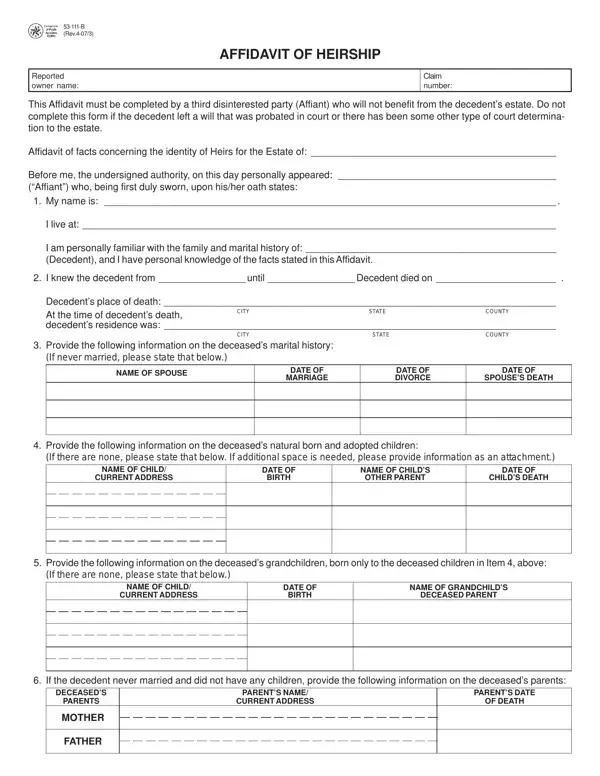
Navigating the process of dealing with a loved one's estate can be a challenging journey, particularly when the decedent has not left behind a will that was probated in court, or in the absence of any court determination regarding the estate. This is where Form 53-111-B, known as the Affidavit of Heirship, becomes a crucial document. Crafted to simplify the legal processes for transferring the decedent's assets to their rightful heirs, this form requires completion by a third disinterested party, known as the Affiant, who has no potential benefits to gain from the deceased's estate. The Affidavit serves as a testament to the decedent's family and marital history, detailing relationships, offspring, and any further descendants, based on the Affiant’s personal knowledge and witnessed under oath. From outlining the decedent's marital history to cataloging information about children, grandchildren, parents, siblings, and even nieces or nephews, Form 53-111-B captures comprehensive data to accurately identify heirs and facilitate a smoother transition of the estate's ownership. Moreover, this form stands out as it does not require filing in the county clerk's records, making it a unique tool in the realm of estate management.
| Question | Answer |
|---|---|
| Form Name | Form 53 111 B |
| Form Length | 2 pages |
| Fillable? | No |
| Fillable fields | 0 |
| Avg. time to fill out | 30 sec |
| Other names | 53 111 a, affidavit of heirship texas property, form 53 111 a instructions, affidavit of heirship |