
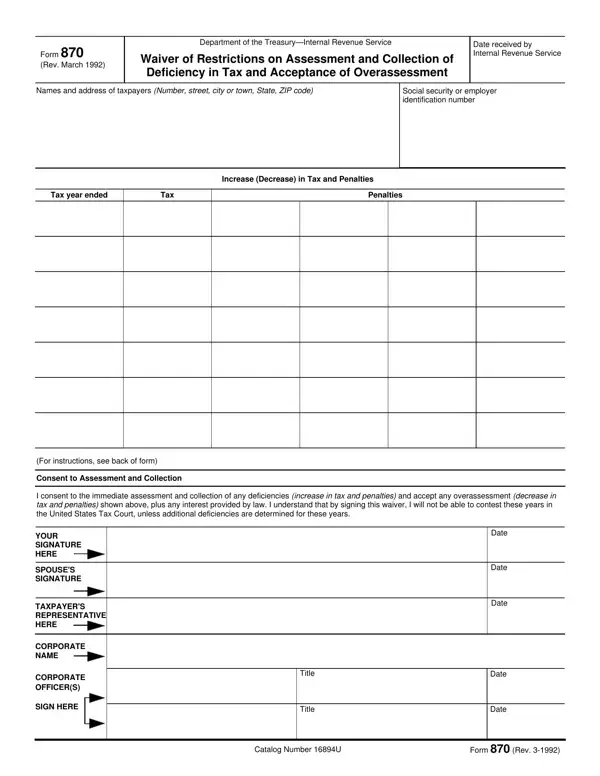
Navigating the intricacies of tax forms and regulations is a daunting task for many taxpayers. The Form 870, a critical document issued by the Department of the Treasury—Internal Revenue Service in March 1992, stands as a pivotal agreement between taxpayers and the IRS. It is designed to expedite the assessment and collection process for tax deficiencies, which refers to the increase in tax and penalties, while also addressing any overassessments, or decrease in tax and penalties. By consenting to this form, taxpayers agree to the immediate assessment and collection of the specified adjustments to their taxes, along with applicable interest, effectively waiving their right to contest the adjustments in the United States Tax Court for the specified tax years. This consent, however, doesn't bar taxpayers from filing a future claim for refund should they believe an error has been made, marking a blend of finality and flexibility within the tax resolution process. Moreover, Form 870 includes provisions for information sharing with State tax agencies and outlines clear instructions on who must sign the form, ranging from individual taxpayers and spouses in the case of a joint filing, to corporate officers and fiduciaries, ensuring that the process of consenting to tax adjustments is as transparent and straightforward as possible. This form, while a seemingly simple document, represents a significant step in the tax collection and adjustment mechanism, emphasizing the importance of understanding one’s obligations and rights within the tax system.
| Question | Answer |
|---|---|
| Form Name | Form 870 |
| Form Length | 2 pages |
| Fillable? | No |
| Fillable fields | 0 |
| Avg. time to fill out | 30 sec |
| Other names | form 870 3, irs waiver, irs form 906, visa waiver program usa |