
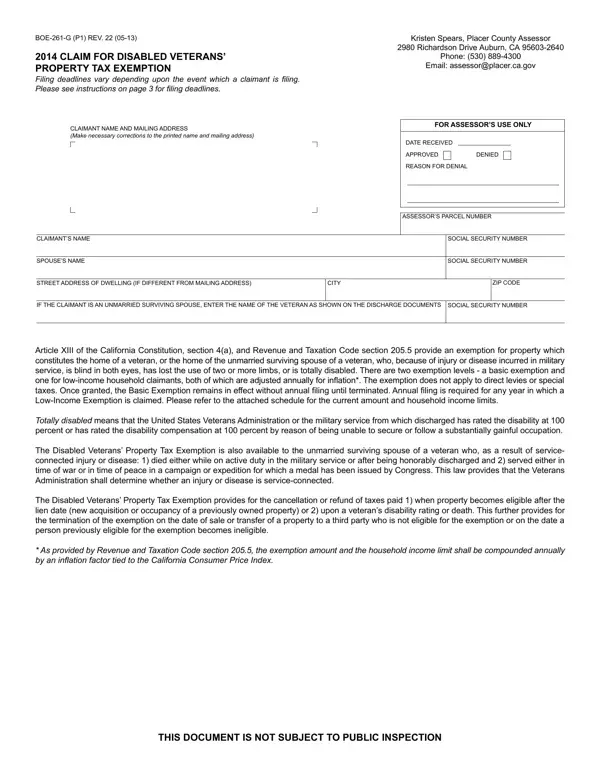
Understanding the BOE-261-G form is essential for disabled veterans and their unmarried surviving spouses seeking property tax exemptions in the state of California. This legal document serves as a claim for property tax exemption, delineating the eligibility and the process for applicants to obtain a reduction or complete exemption from property tax based on their disability status as it relates to their military service. Whether the disability arose from service-connected injuries, leading to blindness, loss of use of limbs, or total disability, this form provides a pathway for financial relief. It not merely outlines who qualifies but also guides on how to substantiate the claim with proper documentation, including proof of disability and, in applicable cases, proof of the veteran's demise being connected to their military service. Additionally, it specifies two levels of exemption: a basic exemption and a low-income exemption, for which the form also requires applicants to provide detailed household income information to determine eligibility. The form, while somewhat complex, is a crucial tool for disabled veterans and their survivors in managing their property tax liabilities, highlighting the intersection of military service, disability law, and tax relief measures designed to honor and assist those who've served. With deadlines and the need for accurate completion, it's vital for claimants to approach this document with care, ensuring they meet the necessary criteria and provide the required information to secure their benefits.
| Question | Answer |
|---|---|
| Form Name | Form Boe 261 G |
| Form Length | 5 pages |
| Fillable? | No |
| Fillable fields | 0 |
| Avg. time to fill out | 1 min 15 sec |
| Other names | BOE-261-G, claimant, AFDC, sonoma county form boe 266 |
Form Boe 261 G isn’t the one you’re looking for?