
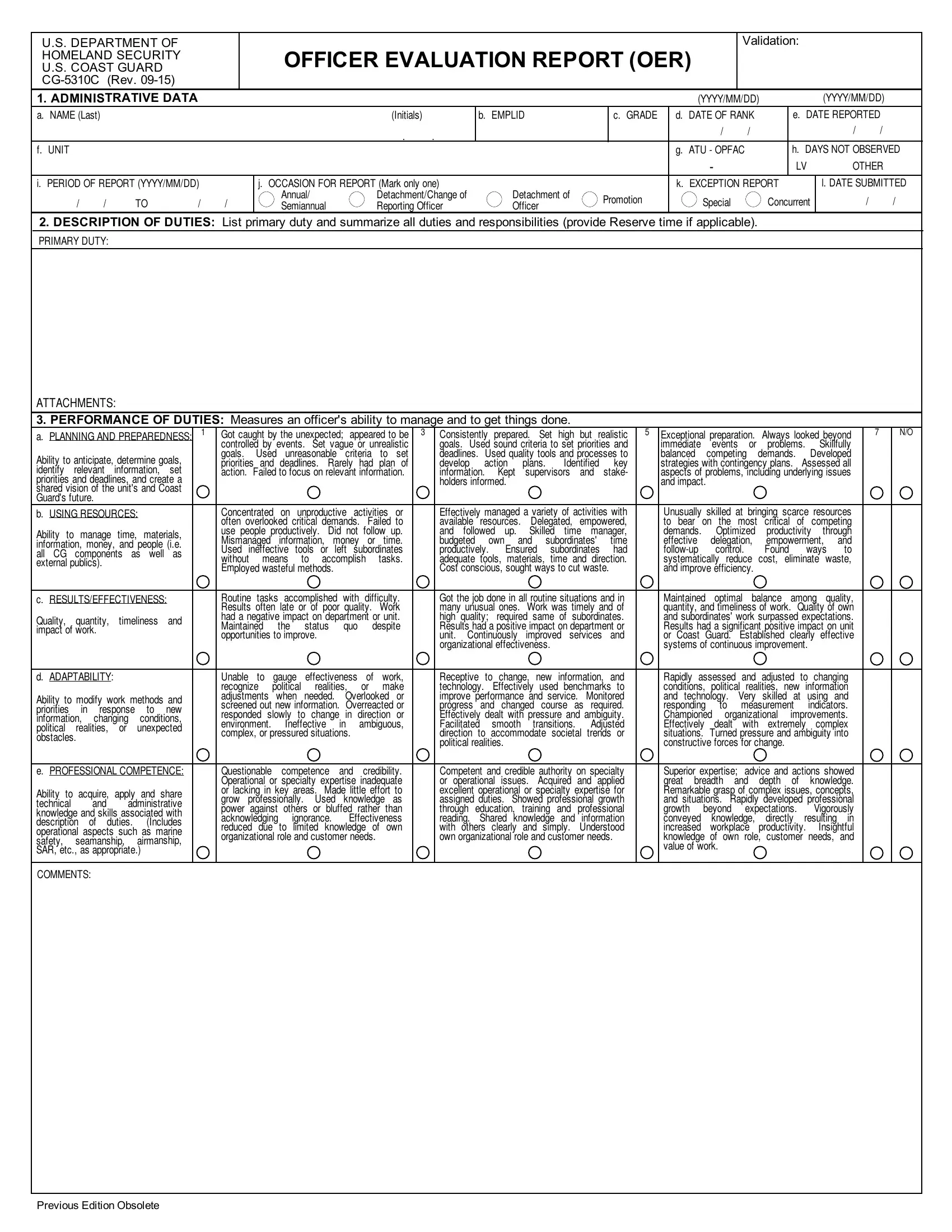
The CG 5310C form, a vital document issued by the U.S. Department of Homeland Security and U.S. Coast Guard, serves as an Officer Evaluation Report (OER) for evaluating the performance and competence of officers within the Coast Guard. The purpose of this form spans several key areas, including providing essential data for promotion, selection, and assignment decisions. Its structure encourages uniform standards of performance, reinforces the core values of the Coast Guard, and offers a means of performance feedback. Sections of the form require detailed administrative data, an in-depth description of duties, a thorough assessment of the officer's performance, communication skills, leadership abilities, and an evaluation of their professional and personal qualities. Additionally, the form includes a supervisor's authentication, reporting officer comments, and a comparison scale to evaluate the officer against peers. It concludes with instructions detailing the form's purpose, guiding instructions, responsibilities, submission schedule, and preparation checklist, ensuring a comprehensive evaluation process. This thorough approach aims to foster a high degree of professionalism and accountability within the Coast Guard, making the CG 5310C an instrumental component in shaping the leadership and operational effectiveness of its officers.
| Question | Answer |
|---|---|
| Form Name | Form Cg 5310C |
| Form Length | 4 pages |
| Fillable? | No |
| Fillable fields | 0 |
| Avg. time to fill out | 1 min |
| Other names | CG_5310C cg 5310c form |
U.S. DEPARTMENT OF HOMELAND SECURITY U.S. COAST GUARD
OFFICER EVALUATION REPORT (OER)
Validation:
1. ADMINISTRATIVE DATA |
|
|
|
|
|
|
|
|
(YYYY/MM/DD) |
|
(YYYY/MM/DD) |
||||
a. NAME (Last) |
|
|
|
|
|
(Initials) |
|
b. EMPLID |
|
c. GRADE |
d. DATE OF RANK |
e. DATE REPORTED |
|||
|
|
|
|
|
|
. |
. . |
|
|
|
/ |
/ |
|
/ |
/ |
f. UNIT |
|
|
|
|
|
|
|
|
|
|
g. ATU - OPFAC |
|
h. DAYS NOT OBSERVED |
||
|
|
|
|
|
|
|
|
|
|
|
- |
|
LV |
OTHER |
|
i. PERIOD OF REPORT (YYYY/MM/DD) |
|
j. OCCASION FOR REPORT (Mark only one) |
|
|
|
k. EXCEPTION REPORT |
|
l. DATE SUBMITTED |
|||||||
/ |
/ |
TO |
/ |
/ |
Annual/ |
Detachment/Change of |
Detachment of |
Promotion |
Special |
Concurrent |
/ |
/ |
|||
Semiannual |
Reporting Officer |
Officer |
|||||||||||||
2.DESCRIPTION OF DUTIES: List primary duty and summarize all duties and responsibilities (provide Reserve time if applicable).
PRIMARY DUTY:
ATTACHMENTS:
3.PERFORMANCE OF DUTIES: Measures an officer's ability to manage and to get things done.
a. |
PLANNING AND PREPAREDNESS: |
1 |
Got caught by the unexpected; appeared to be |
3 |
Consistently |
prepared. |
Set |
high |
but realistic |
5 |
Exceptional preparation. |
Always looked beyond |
7 |
N/O |
||||||||||||||||||||||||||||||||||
|
|
|
|
|
||||||||||||||||||||||||||||||||||||||||||||
|
|
|
|
|
|
|
|
controlled by |
events. |
Set |
vague or unrealistic |
|
goals. Used sound criteria to set priorities and |
|
immediate |
|
events |
or |
problems. |
|
Skillfully |
|
|
|||||||||||||||||||||||||
Ability to anticipate, determine goals, |
|
goals. |
|
Used |
unreasonable |
criteria |
to |
set |
|
deadlines. Used quality tools and processes to |
|
balanced |
|
competing demands. |
|
Developed |
|
|
||||||||||||||||||||||||||||||
|
priorities |
and |
deadlines. |
Rarely |
had |
plan of |
|
develop |
action |
plans. |
Identified |
key |
|
strategies with contingency plans. |
Assessed all |
|
|
|||||||||||||||||||||||||||||||
identify |
relevant |
information, |
set |
|
action. |
Failed to focus on relevant information. |
|
information. |
Kept |
supervisors |
and |
stake- |
|
aspects of problems, including underlying issues |
|
|
||||||||||||||||||||||||||||||||
priorities and deadlines, and create a |
|
|
|
|
|
|
|
|
|
|
|
|
|
|
|
|
holders informed. |
|
|
|
|
|
|
|
|
and impact. |
|
|
|
|
|
|
|
|
|
|
|
|||||||||||
shared vision of the unit's and Coast |
|
|
|
|
|
|
|
|
|
|
|
|
|
|
|
|
|
|
|
|
|
|
|
|
|
|
|
|
|
|
|
|
|
|
|
|
|
|
|
|
|
|
||||||
Guard's future. |
|
|
|
|
|
|
|
|
|
|
|
|
|
|
|
|
|
|
|
|
|
|
|
|
|
|
|
|
|
|
|
|
|
|
|
|
|
|
|
|
|
|
|
|
|
|||
b. USING RESOURCES: |
|
|
Concentrated |
on |
|
unproductive activities |
or |
|
Effectively managed a variety of activities with |
|
Unusually skilled at bringing scarce resources |
|
|
|||||||||||||||||||||||||||||||||||
|
|
|
|
|
|
|
|
often overlooked critical |
demands. Failed to |
|
available |
resources. |
Delegated, |
empowered, |
|
to bear on the most critical of competing |
|
|
||||||||||||||||||||||||||||||
Ability to |
manage |
time, |
materials, |
|
use people productively. |
Did not |
follow |
up. |
|
and |
followed |
up. |
Skilled |
time |
manager, |
|
demands. |
|
Optimized |
productivity |
through |
|
|
|||||||||||||||||||||||||
|
Mismanaged |
|
information, |
money or time. |
|
budgeted |
|
own |
and |
subordinates' |
time |
|
effective |
|
delegation, |
empowerment, |
and |
|
|
|||||||||||||||||||||||||||||
information, money, and people (i.e. |
|
|
|
|
|
|
|
|
||||||||||||||||||||||||||||||||||||||||
|
Used |
ineffective |
tools |
or |
left subordinates |
|
productively. |
|
Ensured |
subordinates |
had |
|
|
control. |
Found |
|
|
ways |
to |
|
|
|||||||||||||||||||||||||||
all CG |
components as well |
as |
|
|
|
|
|
|
|
|
|
|||||||||||||||||||||||||||||||||||||
|
without |
means |
|
to |
|
accomplish |
tasks. |
|
adequate |
tools, |
materials, time |
and direction. |
|
systematically |
reduce |
cost, eliminate |
waste, |
|
|
|||||||||||||||||||||||||||||
external publics). |
|
|
|
|
|
|
|
|
|
|
||||||||||||||||||||||||||||||||||||||
|
|
|
|
Employed wasteful methods. |
|
|
|
|
|
Cost conscious, sought ways to cut waste. |
|
and improve efficiency. |
|
|
|
|
|
|
|
|
||||||||||||||||||||||||||||
|
|
|
|
|
|
|
|
|
|
|
|
|
|
|
|
|
|
|
|
|
|
|||||||||||||||||||||||||||
|
|
|
|
|
|
|
|
|
|
|
|
|
|
|||||||||||||||||||||||||||||||||||
c. RESULTS/EFFECTIVENESS: |
|
Routine |
tasks |
accomplished |
with |
difficulty. |
|
Got the job done in all routine situations and in |
|
Maintained optimal balance among quality, |
|
|
||||||||||||||||||||||||||||||||||||
|
|
|
|
|
|
|
|
Results often late or of poor quality. |
Work |
|
many unusual ones. |
Work was timely and of |
|
quantity, and timeliness of work. Quality of own |
|
|
||||||||||||||||||||||||||||||||
Quality, |
quantity, |
timeliness |
and |
|
had a negative impact on department or unit. |
|
high |
quality; |
required same |
of |
subordinates. |
|
and subordinates' work surpassed expectations. |
|
|
|||||||||||||||||||||||||||||||||
|
Maintained |
the |
|
status |
|
quo |
despite |
|
Results had a positive impact on department or |
|
Results had a significant positive impact on unit |
|
|
|||||||||||||||||||||||||||||||||||
impact of work. |
|
|
|
|
|
|
|
|
|
|
||||||||||||||||||||||||||||||||||||||
|
|
|
|
opportunities to improve. |
|
|
|
|
|
|
|
unit. |
Continuously |
improved |
services |
and |
|
or Coast |
Guard. |
Established |
clearly |
effective |
|
|
||||||||||||||||||||||||
|
|
|
|
|
|
|
|
|
|
|
|
|
|
|
|
|
|
|||||||||||||||||||||||||||||||
|
|
|
|
|
|
|
|
|
|
|
|
|
|
|
|
|
|
|
|
|
|
|
organizational effectiveness. |
|
|
|
|
|
|
systems of continuous improvement. |
|
|
|
|
||||||||||||||
|
|
|
|
|
|
|
|
|
|
|
|
|
|
|
|
|
|
|||||||||||||||||||||||||||||||
d. ADAPTABILITY: |
|
|
|
|
Unable |
to |
gauge |
effectiveness |
of |
work, |
|
Receptive to change, new information, and |
|
Rapidly assessed and adjusted to changing |
|
|
||||||||||||||||||||||||||||||||
|
|
|
|
|
|
|
|
recognize political realities, or make |
|
technology. |
Effectively |
used benchmarks to |
|
conditions, political realities, new information |
|
|
||||||||||||||||||||||||||||||||
Ability to modify work methods and |
|
adjustments |
when |
needed. |
Overlooked |
or |
|
improve performance and service. |
Monitored |
|
and technology. |
Very |
skilled |
at |
|
using |
and |
|
|
|||||||||||||||||||||||||||||
|
screened out new information. Overreacted or |
|
progress |
and changed |
course |
as |
required. |
|
responding |
to |
measurement |
|
indicators. |
|
|
|||||||||||||||||||||||||||||||||
priorities |
in |
response |
to |
new |
|
|
|
|
|
|
||||||||||||||||||||||||||||||||||||||
|
responded slowly |
|
to |
change in direction or |
|
Effectively dealt |
with pressure and ambiguity. |
|
Championed |
organizational |
improvements. |
|
|
|||||||||||||||||||||||||||||||||||
information, |
changing |
conditions, |
|
|
|
|
|
|
||||||||||||||||||||||||||||||||||||||||
|
environment. |
|
Ineffective |
|
in |
ambiguous, |
|
Facilitated |
smooth |
transitions. |
|
Adjusted |
|
Effectively |
dealt |
with |
extremely |
complex |
|
|
||||||||||||||||||||||||||||
political |
realities, |
or |
unexpected |
|
|
|
|
|
|
|
|
|||||||||||||||||||||||||||||||||||||
|
complex, or pressured situations. |
|
|
|
|
direction |
to |
accommodate societal |
trends or |
|
situations. |
|
Turned pressure and ambiguity into |
|
|
|||||||||||||||||||||||||||||||||
obstacles. |
|
|
|
|
|
|
|
|
|
|
|
|
|
|||||||||||||||||||||||||||||||||||
|
|
|
|
|
|
|
|
|
|
|
|
|
|
|
|
|
|
|
|
political realities. |
|
|
|
|
|
|
|
|
|
constructive forces for change. |
|
|
|
|
|
|
|
|||||||||||
|
|
|
|
|
|
|
|
|
|
|
|
|
|
|
|
|
|
|
|
|
|
|
|
|
|
|
|
|
|
|
|
|
|
|
|
|
|
|
||||||||||
|
|
|
|
|
|
|
|
|
|
|
|
|
|
|
|
|||||||||||||||||||||||||||||||||
e. PROFESSIONAL COMPETENCE: |
|
Questionable |
|
competence |
|
and |
credibility. |
|
Competent and credible authority on specialty |
|
Superior expertise; |
advice and actions showed |
|
|
||||||||||||||||||||||||||||||||||
|
|
|
|
|
|
|
|
Operational or specialty expertise inadequate |
|
or operational issues. |
Acquired |
and applied |
|
great breadth and depth of knowledge. |
|
|
||||||||||||||||||||||||||||||||
Ability to |
acquire, |
apply |
and share |
|
or lacking in key areas. |
Made little effort |
to |
|
excellent |
operational or specialty expertise for |
|
Remarkable grasp of complex issues, concepts, |
|
|
||||||||||||||||||||||||||||||||||
|
grow |
professionally. |
Used |
knowledge |
as |
|
assigned duties. |
Showed professional growth |
|
and situations. |
Rapidly |
developed professional |
|
|
||||||||||||||||||||||||||||||||||
technical |
|
and |
administrative |
|
|
|
|
|
||||||||||||||||||||||||||||||||||||||||
|
|
power |
against |
others |
or bluffed rather than |
|
through |
education, |
training |
and |
professional |
|
growth |
beyond |
expectations. |
|
Vigorously |
|
|
|||||||||||||||||||||||||||||
knowledge and skills associated with |
|
|
|
|
|
|
||||||||||||||||||||||||||||||||||||||||||
|
acknowledging |
|
ignorance. |
Effectiveness |
|
reading. |
Shared knowledge |
and |
information |
|
conveyed |
|
knowledge, |
directly |
resulting in |
|
|
|||||||||||||||||||||||||||||||
description |
of duties. |
(Includes |
|
|
|
|
|
|
|
|||||||||||||||||||||||||||||||||||||||
|
reduced |
due |
|
to |
limited |
knowledge of own |
|
with |
others |
clearly |
and |
simply. |
Understood |
|
increased |
|
workplace |
productivity. |
Insightful |
|
|
|||||||||||||||||||||||||||
operational aspects |
such as marine |
|
|
|
|
|
|
|
||||||||||||||||||||||||||||||||||||||||
|
organizational role and customer needs. |
|
|
|
own organizational role and customer needs. |
|
knowledge |
of |
own role, customer |
needs, |
and |
|
|
|||||||||||||||||||||||||||||||||||
safety, |
seamanship, |
airmanship, |
|
|
|
|
|
|
|
|||||||||||||||||||||||||||||||||||||||
|
|
|
|
|
|
|
|
|
|
|
|
|
|
|
|
|
|
|
|
|
|
|
|
|
|
|
|
|
value of work. |
|
|
|
|
|
|
|
|
|
|
|||||||||
SAR, etc., as appropriate.) |
|
|
|
|
|
|
|
|
|
|
|
|
|
|
|
|
|
|
|
|
|
|
|
|
|
|
|
|
|
|
|
|
|
|
|
|
|
|
|
|
||||||||
|
|
|
|
|
|
|
|
|
|
|
|
|
|
|
|
|
|
|
|
|
|
|
|
|
|
|
|
|
|
|
|
|
|
|
|
|
|
|
|
|
|
|
||||||
|
|
|
|
|
|
|
|
|
|
|
|
|
|
|
|
|
|
|
|
|
|
|
|
|
|
|
|
|
|
|
|
|
|
|
|
|
|
|
|
|
|
|
|
|
|
|
||
COMMENTS: |
|
|
|
|
|
|
|
|
|
|
|
|
|
|
|
|
|
|
|
|
|
|
|
|
|
|
|
|
|
|
|
|
|
|
|
|
|
|
|
|
|
|
|
|
|
|||
Previous Edition Obsolete