
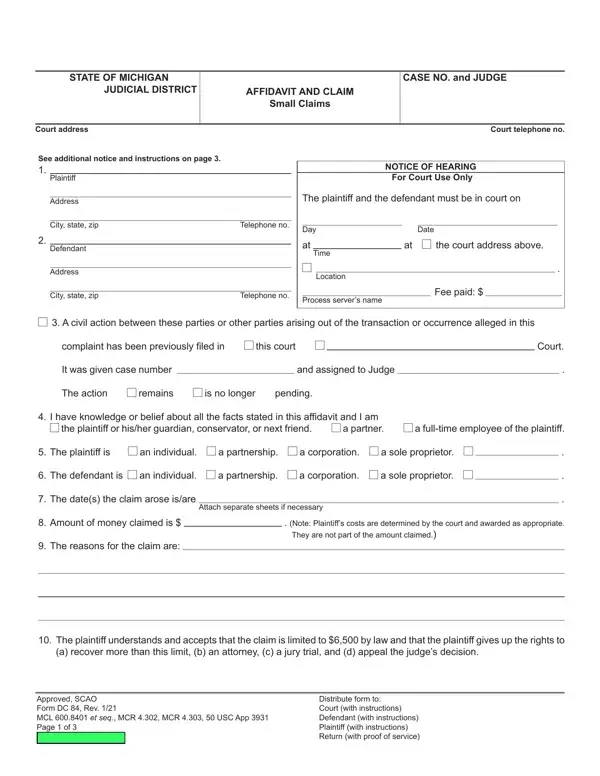

Form DC 84 at a glance
What it is: State of Michigan District Court Small Claims Affidavit, Form DC 84, is used to start a small claims case and gives important case information.
Who signs: Sign on the Plaintiff or Plaintiff's Representative Signature line and write the Printed Name: the plaintiff or plaintiff's representative has examined this affidavit and its contents are true to the best of their information, knowledge, and belief.
The Small Claims Affidavit is completed by the plaintiff.
What to bring and attach to Form DC 84
Parties must bring all evidence (papers, witnesses, photos, emails, books, etc.) to support or defend this claim to the hearing.
A filled-in Form DC 84 example: a plaintiff files a small claim
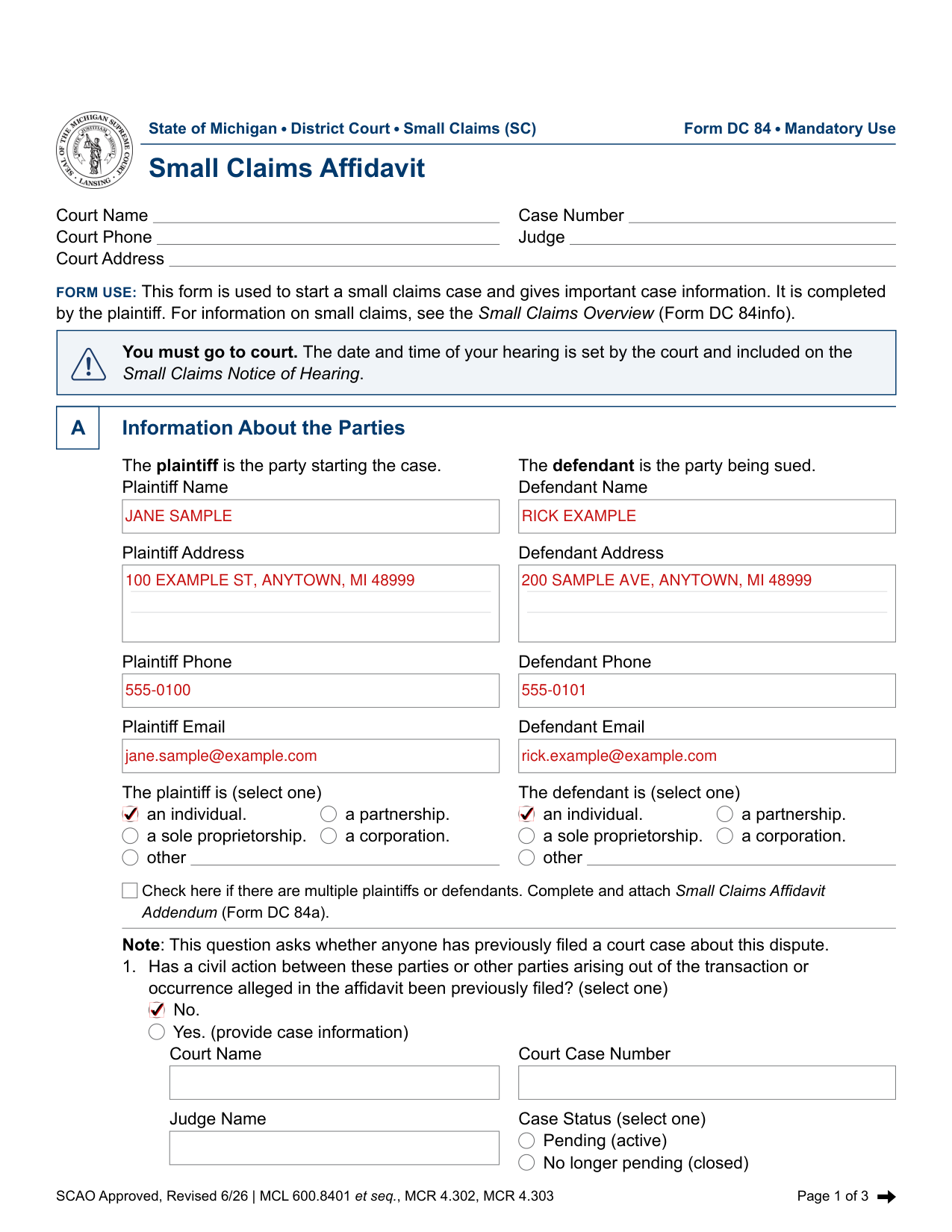
How to fill out Form DC 84, box by box
Information About the Parties
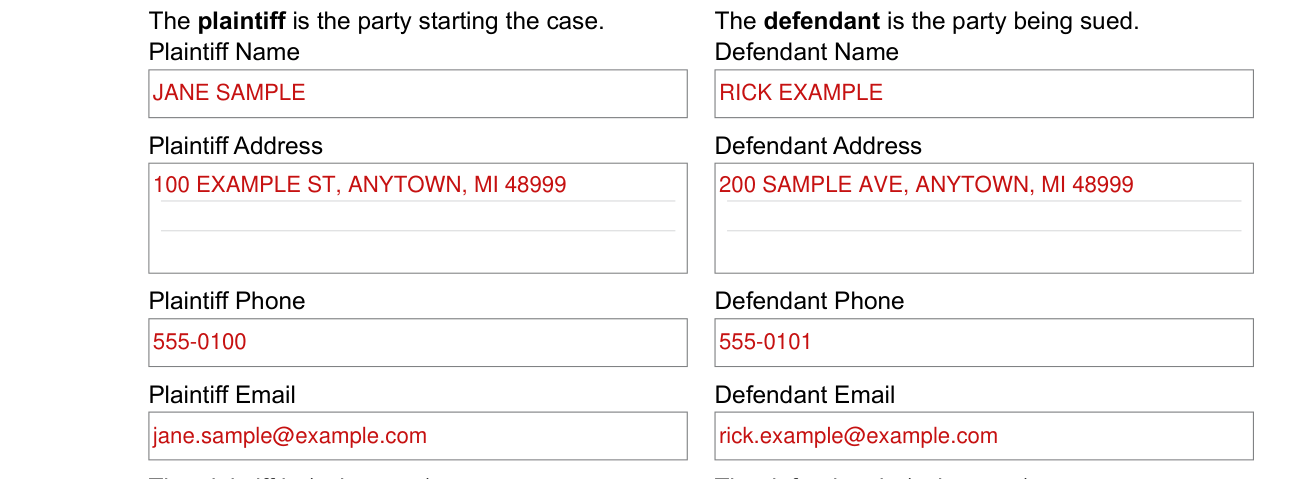
The plaintiff is the party starting the case, and the defendant is the party being sued.
Under Information About the Parties, enter the Plaintiff Name, Plaintiff Address, Plaintiff Phone and Plaintiff Email, and the Defendant Name, Defendant Address, Defendant Phone and Defendant Email.
The plaintiff is and the defendant is

Select one for the plaintiff and select one for the defendant: an individual, a partnership, a sole proprietorship, a corporation or other.
Multiple plaintiffs or defendants

Check here if there are multiple plaintiffs or defendants. Complete and attach Small Claims Affidavit Addendum (Form DC 84a).
Previously filed civil action
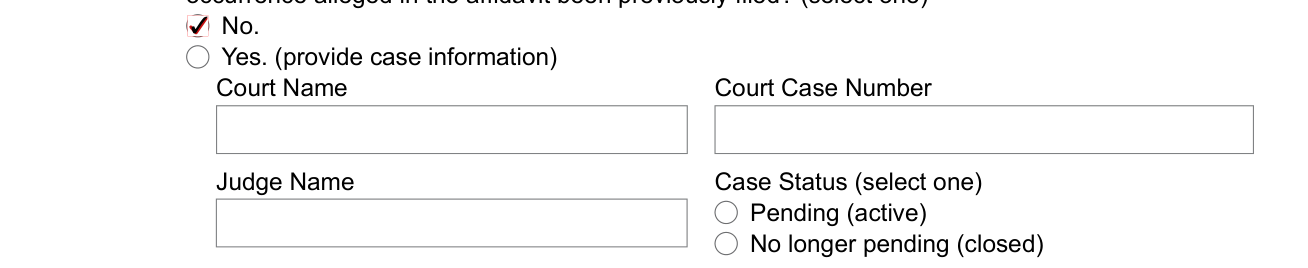
Has a civil action between these parties or other parties arising out of the transaction or occurrence alleged in the affidavit been previously filed? Select one: No or Yes (provide case information).
For Yes, enter the Court Name, Court Case Number and Judge Name, and select one Case Status: Pending (active) or No longer pending (closed).
Claim
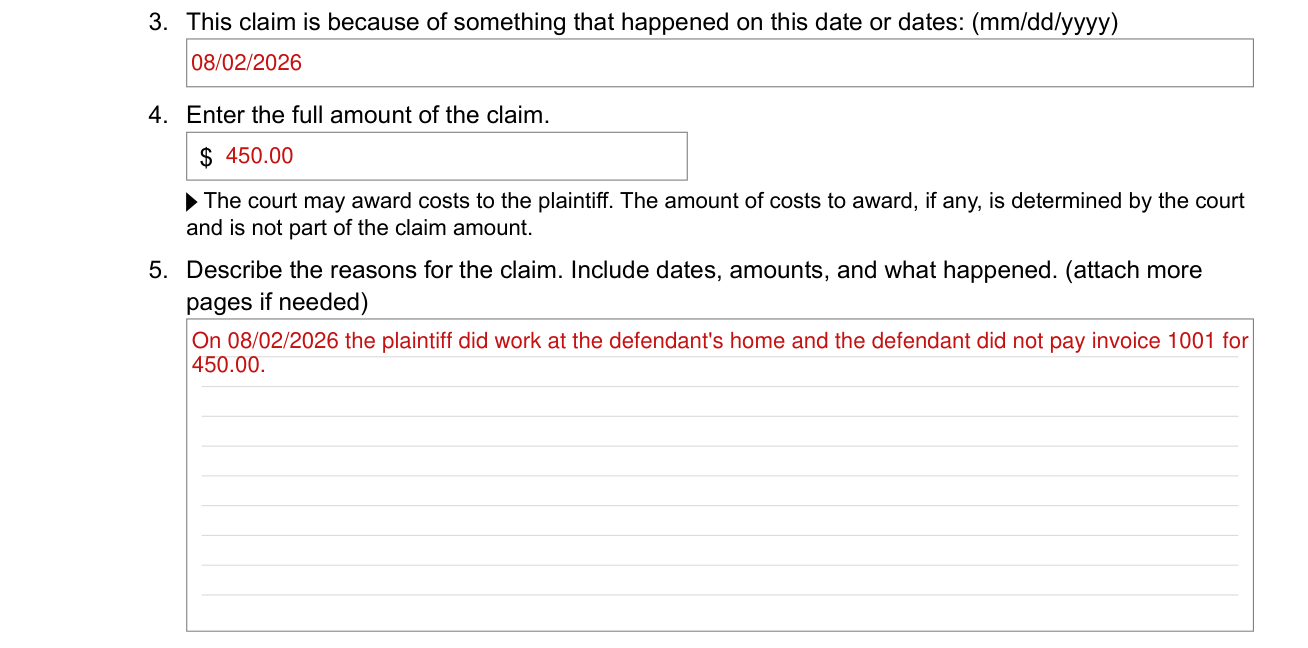
By filing in small claims, the plaintiff understands and accepts that they give up the right to (a) collect more than $7,000 on the claim, (b) have an attorney, (c) have a jury trial, and (d) appeal a judge's decision (checked October 19, 2026).
This claim is because of something that happened on this date or dates: enter (mm/dd/yyyy).
In 4, enter the full amount of the claim. The court may award costs to the plaintiff. The amount of costs to award, if any, is determined by the court and is not part of the claim amount.
Describe the reasons for the claim. Include dates, amounts, and what happened. (attach more pages if needed)
Witnessed Signature
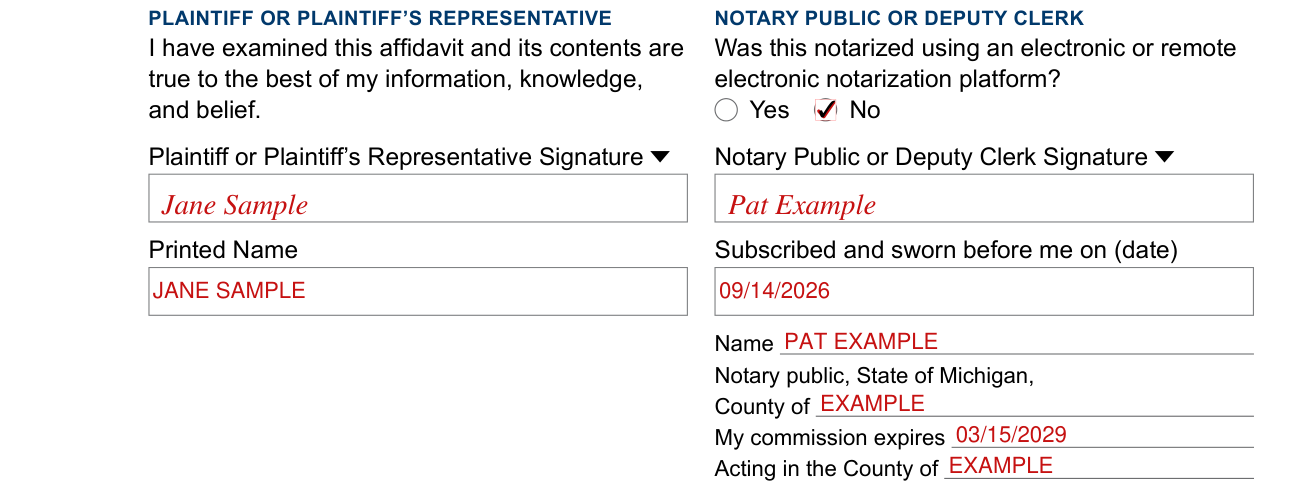
Wait to sign this form until you are in front of a notary or deputy clerk. A notary public or deputy clerk will check your ID, have you swear or affirm that the information in this affidavit is true, and watch you sign.
A notary public may be found at banks, libraries, shipping and packaging stores, or online. A deputy clerk is found at the courthouse.
Under NOTARY PUBLIC OR DEPUTY CLERK: Was this notarized using an electronic or remote electronic notarization platform? Yes No
Under NOTARY PUBLIC OR DEPUTY CLERK, the lines are Notary Public or Deputy Clerk Signature, Subscribed and sworn before me on (date), Name, Notary public, State of Michigan, County of, My commission expires and Acting in the County of.
More rules for Form DC 84
You must go to court. The date and time of your hearing is set by the court and included on the Small Claims Notice of Hearing.
If your case is heard in the small claims division, you may not be represented by an attorney at any stage of the case.
If the plaintiff does not appear at the hearing, the court may dismiss the claim. If the defendant does not appear, the court may grant the claim up to $7,000 plus costs (checked October 19, 2026).
Evening and Saturday court hours may be made available if a written request is submitted and need for the request is shown.
Court forms are available at courts.michigan.gov/SCAO-forms.
More information about small claims is available at michiganlegalhelp.org/smallclaims.
If your situation is different
Magistrate Hearings
Your case may be assigned to a magistrate. A magistrate is an attorney appointed to hear cases. You have the right to ask that a judge conduct the hearing instead of a magistrate. You can make this request in writing or at the court before the hearing starts.
If your case is heard by a magistrate, you may appeal the magistrate's decision to the district court judge within 7 days of the date the judgment is signed. If your case is heard by a judge, the judge's decision is final and cannot be appealed.
Removal Requests
Having your case heard in the small claims division is optional. The process of moving a case from the small claims division to the general civil division of the district court is called removal. Either party has the right to remove this case from the small claims division to the general civil division of the district court.
If a case is removed to the general civil division, parties may hire attorneys, have a jury trial, and appeal decisions.
There are two ways to remove the case from the small claims division to the general civil division. Option 1: Complete a request in writing using the Small Claims Demand for Removal (Form DC 86) and return it to the court before the hearing.
Option 2: Go to the hearing as scheduled. Before it starts, tell the judge or magistrate you want to remove the case to the general civil division.
Foreign Language Interpreters and ADA Accommodations
If you need accommodations to fully participate in the hearing, complete one of the following forms and return it to the court's ADA coordinator right away.
Foreign language interpreter: Use Request and Order for Interpreter (Form MC 81).
Other ADA accommodations, including a sign language interpreter: Use Request for Reasonable Accommodations and Response (Form MC 70).
Sources
[1] Form DC 84, Small Claims Affidavit, State of Michigan District Court (the Official source link on this page).