
Form PC 577 at a glance
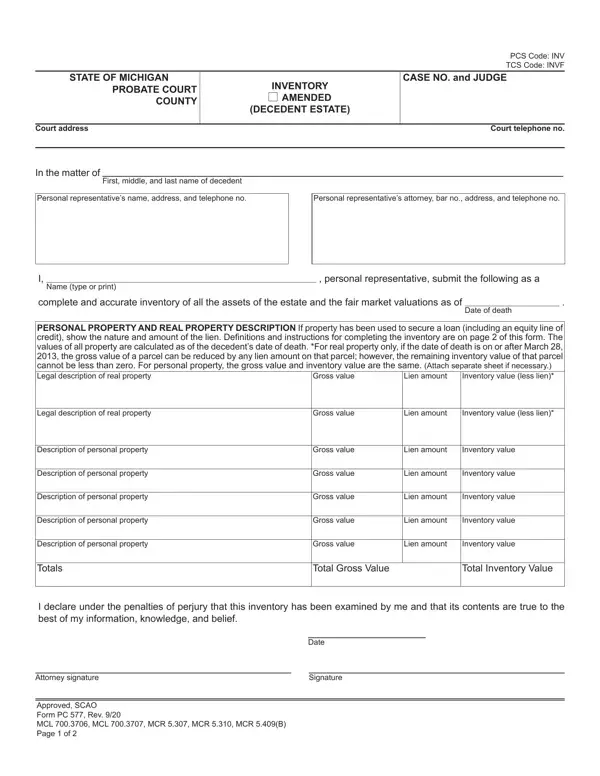
What it is: Form PC 577, Inventory (Decedent Estate), is the complete and accurate inventory of all the assets of the estate and the fair market valuations that the personal representative submits to the Michigan probate court.
Who signs: The personal representative signs on the line marked Signature. The attorney signs on the line marked Attorney signature.
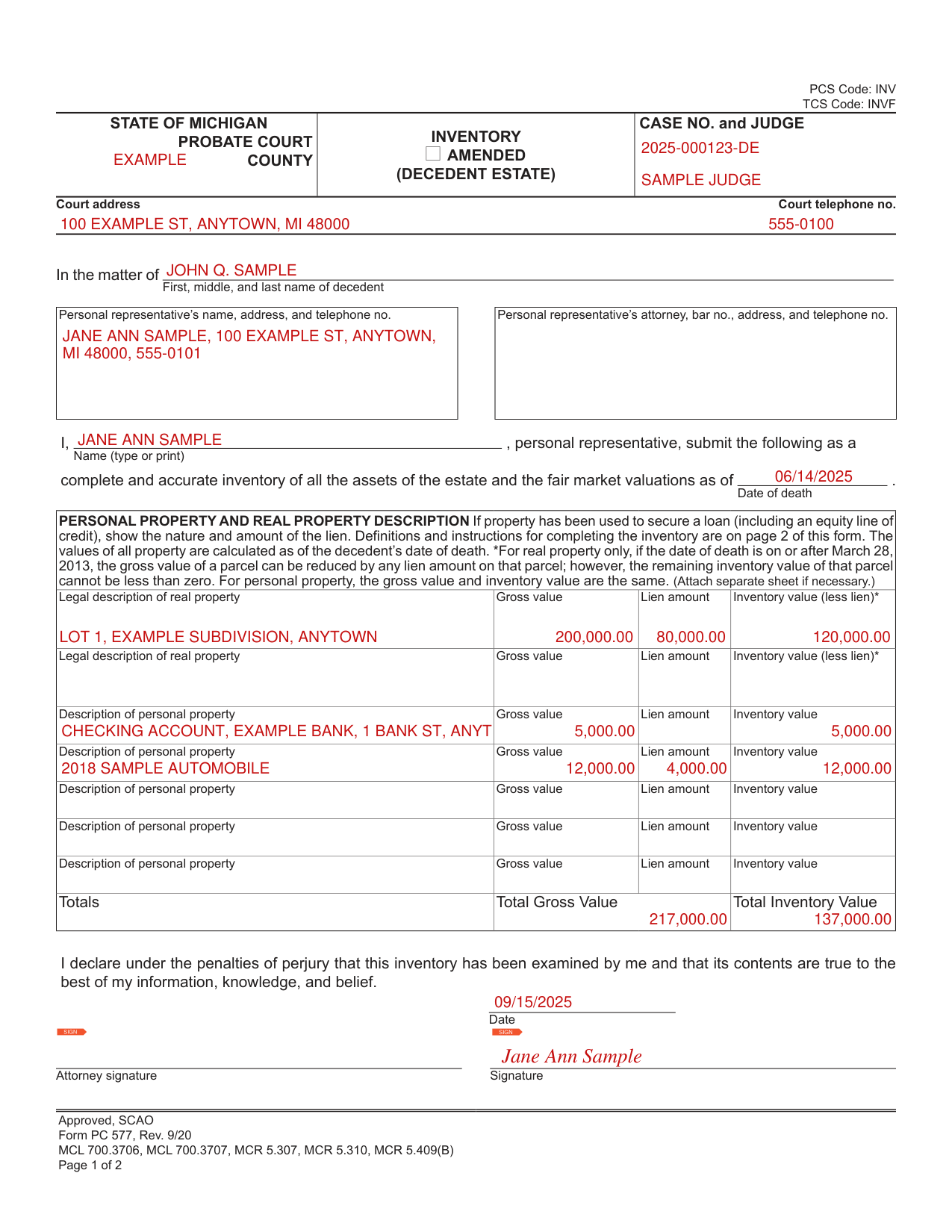
A filled-in Form PC 577 example: an inventory with a house and two personal items
How to fill out Form PC 577, box by box
The court, the case and AMENDED

Under STATE OF MICHIGAN PROBATE COURT, fill in the COUNTY, the CASE NO. and JUDGE, the Court address and the Court telephone no.
The form has an AMENDED box.
The decedent and the personal representative
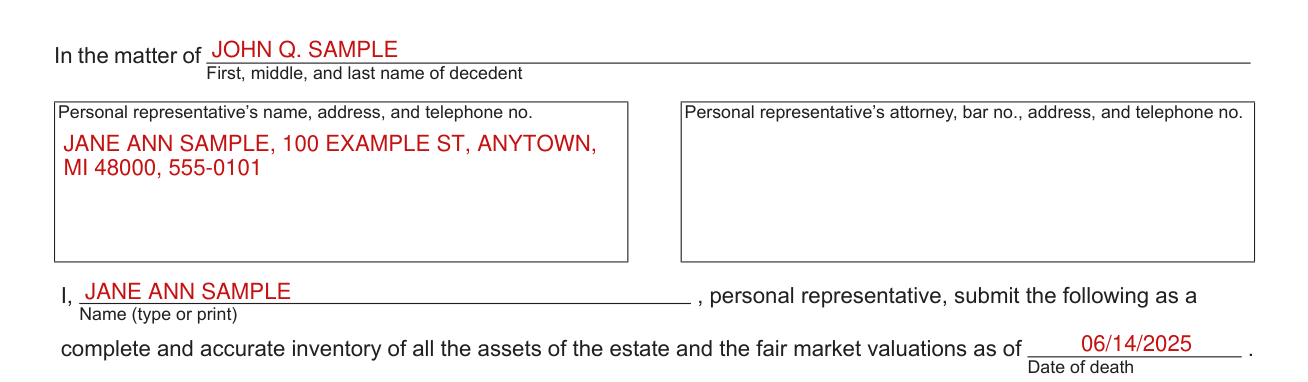
After In the matter of, enter the First, middle, and last name of decedent.
Enter the Personal representative's name, address, and telephone no., and the Personal representative's attorney, bar no., address, and telephone no.
After I, type or print your Name, as personal representative, and enter the Date of death.
Real property

Real property means land, including a building or house that is built on the land.
When listing real property, provide the legal description of the property and the name of any other owner.
For each parcel of real property, calculate the value individually.
If property has been used to secure a loan (including an equity line of credit), show the nature and amount of the lien. The values of all property are calculated as of the decedent's date of death. *For real property only, if the date of death is on or after March 28, 2013, the gross value of a parcel can be reduced by any lien amount on that parcel; however, the remaining inventory value of that parcel cannot be less than zero. For personal property, the gross value and inventory value are the same. (Attach separate sheet if necessary.)
Personal property
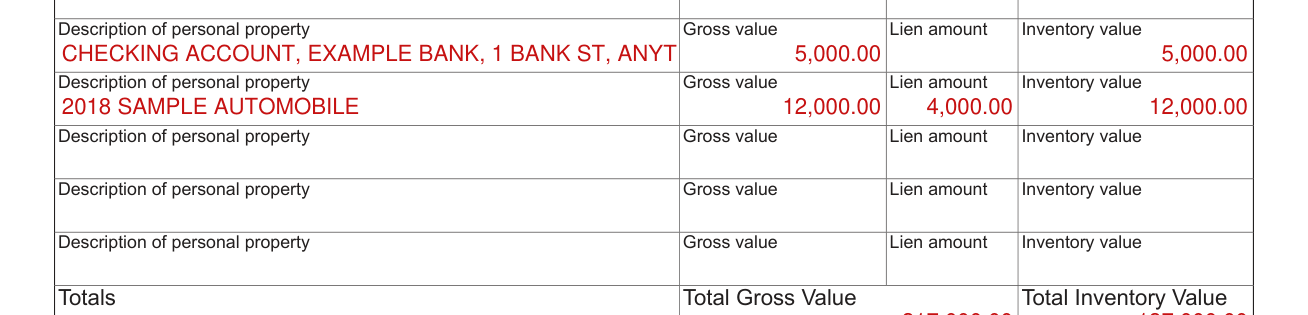
Personal property means everything that a person owns except real property, and includes bank accounts and checking accounts.
When listing personal property, provide enough detail to adequately determine the value.
Some items should be listed separately and some items should be combined under one category.
Examples of items that should be listed and valued separately are: Automobiles, Life insurance if payable to the estate, Jewelry, Annuities, Bank accounts, Mutual funds, Antiques, Stocks and bonds, and any other individual item of high value.
Examples of items that can be listed in categories are household items such as dishes, flatware, curtains, linens, utensils, clothing, furnishings, etc. These items can be grouped into several categories or combined into one category.
Provide the name and address of each financial institution listed; the address of a financial institution shall be either that of the institution's main headquarters or the branch used most frequently by the personal representative.
Do not provide financial account numbers on this form. If an account number is necessary to distinguish between accounts, put it on form MC 97.
If personal property has been used to secure a loan, show the nature and amount of the lien, but do not deduct the lien amount from the gross value (value as of the date of death) of any item of personal property.
Totals

Under Totals, enter the Total Gross Value and the Total Inventory Value.
The declaration, the date and the signatures

By signing, you declare under the penalties of perjury that this inventory has been examined by you and that its contents are true to the best of your information, knowledge, and belief.
Enter the Date.
More rules for Form PC 577
List all real and personal property in the column "Personal Property and Real Property Description."
If your situation is different
The value of the property is determined by an appraisal
If the value of real property is determined by an appraisal, include the appraiser's name and address and a description of the property appraised.
If the value of personal property is determined by an appraisal, include the appraiser's name and address and a description of the property appraised.
The court may require additional information
The court may require additional information to support the value of property that is stated in the inventory.
Sources
[1] Form PC 577 (Rev. 9/20), Inventory (Decedent Estate), Michigan State Court Administrative Office (the Official source link on this page).