
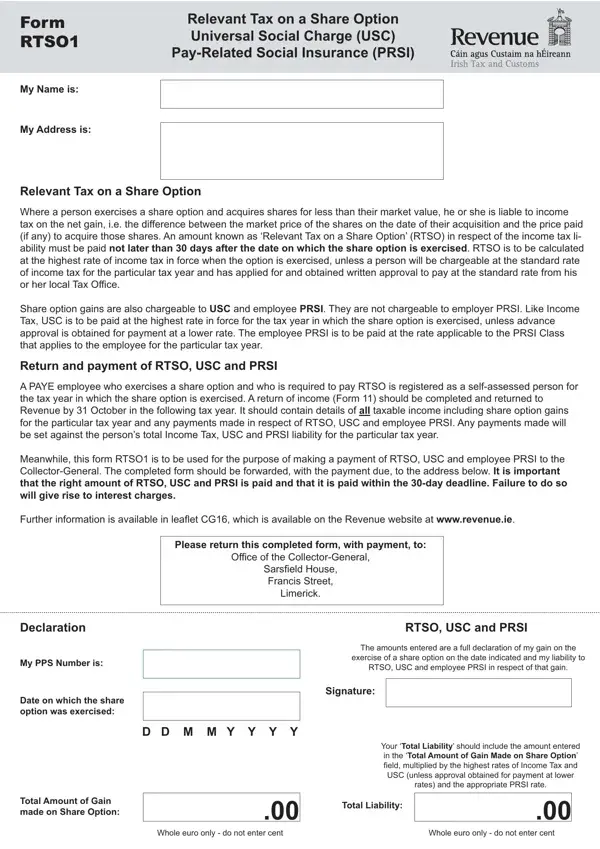
In the realm of taxation and employee benefits, understanding the procedural requirements when exercising share options is crucial. One such procedure involves the Rtso1 form, an essential document for individuals acquiring shares below their market value. This form comes into play as it directly pertains to the tax implications of such transactions, specifically addressing the income tax due on the net gain—the difference between the acquisition cost and the market price of the shares at the time of purchase. Known as the Relevant Tax on a Share Option (RTSO), this tax must be calculated at the highest income tax rate unless a lower rate is authorized through written approval from the local Tax Office. This responsibility falls on the shoulders of the employee, distinguishing from obligations like employer PRSI, which remain unaffected in these scenarios. In addition, the Universal Social Charge (USC) and the employee PRSI contributions are also subject to these taxation rules, with payments adjusted according to specific rates tied to the employee's PRSI class or any pre-approved reduced rates for USC. The RTSO1 form facilitates the payment of these taxes, aiming to streamline the reporting and payment process to the Collector-General. Its completion and submission are crucial steps in adhering to tax obligations, accompanied by a payment that reflects the detailed gains from share options, solidifying its role in the broader tax compliance landscape. Furthermore, the form's integration into the tax return process underlines its significance, ensuring that payments made contribute towards the individual's total tax liability for the applicable year, thus epitomizing the interconnectedness of individual tax events and overall tax responsibilities.
| Question | Answer |
|---|---|
| Form Name | Form Rtso1 |
| Form Length | 2 pages |
| Fillable? | No |
| Fillable fields | 0 |
| Avg. time to fill out | 30 sec |
| Other names | rtso1 printable, rtso1 tax form, rtso1, rtso1 online |