
Form MV20 at a glance
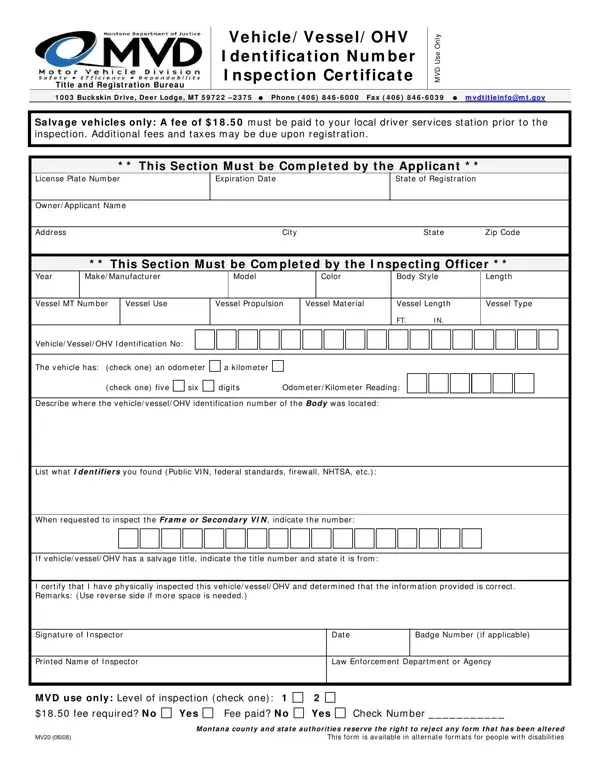
What it is: Form MV20 is the Stage 1 Vehicle/OHV Inspection Form.
Who signs: The inspector must sign and print their name as well as list the date, agency, state and badge number. The inspection needs to be legible. Forms which are not complete, inaccurate, or unreadable will be rejected.
Retain the first page for your records and do not return it with the form. This inspection form is used when completing a Vehicle Identification Inspection. It is needed for authenticating a vehicle's identification number for the purpose of titling the vehicle. An inspection may be requested by any county or MVD for any reason for verification of the vehicle.
What to bring and attach to Form MV20
For vehicles 1981 and newer, the applicant must attach a clear picture of the public VIN, found on the driver's side of the dash, viewable from the outside through the vehicle windshield. They must also have a clear picture of the Federal Standards Label found in the driver's door area. These pictures must be printed and attached to this form. The pictures may be printed on normal paper if the image is readable.
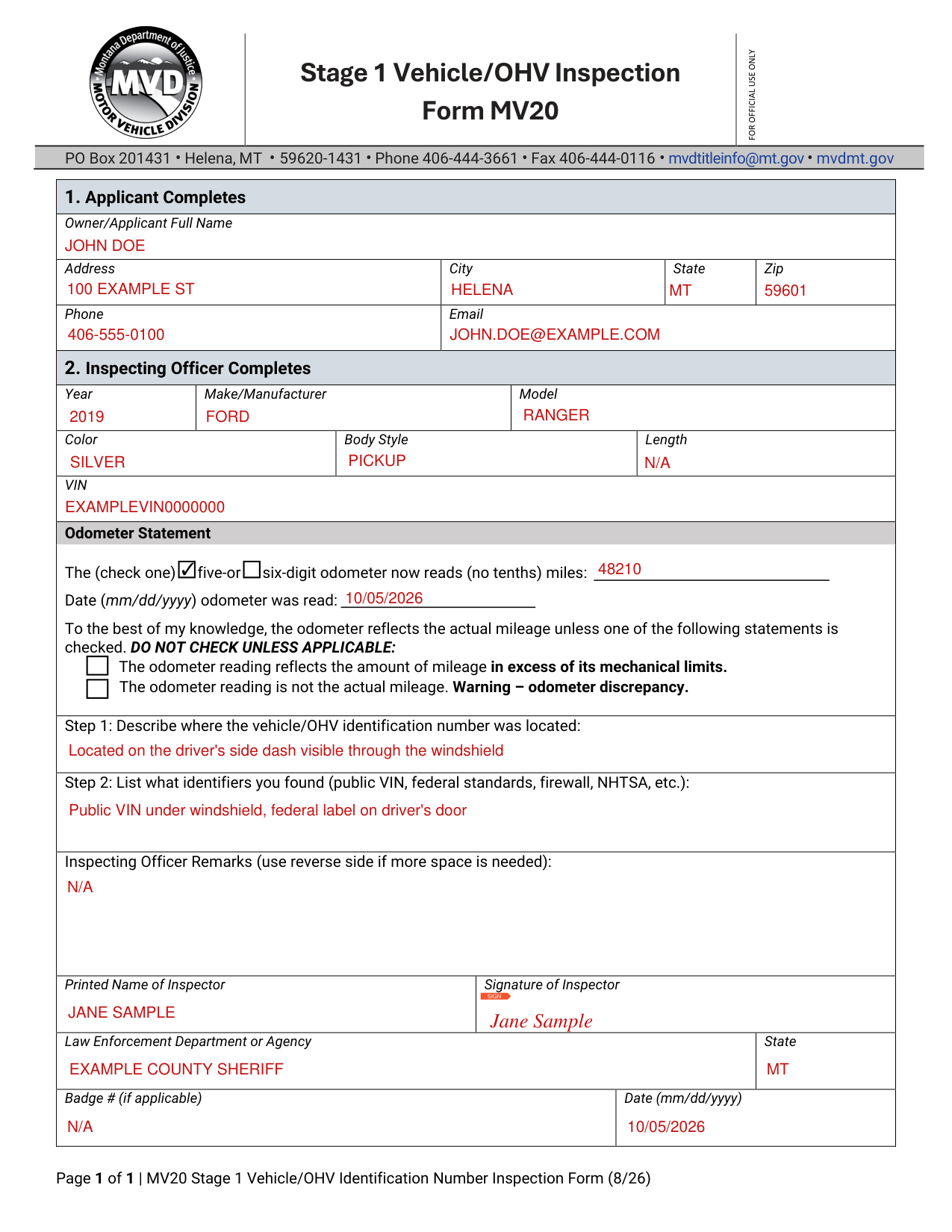
A filled-in Form MV20 example: an officer inspects a pickup
How to fill out Form MV20, box by box
1. Applicant Completes: owner or applicant
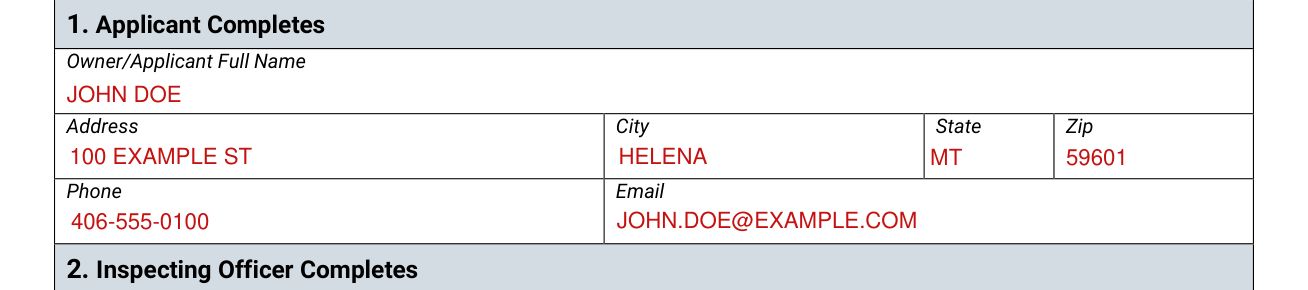
Section 1 must be completed by the applicant. Enter the Owner/Applicant Full Name, Address, City, State, Zip, Phone and Email. The form can be filled in electronically and it is highly recommended to do so. If a box has no information, you must indicate N/A in that box.
2. Inspecting Officer Completes: the vehicle
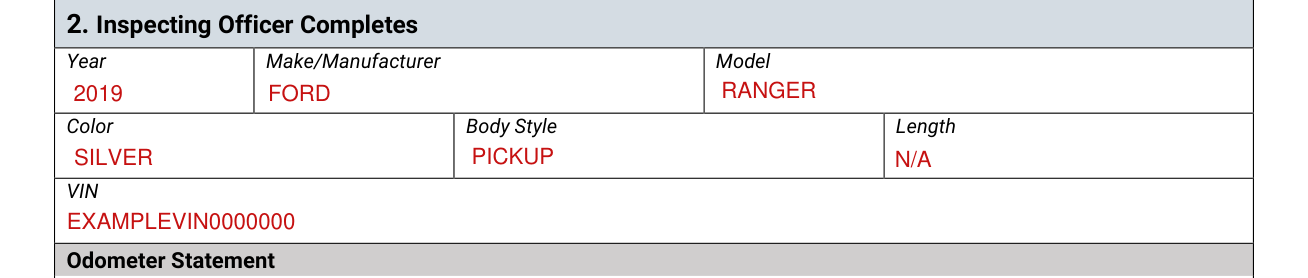
Section 2 must be completed by an inspection officer. A Stage 1 inspection can be completed by any law enforcement officer. All fields must be filled in with the correct information and must be legible. If a field has no information, it must indicate N/A in that box. If a mistake is made, the form must be discarded and a new form used.
Year, Make/Manufacturer, Model, Color, and Body Style must be completed for all vehicles being inspected. Enter the VIN.
Length is used for a trailer that is being inspected.
Odometer Statement
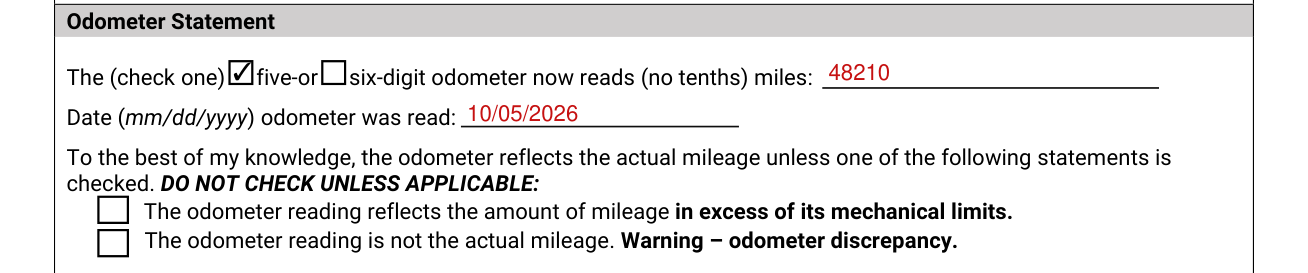
Odometer Statement: check one (five-or six-digit), and enter what the odometer now reads (no tenths) in miles.
Enter the date (mm/dd/yyyy) the odometer was read.
To the best of my knowledge, the odometer reflects the actual mileage unless one of the following statements is checked. DO NOT CHECK UNLESS APPLICABLE: The odometer reading reflects the amount of mileage in excess of its mechanical limits. The odometer reading is not the actual mileage. Warning: odometer discrepancy.
Step 1, Step 2 and Inspecting Officer Remarks
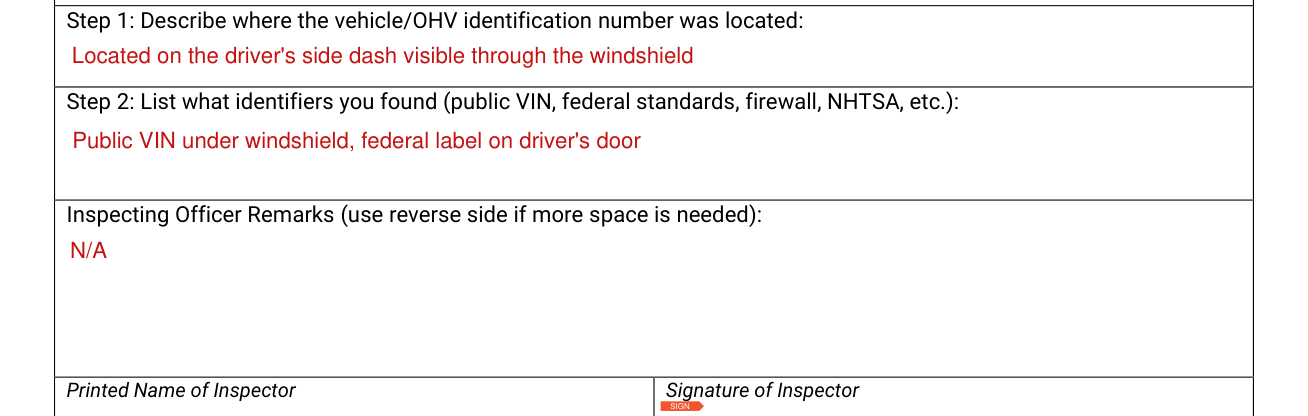
Step 1: Describe where the identification number is located. Example: “located on the driver's side dash visible through the windshield” or “under the hood on the emissions label affixed to the radiator core support,” etc.
List what identifiers you found (public VIN, federal standards, firewall, NHTSA, etc.). Step 2: The identifiers must be listed in the appropriate section. Identifiers will be what the VIN was located on. Example: public VIN under windshield, federal label on driver's door, emission label under the hood, or stamped into firewall, etc.
Inspecting Officer Remarks: any other remarks about the inspection need to be listed in the Remarks section. Use reverse side if more space is needed.
Inspector, signature, agency and badge

Enter the Printed Name of Inspector, sign the Signature of Inspector line, then enter the Law Enforcement Department or Agency, State, Badge # (if applicable) and Date (mm/dd/yyyy).
More rules for Form MV20
Montana county and state authorities reserve the right to reject any form that has been altered.
Sources
[1] Stage 1 Vehicle/OHV Inspection Form MV20 (8/26), Montana Motor Vehicle Division (the Official source link on this page).