
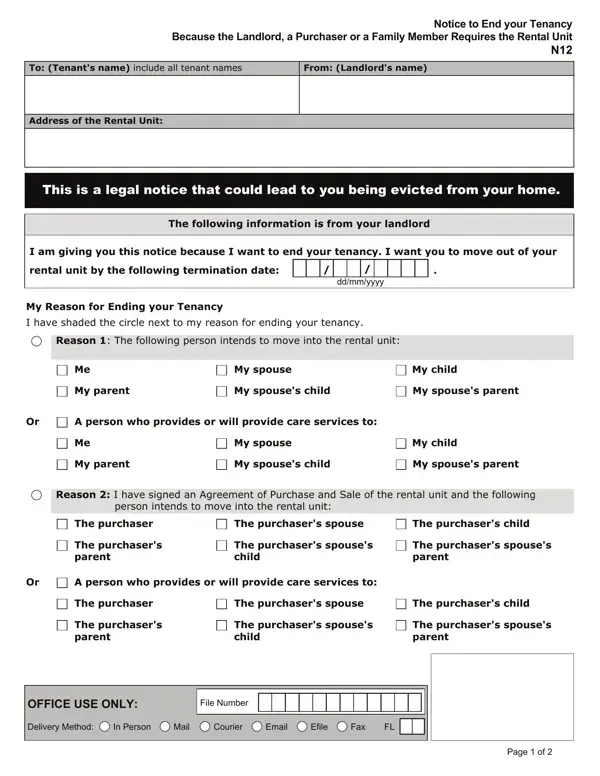
In the realm of tenant and landlord relationships, the N12 form serves as a critical document, marking a significant juncture when a landlord wishes to reclaim a rental unit for personal use, for immediate family members, or for buyers following a sale. This notice to end tenancy is not merely informational but carries the weight of a potential eviction should the tenant choose not to comply by the specified date. The form clearly outlines the need for tenants to vacate their home, providing reasons that include the landlord or their close relatives, or purchasers desiring to occupy the unit. Given with this notice is a mandatory period—no less than 60 days after the notice is served and coinciding with the end of a rental period—during which the tenant has the right to make a decision. Notably, the termination date cannot precede the conclusion of a fixed-term lease agreement's duration. Moreover, tenants retain the right to terminate their tenancy earlier than stated, provided they notify the landlord using the appropriate form at least 10 days in advance. In cases of disagreement with the eviction notice, tenants don't have to vacate immediately but face a potential legal process. The document emphasizes the procedural aspects following a landlord's application for eviction, reinforcing the tenant's opportunity to contest the claims during a scheduled hearing. For individuals navigating this process, support and detailed information are accessible through the Landlord and Tenant Board, offering guidance on rights and next steps. This framework underscores the procedural and rights-focused infrastructure surrounding tenant evictions for personal use, ensuring both parties are informed and have avenues to address concerns arising from an N12 notice.
| Question | Answer |
|---|---|
| Form Name | N12 Form |
| Form Length | 2 pages |
| Fillable? | No |
| Fillable fields | 0 |
| Avg. time to fill out | 30 sec |
| Other names | n12 form ontario 2021, n12 notice, n12, n12 form ontario download |
N12 Form isn’t the one you’re looking for?