
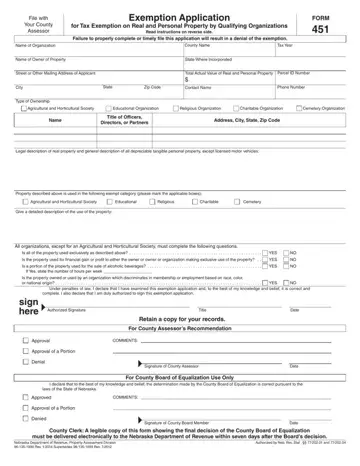
In Nebraska, organizations seeking tax exemption on real and personal property for uses that are deemed beneficial to society face a detailed process encapsulated within the Form 451 Exemption Application. This crucial document is designed for specific entities such as agricultural and horticultural societies, educational organizations, religious groups, charitable entities, and cemetery organizations, outlining a pathway to obtain tax relief, providing they meet strict criteria. The form mandates information about the organization applying for exemption, including the name, ownership details, contact information, and a thorough description of the property for which the exemption is sought. Moreover, it probes into the exclusive use of the property, ensuring it's not employed for financial gain or the sale of alcoholic beverages beyond a designated limit, and that it doesn't facilitate practices discriminating based on race, color, or national origin. The filing timeline and procedures are rigorously delineated, highlighting deadlines and late filing possibilities alongside potential penalties for tardiness, emphasizing the importance of timely action and accuracy. Additionally, the form touches on intervening years’ requirements, appealing a denial, and the specific case of cemetery organizations, reflecting a comprehensive guide for exemptions within the state's regulatory framework. Thus, the Form 451 emerges as a pivotal document for qualifying organizations in Nebraska, navigating through the intricacies of tax exemption eligibility and procedural compliance, underscoring the necessity of precision and adherence to stipulated guidelines.
| Question | Answer |
|---|---|
| Form Name | Nebraska Form 451 |
| Form Length | 2 pages |
| Fillable? | No |
| Fillable fields | 0 |
| Avg. time to fill out | 30 sec |
| Other names | Horticultural, taxable, discriminates, Nebraska |