
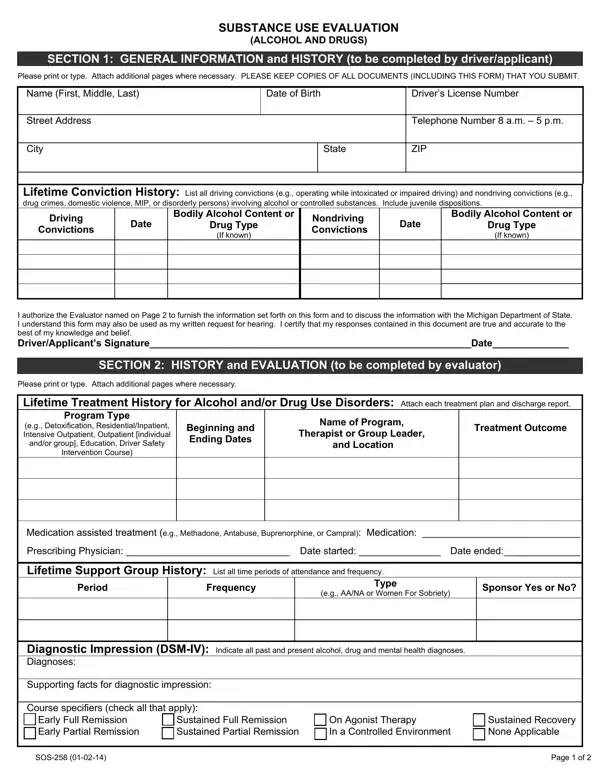
Form SOS-258 at a glance
What it is: Form SOS-258, the Substance Use Evaluation, must be completed by a qualified evaluator on your behalf.
Where and when to file: Submit this form within 90 days of your evaluation with your evidence package.
What to bring and attach to Form SOS-258
1 Find a qualified evaluator to complete this form. 2 Schedule an appointment with the evaluator.
Bring your completed Hearing Request Application (SOS-257) to the appointment.
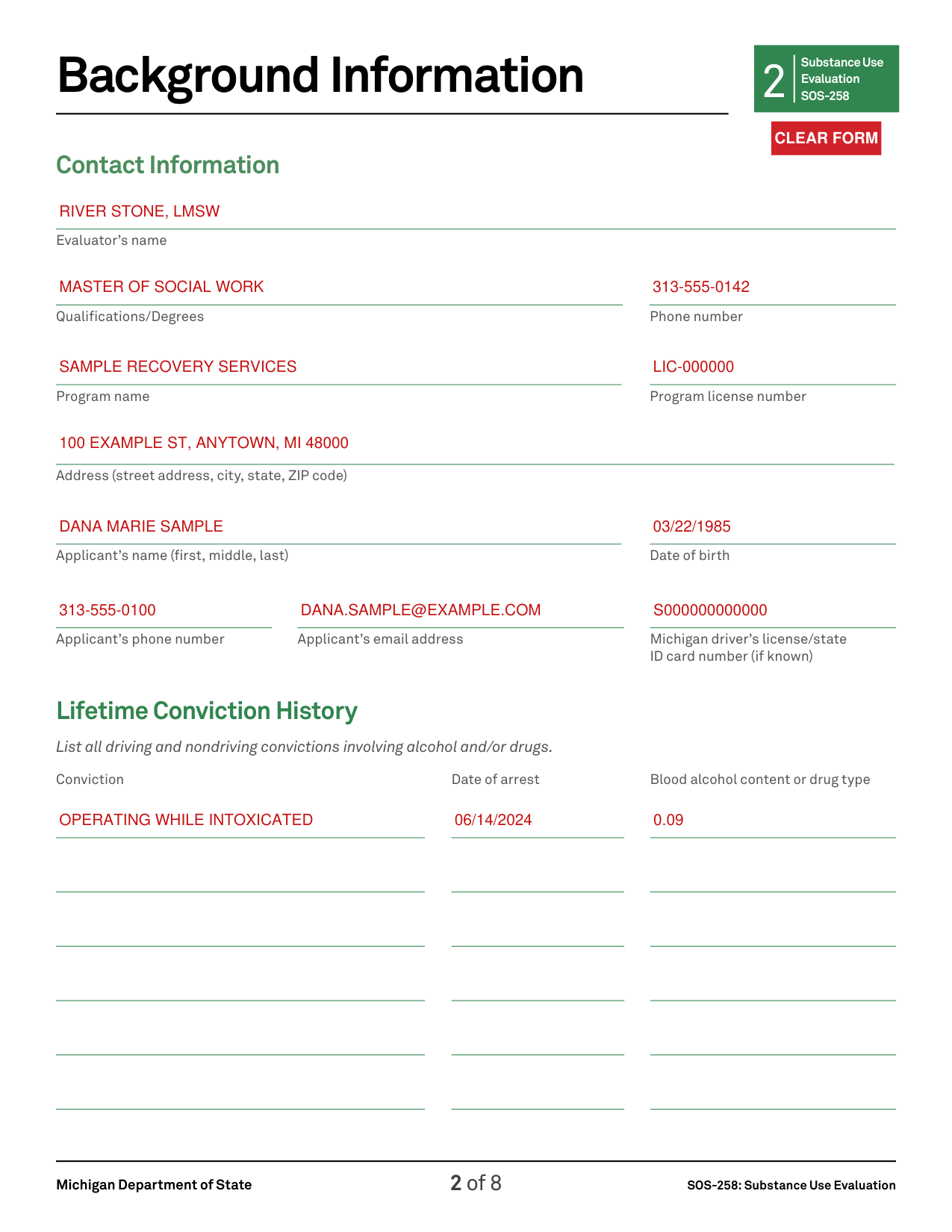
A filled-in Form SOS-258 example: an evaluator fills in the contact lines and one conviction
How to fill out Form SOS-258, box by box
Contact Information
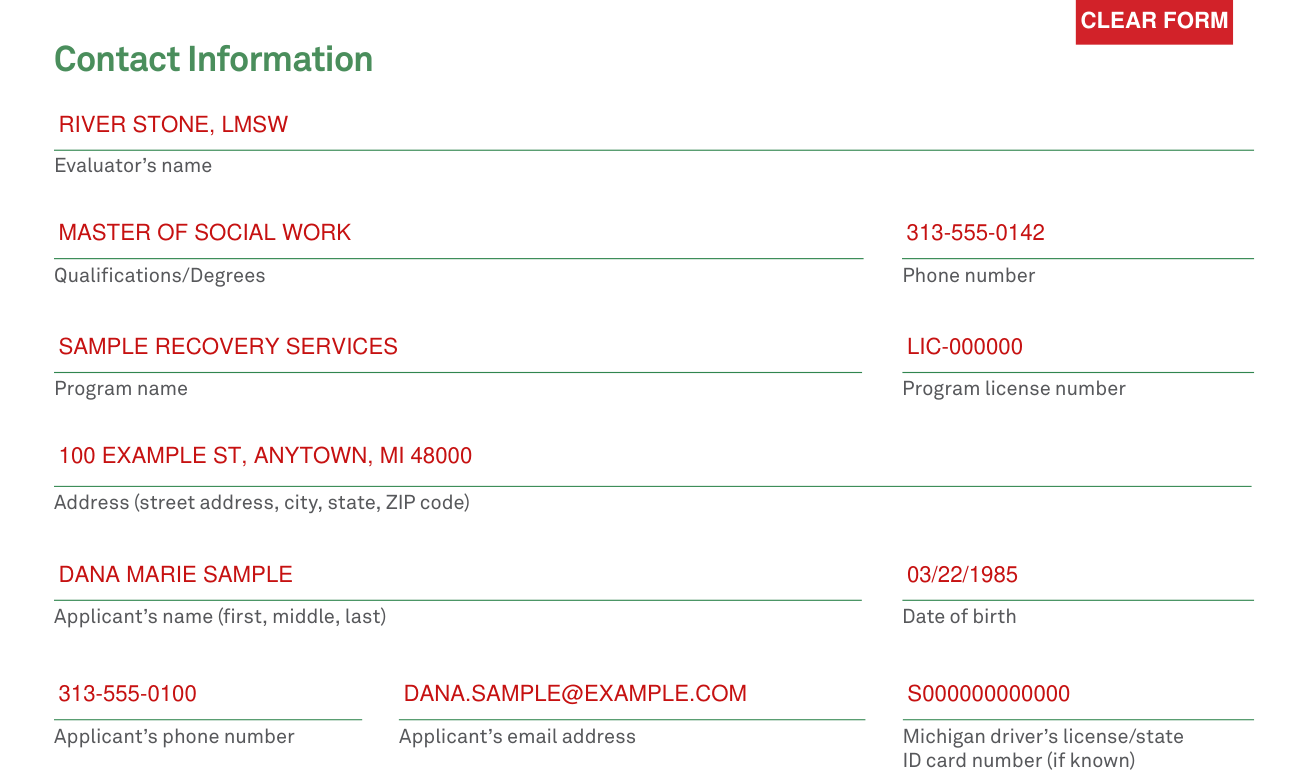
Under Contact Information, enter the Evaluator's name, Qualifications/Degrees, Phone number, Program name, Program license number and Address (street address, city, state, ZIP code).
Enter the Applicant's name (first, middle, last), Date of birth, Applicant's phone number, Applicant's email address and Michigan driver's license/state ID card number (if known).
Lifetime Conviction History
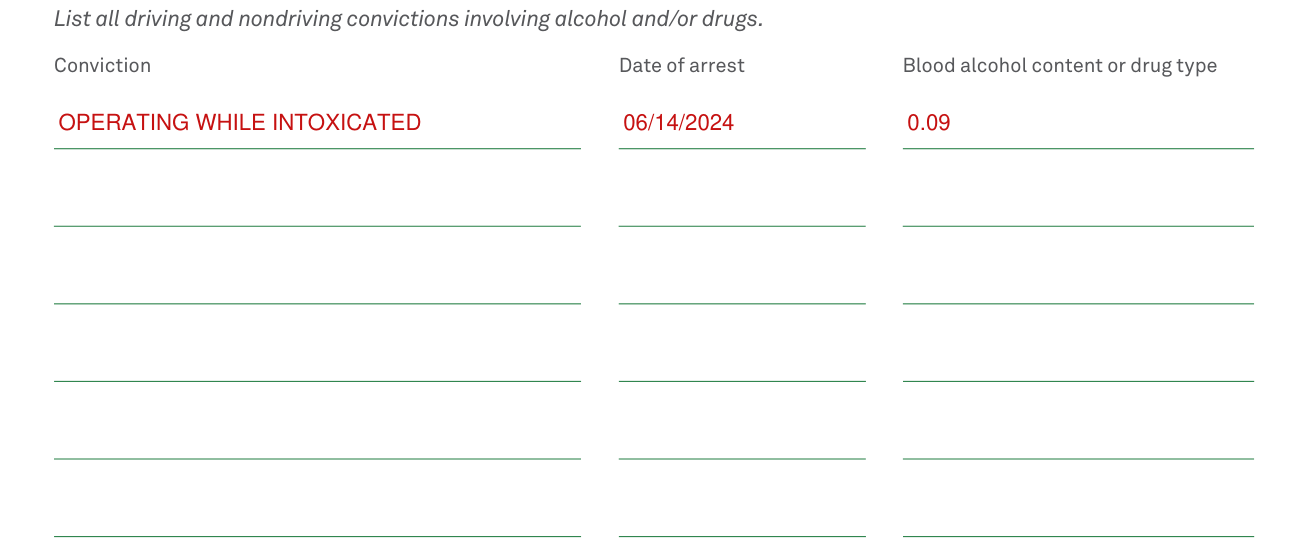
Under Lifetime Conviction History, list all driving and nondriving convictions involving alcohol and/or drugs: the Conviction, Date of arrest and Blood alcohol content or drug type.
Lifetime Treatment History
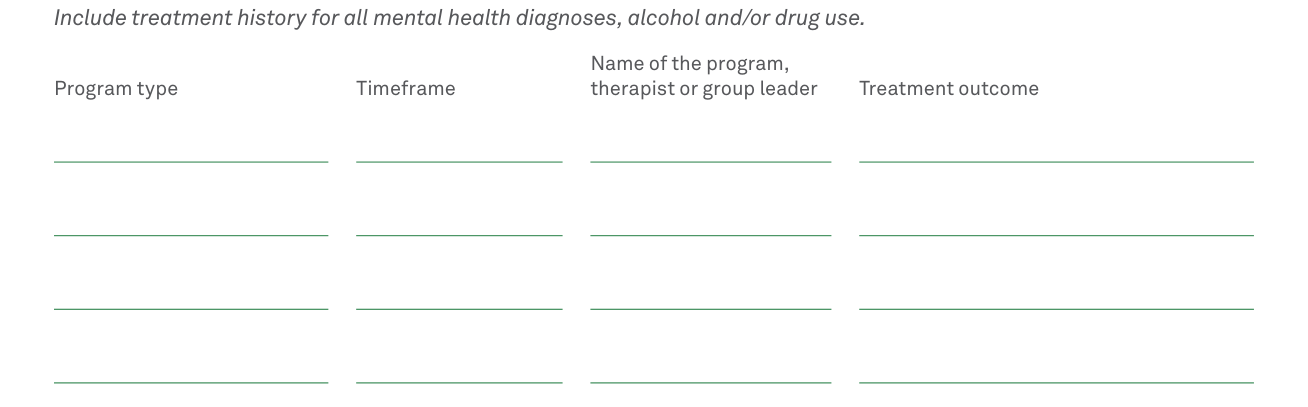
Include treatment history for all mental health diagnoses, alcohol and/or drug use: Program type, Timeframe, Name of the program, therapist or group leader and Treatment outcome.
Attach treatment plans and discharge reports.
Prescription Medication
Under Prescription Medication, include all agonist medication and medication to treat pain, mental or physical health that may impact the applicant's ability to drive.
The prescribing physician must complete a DA-4P for all prescriptions included.
For PAST and for CURRENT, enter the Medication, Prescribing physician, Used for and Dates used (start and end dates).
Lifetime Support Group History
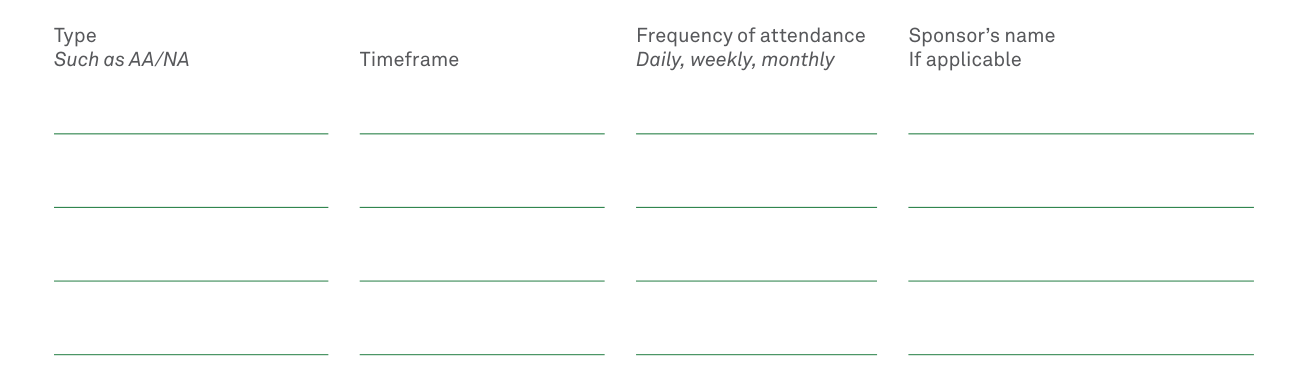
Under Lifetime Support Group History, enter the Type (such as AA/NA), Timeframe, Frequency of attendance (daily, weekly, monthly) and Sponsor's name (if applicable).
Lifetime Abstinence History and last use
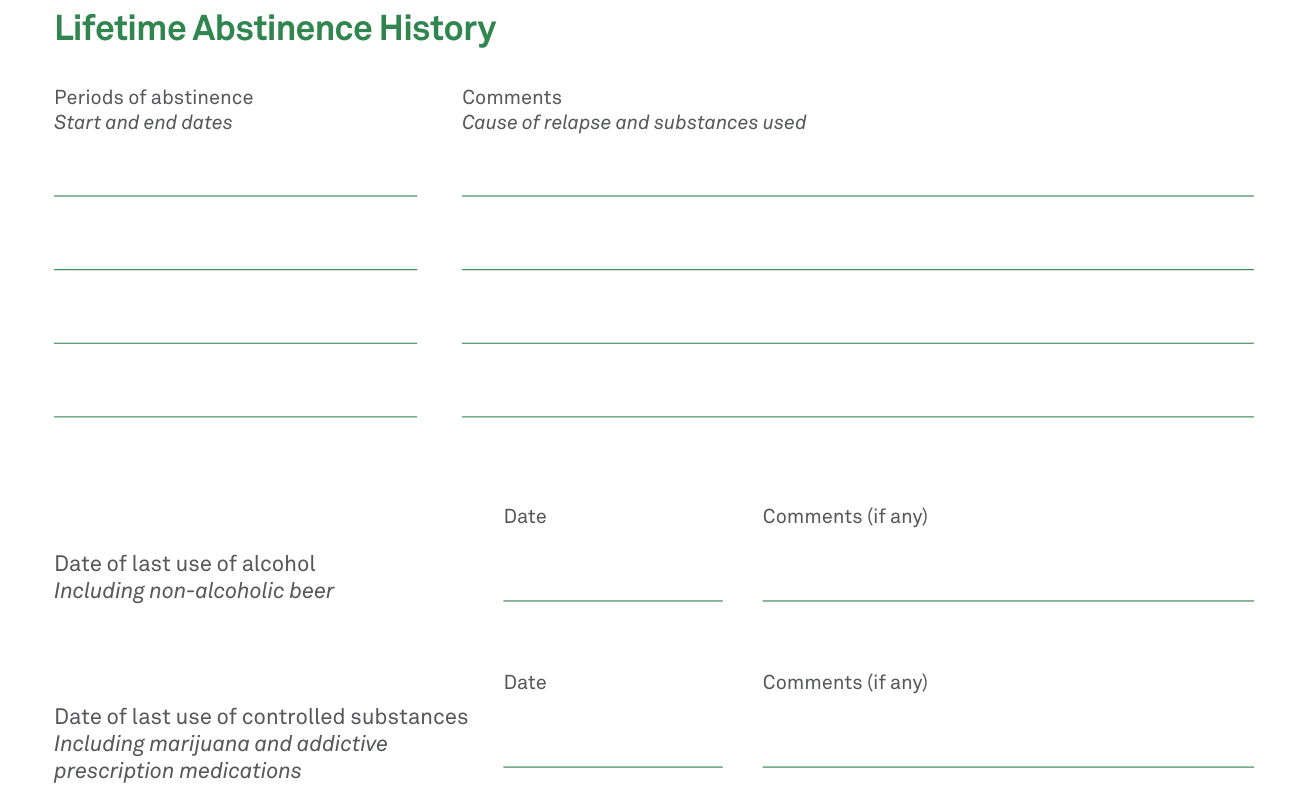
Under Lifetime Abstinence History, enter the Periods of abstinence (start and end dates) and Comments (cause of relapse and substances used).
Enter the Date of last use of alcohol, including non-alcoholic beer, and the Date of last use of controlled substances, including marijuana and addictive prescription medications, with Comments (if any).
Diagnostic Impression
Under Diagnostic Impression (DSM-IV or DSM-V), describe all past and present alcohol, drug, and mental health diagnoses (including self-reported): the Diagnosis and the Supporting facts for diagnosis.
Course specifiers (check all that apply): Early Full Remission, Sustained Full Remission, On Agonist Therapy, Sustained Recovery, Early Partial Remission, Sustained Partial Remission, In a Controlled Environment, Non-Applicable.
Testing Instruments
Under Testing Instruments, for TEST 1 and TEST 2, enter the Testing instrument used, Interpretation of results, Score and how the results of this test correlate with the DSM-IV or DSM-V diagnosis.
Attach the actual instrument (such as ASI, SASSI-3, MAST/DAST) used.
Drug Screen
Attach the 11-panel drug test results and results for any additional drug tests taken.
The evaluator checks the box if they referred a client to a drug screening facility.
The evaluator checks the box if they administered an 11-panel urinalysis drug screen and submitted a current laboratory report that includes at least two urine integrity variables such as specific gravity, urine creatinine or pH level.
Enter the results of the applicant's 11-panel urinalysis drug screen, which includes: cocaine, marijuana, PCP, amphetamines, opiates, benzodiazepines, barbiturates, methadone, methamphetamines, ecstasy/MDMA, and oxycodone/Percocet.
If the evaluator administered an ethyl-glucurodine alcohol test, the evaluator includes the results.
Applicant Prognosis
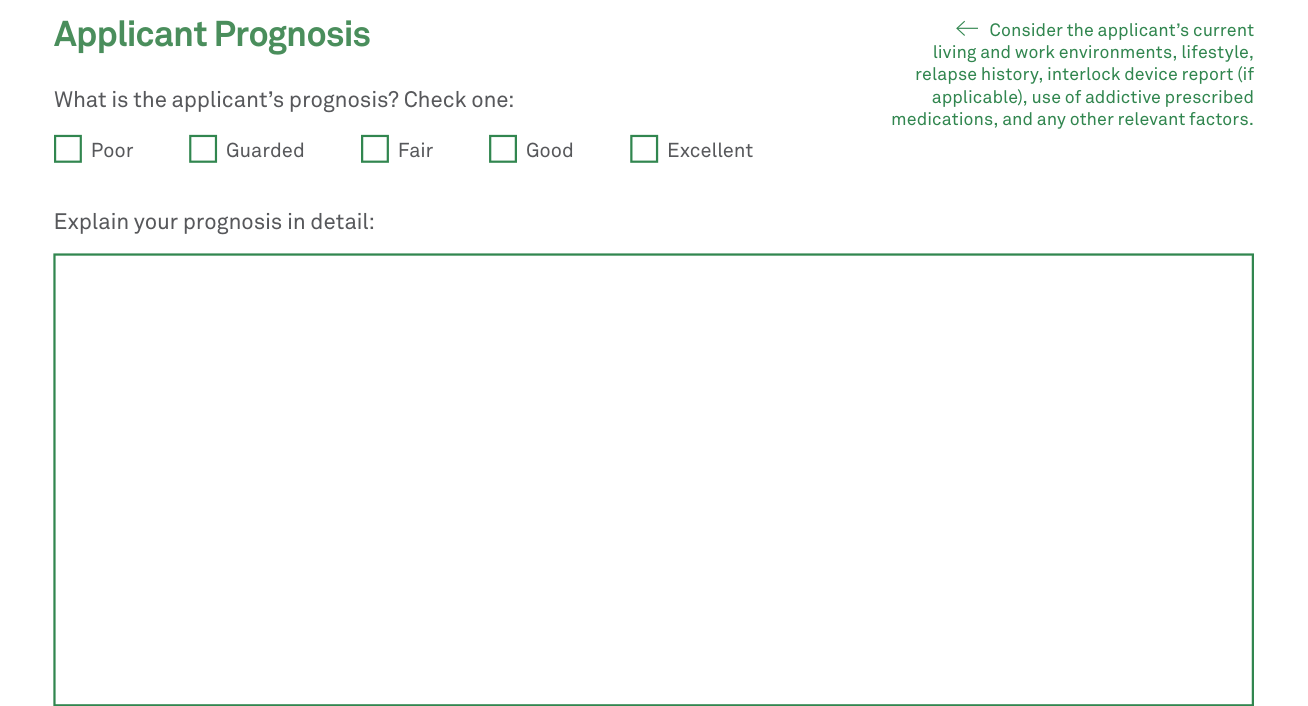
Consider the applicant's current living and work environments, lifestyle, relapse history, interlock device report (if applicable), use of addictive prescribed medications, and any other relevant factors.
What is the applicant's prognosis? The evaluator checks one: Poor, Guarded, Fair, Good, Excellent. The evaluator explains the prognosis in detail.
Continuum of Care Recommendations
Under Continuum of Care Recommendations: How does the evaluator recommend the applicant stay abstinent? Check all that apply: Mental health treatment, Community support group (such as AA/NA), Substance use treatment, Other.
Explain in detail. If no recommendations, why?
Additional Information and Sign Here
Under Additional Information, share anything else about the applicant's substance use history or current lifestyle.
You may e-sign this document. Click document field to sign.
Under Sign Here, the Applicant's signature authorizes the Evaluator to furnish the information set forth on this form and to discuss the information with the Michigan Department of State.
By signing, the Applicant certifies that their responses contained in this document are true and accurate to the best of their knowledge and belief.
Enter the Applicant's name and the Date; sign on the Applicant's signature line.
As of this date, the evaluator certifies that this Substance Use Evaluation is true to the best of their knowledge and belief based on information obtained from the applicant, the applicant's known substance use disorder and mental health history, and examination.
The decision to grant, suspend, or reinstate an individual's driving privileges rests solely with the Department of State, which may consider other facts or conditions when making this decision.
Enter the Evaluator's name and the Date; sign on the Evaluator's signature line.
More rules for Form SOS-258
3 Sign and submit the completed form with your evidence package.
Common questions about Form SOS-258
Is there a deadline?
Submit this form within 90 days of your evaluation with your evidence package.
Sources
[1] Form SOS-258, Substance Use Evaluation, Michigan Department of State (the Official source link on this page).