
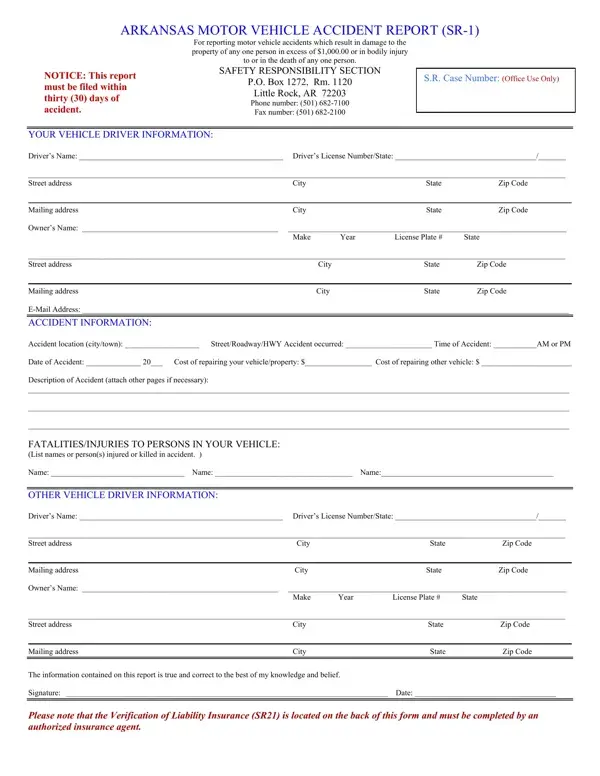
If a car crash in Arkansas causes substantial property damage or injuries, those involved must follow specific reporting requirements outlined in the Arkansas Motor Vehicle Accident Report (SR-1). This report offers a uniform way for drivers to document the specifics of a collision. It comprises details on the drivers and vehicles affected, where and when the accident occurred, a narrative of the incident, and the severity of damages or injuries.
The Arkansas Motor Vehicle Accident Report also includes a section for verification of liability insurance (SR-21), which an authorized insurance agent must complete. This is helpful for insurance claims and potential legal proceedings.
Note that an SR-1 form must be filed by the driver involved in the accident or by the vehicle owner if the driver is incapacitated within 30 days of the accident.
| Question | Answer |
|---|---|
| Form Name | SR-1 Form |
| Form Length | 2 pages |
| Fillable? | Yes |
| Fillable fields | 58 |
| Avg. time to fill out | 10 min |
| Other names | motor vehicle SR 1, Arkansas motor accident report, AR accident report, Arkansas vehicle accident report |
SR 1 Form isn’t the one you’re looking for?