Please rate Summon Form

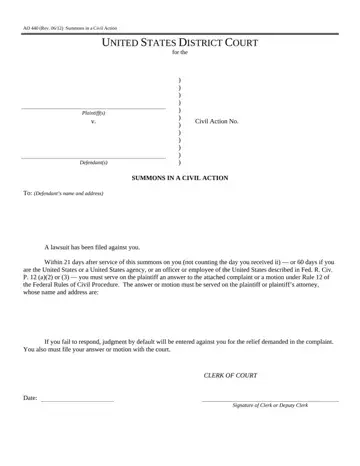
Stepping into the legal arena, especially when it involves a lawsuit, can be a complex and daunting journey. At the heart of this process is the summon form, a critical document that serves as the official notice to someone that they are being sued. Known officially as Form AO 440 in the United States District Court, this notice requires the person being sued (the defendant) to respond within a specified period - typically 21 days for most, but extending to 60 days for the United States, its agencies, officers, or employees. Failure to respond can lead to a default judgment against the defendant, meaning the court may automatically rule in favor of the plaintiff without hearing the defendant's side. Besides informing the defendant of the lawsuit, this form also provides important details such as the name and address of the plaintiff’s attorney, highlighting where the defendant must send their answer or any motion related to the case. Moreover, it outlines the necessity of filing the response with the court, ensuring the legal proceedings are properly documented and accessible. Additionally, the form includes a section for proof of service, ensuring that the process of notifying the defendant adheres to legal standards and is officially recorded. This document essentially initiates the formal legal process, bridging the gap between allegations made in a complaint and the actual courtroom proceedings, guiding participants through the initial steps of a civil action lawsuit.
| Question | Answer |
|---|---|
| Form Name | Summon Form |
| Form Length | 2 pages |
| Fillable? | No |
| Fillable fields | 0 |
| Avg. time to fill out | 30 sec |
| Other names | how to district court summons, how to court summons civil, how to summons, summons action civil |
Summon Form isn’t the one you’re looking for?
Please rate Summon Form