

Trial Notebook Techniques & Strategies at a glance
What it is: Trial Notebook Techniques & Strategies is How to Create the Ultimate Trial Notebook.
The trial notebook is your blueprint for trial and should be customized to the attorney who will try the case. Under ABA Model Rules of Professional Conduct 1.1 and 1.3, the attorney must act with reasonable diligence and competency on the client's behalf. Do not delay trial preparation until the week of the trial.
A filled-in Trial Notebook Techniques & Strategies example: a paralegal fills in a Witness Summary
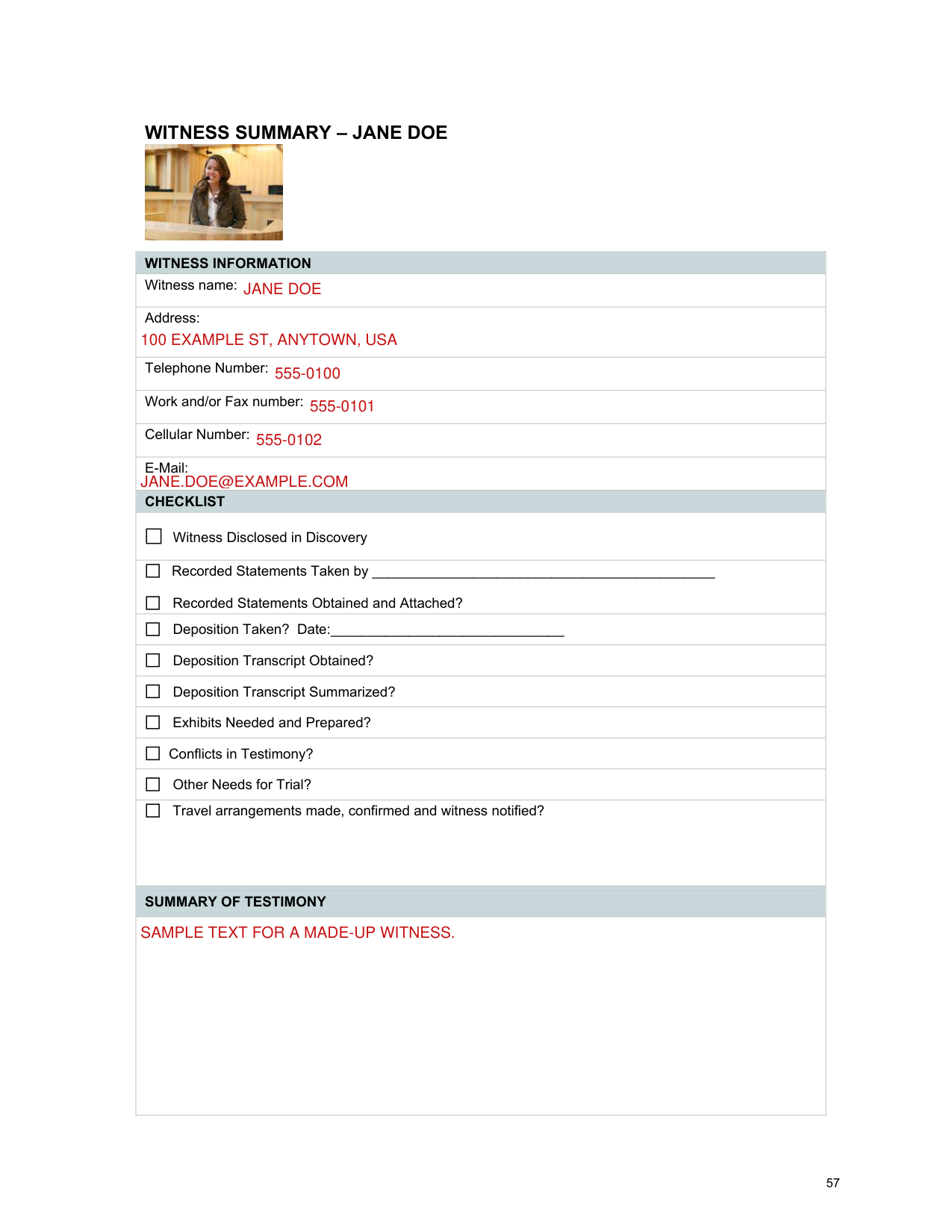
How to fill out Trial Notebook Techniques & Strategies, box by box
Witness information
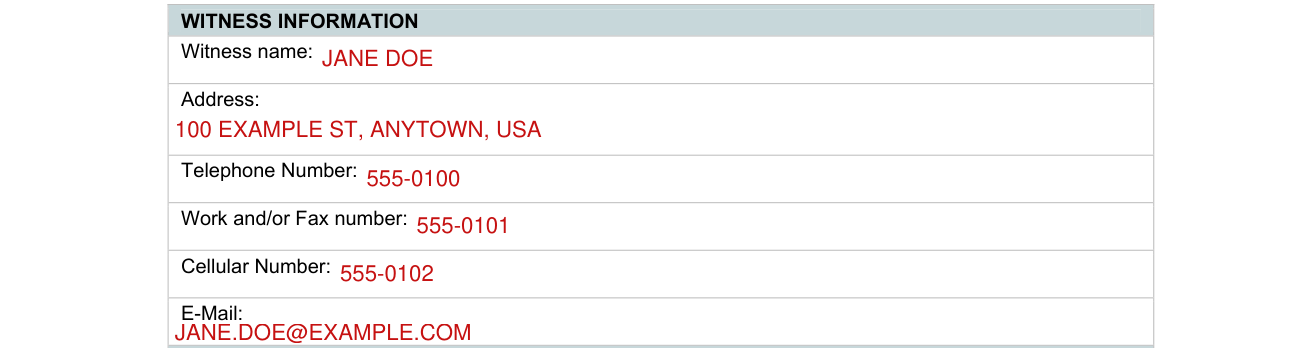
Each witness has a tab, a Witness Summary and list of exhibits to be used.
Under WITNESS INFORMATION, fill in Witness name, Address, Telephone Number, Work and/or Fax number, Cellular Number and E-Mail.
Two ways to organize the witnesses behind the witness tab: Alphabetically, By order of appearance at trial.
Summary of testimony
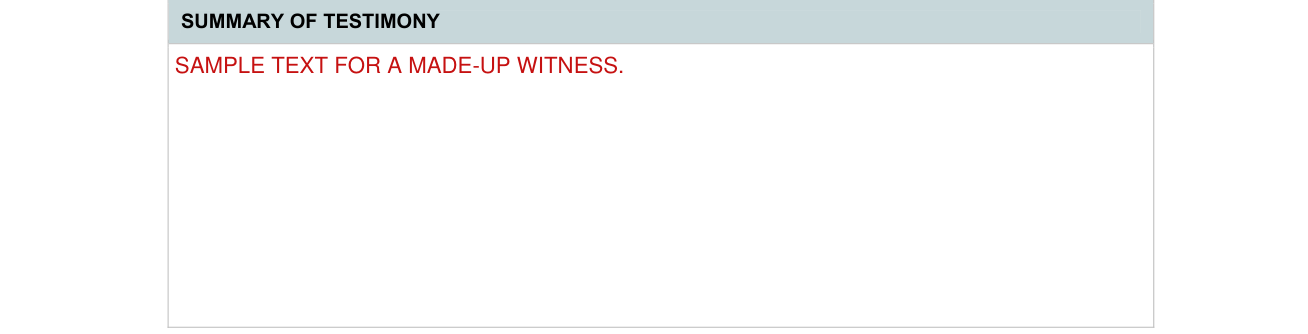
Fill in SUMMARY OF TESTIMONY.
More rules for Trial Notebook Techniques & Strategies
The biggest mistake attorneys and paralegals can make is to delay trial preparation until the week of the trial.
Assume every case will go trial and begin trial preparation the day the client retains the firm.
The general rule is that it is organized in the same form and order that trial will progress.
Customary sections include: Voir Dire, Opening Argument, Pretrial Orders/Motions, Pleadings, Plaintiff's Witness List w/separate tabs for each witness, Defendant's Witness List w/separate tabs for each witness, Plaintiff's Exhibit List, Defendant's Exhibit List, Closing Argument, Jury Instructions/Trial Briefs and Settlement/Damages.
Start your OFFICIAL trial notebook two to four weeks prior to trial.
Begin with a review of the pleadings.
Developing a one page summary of the case helps organize trial issues at the front of the trial notebook. Include: Case caption, Pertinent dates and times, Brief summary of the facts, damages, claimed liability and applicable defenses, Major witnesses.
Review the Pretrial Order for deadlines and orders on procedure (caution: deadlines change!)
Start your Exhibit List at the first hearing or deposition.
Use an Exhibit Log.
This section includes a copy of the Jury Instructions and trial briefs filed by all parties.
Summarize any differences in the Jury Instructions from each party.
Include settlement demands and offers.
Organize the electronic trial notebook simultaneously beginning when the firm is retained. It will mirror your hard file.
Visit the courtroom.
Sources
[1] Trial Notebook Techniques & Strategies (1/26/05).
