
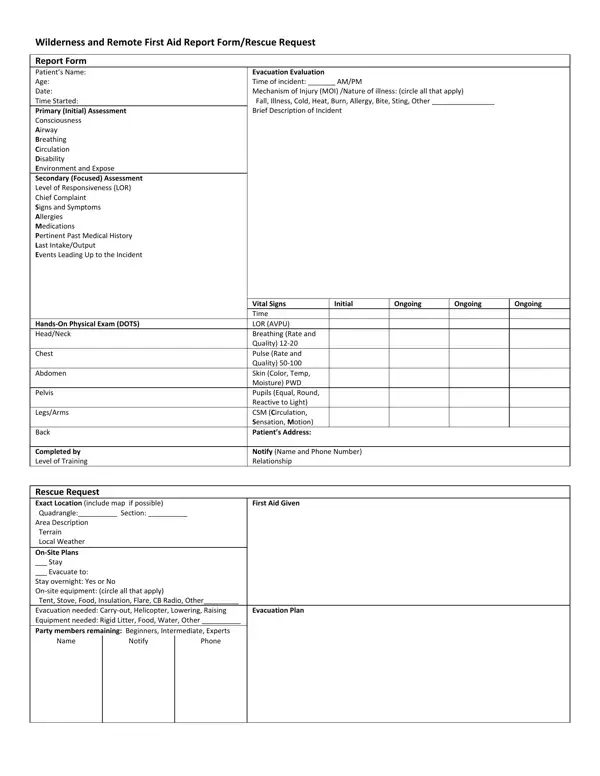
Wilderness First Aid Report Form PDF Details

When an incident occurs in a wilderness or remote area, a well-documented aid report is crucial for ensuring the safety and well-being of those involved. The Wilderness First Aid Report Form serves as an essential tool in this process, providing a systematic way to record the details of an injury or illness that occurs far from traditional medical facilities. This form captures a wide array of vital information, starting with the patient's name, age, and the time and date of the incident. It goes on to detail the mechanism of injury or nature of the illness, encompassing everything from falls and illnesses to bites and stings. The form is comprehensive, covering the initial assessment of the patient’s condition, including consciousness, airway, breathing, circulation, and disability, as well as the environmental conditions. The secondary assessment records the level of responsiveness, chief complaint, signs and symptoms, allergies, medications, and pertinent past medical history, alongside the last intake/output and events leading up to the incident. It also includes the recording of vital signs, both initially and ongoing, and a hands-on physical examination. Details about the patient’s address, the person completing the form, their level of training, and relationship to the patient are incorporated, as well as instructions for rescue requests. Information on the exact location, first aid provided, and the on-site plan, including whether evacuation is needed and the specifics of the evacuation plan, are also integral parts of the form. This document ensures that a thorough record is kept, aiding in both the immediate care and future understanding of wilderness incidents.

QuestionAnswer
Form NameWilderness First Aid Report Form
Form Length1 pages
Fillable?No
Fillable fields0
Avg. time to fill out15 sec
Other namestrailer accident report form, wilderness form rescue, wilderness first aid boy scouts, first aid observation report form

How to Fill Out Wilderness and Remote First Aid Report Form/Rescue Request

Wilderness and Remote First Aid Report Form/Rescue Request at a glance

What it is: The Wilderness and Remote First Aid Report Form/Rescue Request is a report form.

A filled-in Wilderness and Remote First Aid Report Form/Rescue Request example: a trail guide records an injured hiker
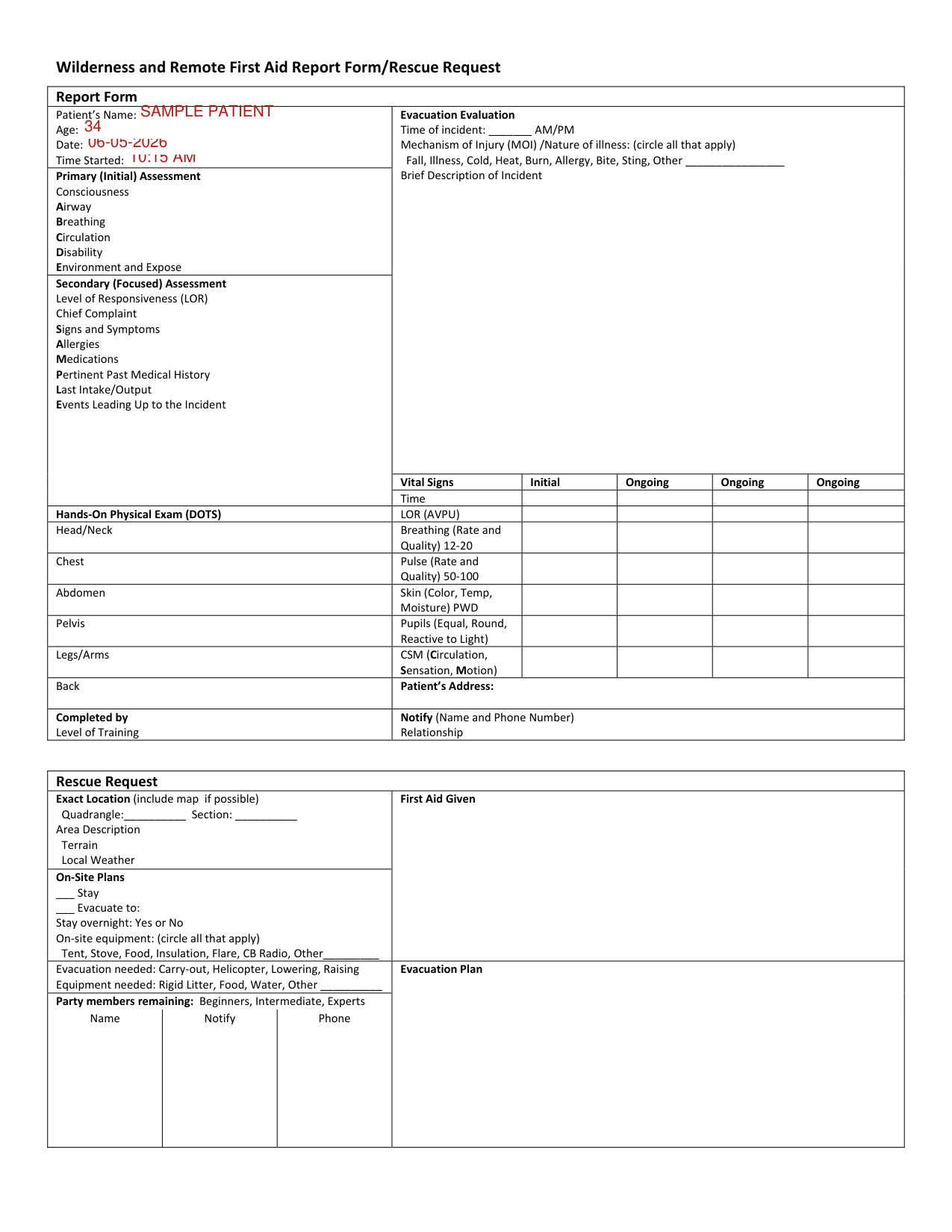
Wilderness and Remote First Aid Report Form/Rescue Request example filled out, example: a trail guide records an injured hiker
A trail guide fills out the Wilderness First Aid Report Form. The patient, a hiker with a sprained ankle, is treated on June 5, 2026. The picture shows page 1, and all its values are invented. Rescue Request stays empty because the hiker walks out unaided. Evacuation Plan stays empty because no evacuation is needed.

How to fill out Wilderness and Remote First Aid Report Form/Rescue Request, box by box

Patient's Name, Age, Date and Time Started
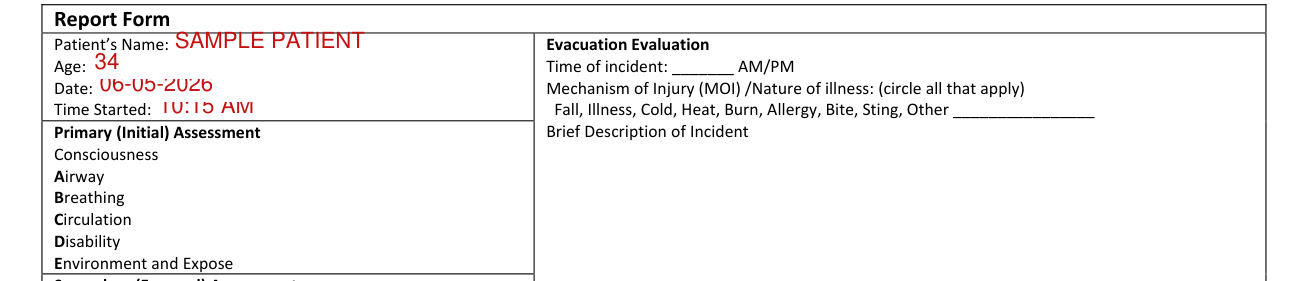
Wilderness and Remote First Aid Report Form/Rescue Request example filled out, patient's Name, Age, Date and Time Started

Enter the Patient's Name, Age, Date and Time Started, then assess Consciousness, Airway, Breathing, Circulation, Disability, Environment and Expose under Primary (Initial) Assessment.

Rescue Request
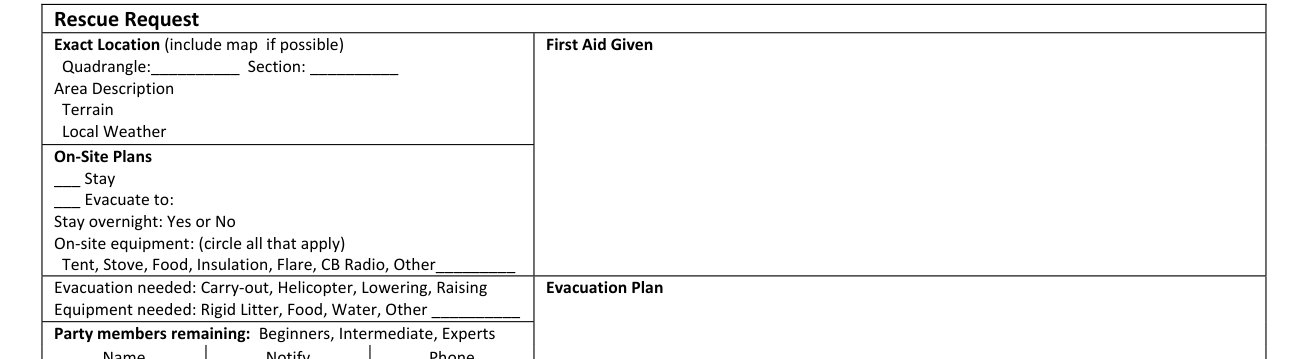
Wilderness and Remote First Aid Report Form/Rescue Request example filled out, rescue Request

Under Rescue Request, enter the Exact Location (include map if possible), Quadrangle, Section, Area Description, Terrain and Local Weather. Also mark Evacuation needed: Carry-out, Helicopter, Lowering or Raising, and Equipment needed: Rigid Litter, Food, Water or Other.

More rules for Wilderness and Remote First Aid Report Form/Rescue Request

Under Secondary (Focused) Assessment, enter Level of Responsiveness (LOR), Chief Complaint, Signs and Symptoms, Allergies, Medications, Pertinent Past Medical History, Last Intake/Output and Events Leading Up to the Incident.

Sources

[1] Wilderness and Remote First Aid Report Form/Rescue Request (the served file; no issuer file found) (the Official source link on this page).