
A Florida limited power of attorney is a written document in which you, the principal, name an agent (also called an attorney-in-fact) to act for you on only the tasks you list on the form. It is also known as a special power of attorney. This page offers a free Florida limited power of attorney form that you can fill out online or download as a PDF, along with the signing rules and the ways a Florida power of attorney ends.
Last Updated: October 2026. This guide is reviewed and updated regularly to reflect current Florida law. If you notice an error or outdated information, please contact us.

Build Your Document
Answer a few simple questions to make your document in minutes
Save and Print
Save progress and finish on any device, download and print anytime
Sign and Use
Your valid, lawyer-approved document is ready
The form is titled Florida Limited Power of Attorney. It lets your agent act for you in any lawful way on the limited purposes you write on its purpose lines. It has four pages and 40 fillable fields. A notice under the purpose lines says the powers pertain solely to those purposes.
The form has these parts, in order:
The person who gives the powers is the principal. The person who receives them is the agent, also called the attorney-in-fact. You may also name a successor attorney-in-fact who steps in if your first agent is unable or unwilling to serve. Page 2 of the form has a paragraph for that.
The paragraph for third parties says that any third party who receives a copy may act under the document. In it, you also agree to indemnify the third party for claims that arise from relying on the power of attorney.
To cover health care decisions, use a Florida medical power of attorney instead. If you want your agent to handle a wide range of financial matters, see our Florida general power of attorney. To compare other forms, see all Florida power of attorney forms or our power of attorney guide.
The table below summarizes the key details of this Florida limited power of attorney form.
| Document Name | Florida Limited Power of Attorney Form |
| Other Name | Florida Special Power of Attorney |
| Relevant Laws | Fla. Stat. § 709.2105 and § 709.2109 |
| Pages | 4 |
| Avg. Time to Fill Out | 8 minutes |
| # of Fillable Fields | 40 |
| Available Formats | Adobe PDF |
Under Section 709.2105 of the Fla. Stat., a Florida power of attorney must be signed by the principal and by two subscribing witnesses. The principal must also acknowledge it before a notary public.[1] The statute puts it this way:
A power of attorney must be signed by the principal and by two subscribing witnesses and be acknowledged by the principal before a notary public or as otherwise provided in s. 695.03
In plain words, three things have to happen for the document to meet this rule:
The form on this page has an acknowledgment for the notary on page 3 and a signing block for two witnesses on page 4. The steps below explain where each one goes.
The same section says who can be the agent. The agent must be one of these:
If the principal is physically unable to sign the power of attorney, the notary public before whom the principal's oath or acknowledgment is made may sign the principal's name on the power of attorney under s. 117.05.[1]
A Florida power of attorney ends when the principal dies, when the principal revokes it, or when its purpose is accomplished. It also ends under its own terms, and it ends if a court adjudicates the principal incapacitated, with some exceptions. The list below comes from Section 709.2109 of the Fla. Stat.[2]
A power of attorney terminates when:
The agent's own authority can end too. It terminates when the agent dies, becomes incapacitated, resigns, or is removed by a court. It also terminates when an action is filed for the dissolution or annulment of the agent's marriage to the principal or for their legal separation, unless the power of attorney provides otherwise.[2]
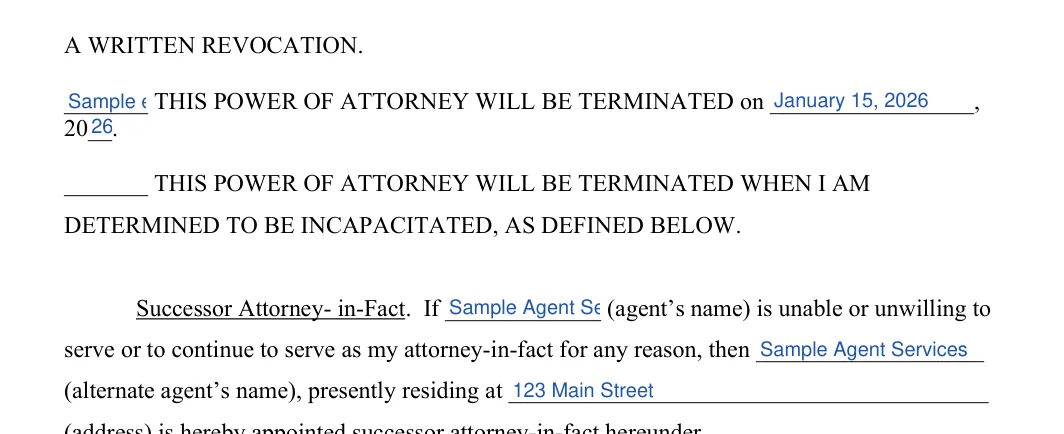
Pages 1 and 2 of the form let you pick an ending. You initial one line: it ends when you have signed a written revocation, on a date you write in, or when you are determined to be incapacitated. The form has no line about death, so that ending comes from the law.
A power of attorney that is not durable ends if the principal becomes incapacitated. If you need a durable power of attorney instead, see our Florida durable power of attorney form. A durable power of attorney is a separate document, so decide which one fits your plans before you sign.
A principal can revoke a Florida power of attorney, but a revocation does not reach everyone at once. Termination or suspension of an agent's authority or of a power of attorney is not effective as to an agent who, without knowledge of the termination or suspension, acts in good faith under the power of attorney.[2]
An act so performed, unless otherwise invalid or unenforceable, binds the principal and the principal's successors in interest.[2]
In practice, this is why people tell their bank and other organizations when they end a power of attorney. See our guide to revoking a power of attorney for the steps.
If someone starts court proceedings about the principal's capacity, the authority granted under the power of attorney can be suspended. The rules differ for family members and for health-care decisions, as the list below shows.[2]
One more rule applies if the principal has signed a health care advance directive naming a health care surrogate. If the directive and the power of attorney conflict, the terms of the directive control, unless the power of attorney is later executed and expressly states otherwise.[2]
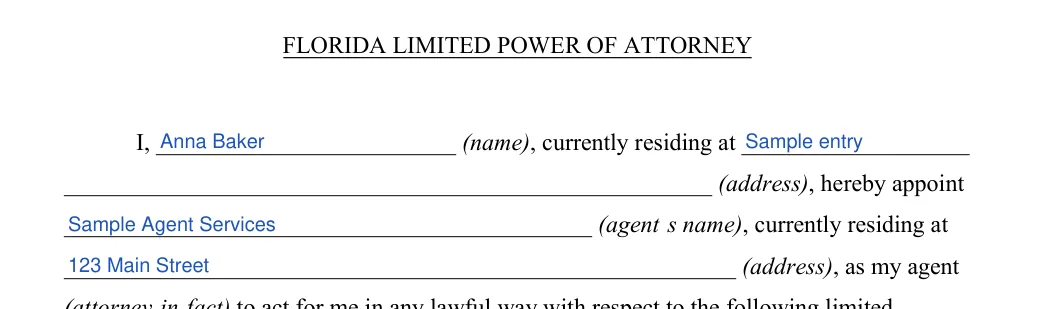
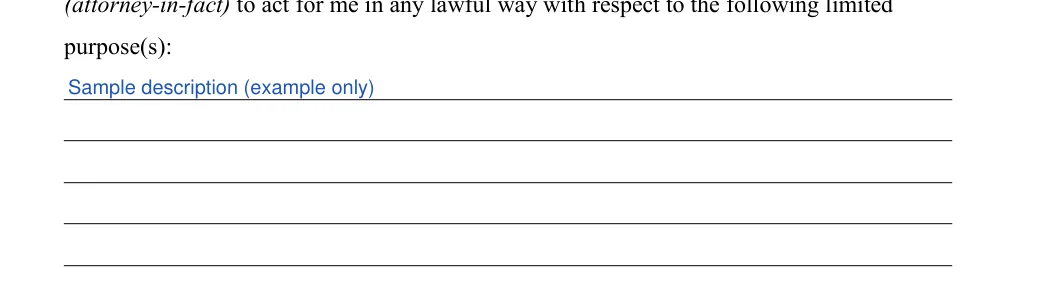
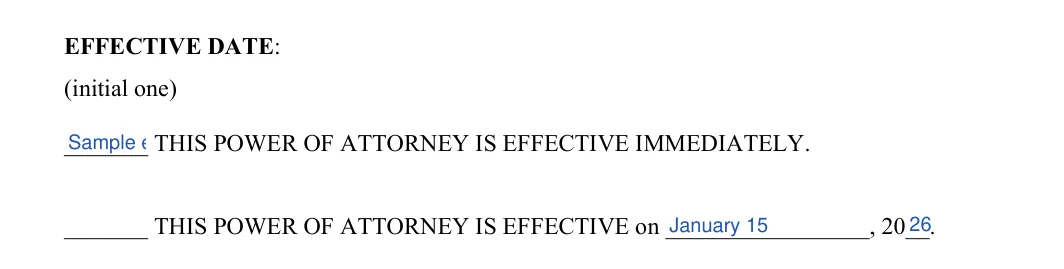
Fill in the form from top to bottom. It has four pages, and the steps below follow its order: your names, the purposes, the dates, a successor, your signature, the notary's acknowledgment and the witness block. Type your answers on the FormsPal website, or download the PDF and complete it in the PDF editor.
The screenshots under each step show the FormsPal Florida limited power of attorney template filled with sample entries in blue, so you can see where each answer goes. The names, addresses, dates and amounts are examples only.

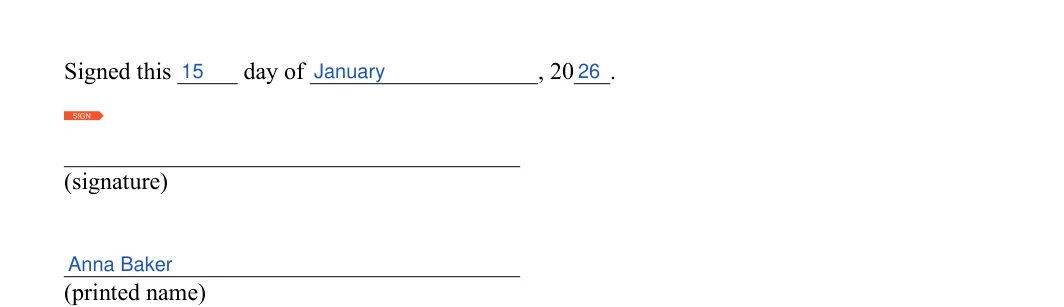
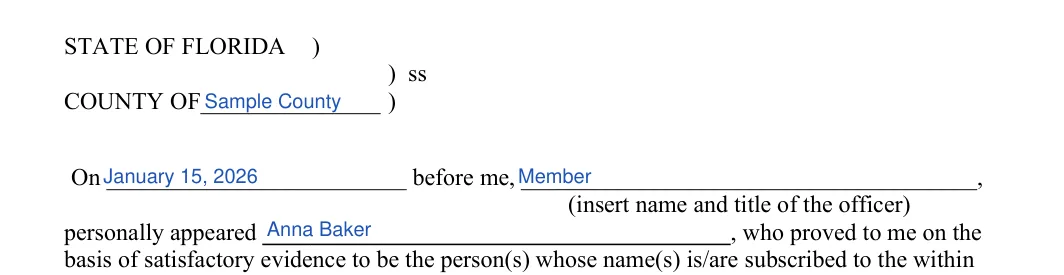

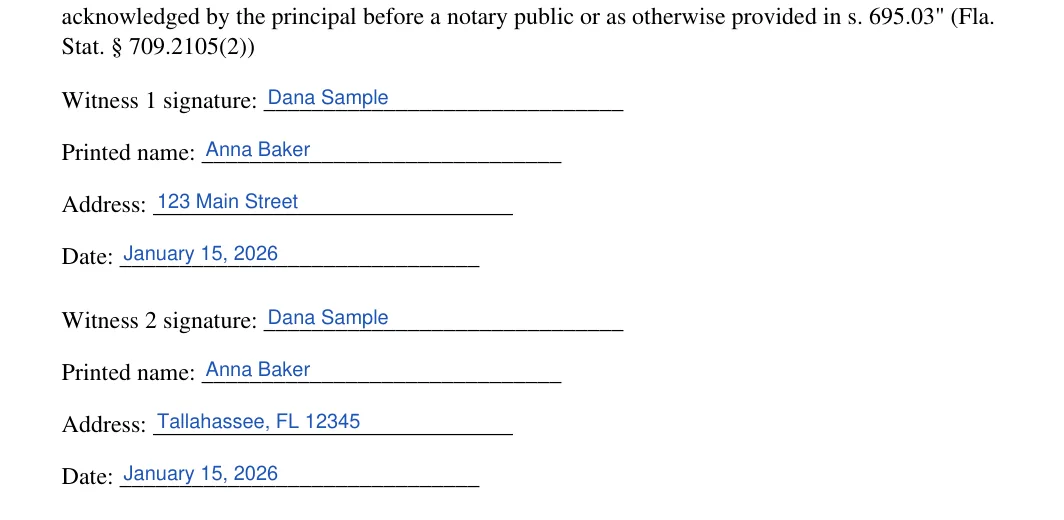
Once the form is filled in, a few more steps make it ready to use. A good habit is to line up your notary and both witnesses before you start, so that everyone can finish in one visit. Follow these steps in this order:
These answers cover signing a Florida limited power of attorney and ending it. Each answer cites the Florida Statutes, and the numbered sources are listed at the end of the page.
On this page's form, the principal names an agent to act for the limited purposes that the principal writes on five lines. Like any Florida power of attorney, it must be signed by the principal and by two subscribing witnesses and be acknowledged by the principal before a notary public.[1]
A Florida power of attorney must be signed by the principal and by two subscribing witnesses and be acknowledged by the principal before a notary public.[1] The form on this page has a notary acknowledgment on page 3 and a block for two witnesses on page 4.
The agent must be one of the following:[1]
If the principal is physically unable to sign, the notary public before whom the principal's oath or acknowledgment is made may sign the principal's name on the power of attorney.[1]
Yes. A power of attorney terminates when the principal dies.[2] The form on this page has no line about death, so this ending comes from the law and not from a choice you make on the form.
It can. The agent's authority terminates when an action is filed for the dissolution or annulment of the agent's marriage to the principal or for their legal separation, unless the power of attorney otherwise provides.[2]
Not as to that agent. A termination is not effective as to an agent who acts in good faith without knowledge of it.[2]
General information, not legal or tax advice.
Unless noted otherwise, the sources below are from the Fla. Stat.
