
Updated:
A real estate contract cancellation form is a written purchase agreement termination. The buyer and the seller sign it to end the deal and decide where the earnest money goes. Build it online or download it, with filling steps and buyer cancellation rules below.

Build Your Document
Answer a few simple questions to make your document in minutes
Save and Print
Save progress and finish on any device, download and print anytime
Sign and Use
Your valid, lawyer-approved document is ready
Yes, a signed real estate purchase agreement can be cancelled in three ways: the buyer and the seller agree to end it, the contract itself allows it, or a statute gives the buyer a cancellation right, such as the seven-day window under Tex. Prop. Code § 5.008 when the seller did not give the written Seller's Disclosure Notice that section requires.
A cancellation the two sides agree on is the most common route, and it is what this form records. Both the buyer and the seller sign it, so it works only when the other side agrees to let the deal go. A rescission letter that one side sends first can open that talk, and the signed form closes it.
Sometimes the agreement itself may provide a reason for termination. Inspection, financing and title conditions are the usual examples: the buyer finds a defect during the inspection period, or the owner does not let the buyer onto the property to inspect it. Read the termination and contingency clauses of your own contract first, since they set out when each side can walk away and what happens to the deposit.
Buyers usually want out of a real estate contract for one of these reasons:
A seller who changes their mind needs the buyer's signature on this form for a mutual cancellation. Common reasons on the seller's side are:
A real estate contract cancellation form is a written agreement in which the buyer and the seller end their purchase agreement, release each other from further duties and settle the earnest money deposit. It is also called a cancellation letter, a termination agreement or a release and cancellation of contract.
The form names the original contract and the property, says the contract ends as of a set date and lists who receives the deposit. Once both sides sign it, neither one has to go through with the sale, apart from duties the contract says survive.
A buyer's days to cancel come from the purchase contract or from a statute, and each statutory window opens only on its own trigger, usually a seller disclosure delivered late: 72 hours after a late property disclosure under La. Rev. Stat. § 9:3198, for example, and fifteen calendar days after the disclosure statement arrives under Haw. Rev. Stat. § 508D-5.
The table lists buyer cancellation rights found in the sources behind this page, each with the condition that opens it. It is not a complete list: a state left out may still give buyers a right to cancel, so read your contract and your state's disclosure law.
Each citation in the table names its section; read it on the jurisdiction's own legislature or code website before you rely on it.
| Jurisdiction | Buyer's right to cancel and its condition | Citation |
|---|---|---|
| Alaska | If the disclosure statement or a material amendment arrives after the buyer's written offer, the buyer can terminate the offer by written notice to the seller or the seller's agent within three days after delivery in person or six days after delivery by mail. | Alaska Stat. § 34.70.020 |
| Arizona | Only for a sale of land other than subdivided land, by a seller of five or fewer parcels in an unincorporated area of a county: the buyer can rescind the sale for five days after the seller's affidavit of disclosure is furnished to the buyer. | Ariz. Rev. Stat. § 33-422 |
| California | If a required disclosure or a material amendment arrives after the buyer signs an offer, the buyer has three days after delivery in person, or five days after delivery by mail or by electronic record (where the parties agreed to deal electronically), to terminate by written notice to the seller or the seller's agent. | Cal. Civ. Code § 1102.3 |
| District of Columbia | If a required disclosure arrives after the buyer signs the purchase agreement, the buyer can terminate by written notice no later than 5 calendar days after receiving it, and any deposits are promptly returned. | D.C. Code § 42-1302 |
| Hawaii | The buyer has fifteen calendar days after receiving the disclosure statement to decide whether to rescind, without loss of deposits. A court action to rescind under the chapter has to be started before the sale is recorded. | Haw. Rev. Stat. § 508D-5; § 508D-16.5 |
| Louisiana | If the property disclosure document arrives after the offer, the buyer can terminate or withdraw no later than 72 hours after receiving it, excluding weekends and federal and state holidays. The right ends if not used before transfer of title or occupancy, whichever is earlier. | La. Rev. Stat. § 9:3198 |
| Montana | Unless the buyer and the seller agreed otherwise in writing, the contract is not effective until 3 days after the buyer receives the disclosure statement, and the buyer can withdraw without penalty during that time. | Mont. Code Ann. § 70-20-502 |
| Nevada | If the seller or the seller's agent fails to serve a completed disclosure form, the buyer can rescind without penalties at any time before the property is conveyed. | Nev. Rev. Stat. § 113.150(1) |
| North Dakota | The buyer can void the contract until the homeowners' association or condominium documents are provided and for five days after receipt, or until conveyance, whichever comes first. | N.D.C.C. § 47-10-02.3 |
| Ohio | If the disclosure form or an amendment arrives after the agreement is signed, the buyer can rescind by a written, signed and dated document delivered within three business days of receipt, and no later than 30 days after the seller accepted the offer or the closing, whichever is earlier. | Ohio Rev. Code Ann. § 5302.30 |
| Oregon | Unless the buyer has delivered a written waiver, the buyer has five business days after delivery of the seller's disclosure statement to revoke the offer by a separate signed written statement. | Or. Rev. Stat. § 105.475 |
| Texas | For a home of not more than one dwelling unit: if the contract was signed before the seller gave the written Seller's Disclosure Notice, the buyer can terminate for any reason within seven days after receiving that notice. | Tex. Prop. Code § 5.008 |
| Vermont | If the seller does not provide the flood information that subsection (a) of the section requires, such as a copy or link of the official FEMA flood insurance rate map or notice that none is available, the buyer can terminate before transfer of title or occupancy, whichever is earlier. | 27 V.S.A. § 380 |
| Virginia | If the disclosures arrive after the contract is ratified, the buyer can terminate up to the earliest of: three days after delivery in person or electronically, five days after the postmark if mailed, settlement, occupancy, a written mortgage application that states the right ends on application, or a separate written waiver. | Va. Code Ann. § 55.1-709 |
| Washington | Unless the buyer and the seller agree otherwise in writing, the buyer has three business days after the disclosure statement is delivered to rescind by a separately signed written statement to the seller or the seller's agent. | Wash. Rev. Code § 64.06.020 |
| Wisconsin | A buyer who does not receive the report within the 10 days can rescind within 2 business days after that period by written notice to the owner or the owner's agent, with the return of deposits and option fees. | Wis. Stat. § 709.02 |
A late or missing disclosure does not open a cancellation right everywhere. In Tennessee, failure to provide the disclosure or disclaimer statement does not let a purchaser terminate the contract, though other legal actions stay open (Tenn. Code Ann. § 66-5-203). In New Mexico, only one kind of silence is covered: a failure to disclose that the property was the site of a natural death, homicide, suicide, assault or other felony, or was occupied by a person with HIV or AIDS, is no ground for termination or rescission of the sale (N.M. Stat. Ann. § 47-13-3(B)). In North Dakota, the radon section creates no right to rescind unless the contract states one as an express term (N.D.C.C. § 47-10-02.2).
When the buyer and the seller cancel by agreement, they decide together where the earnest money goes. The money goes wherever the buyer and seller write it in Section 2. The form also says the buyer and seller notify any escrow or settlement agent. If you only need to release a deposit, FormsPal also offers a separate release of earnest money form.
A statutory cancellation carries its own deposit rule. Under Haw. Rev. Stat. § 508D-5, deposits are returned to the buyer immediately. Under La. Rev. Stat. § 9:3198 and Va. Code Ann. § 55.1-709, any deposit is promptly returned to the buyer. Under Ohio Rev. Code Ann. § 5302.30, the seller returns any deposits the buyer made once the buyer rescinds under that section, and the buyer cannot rescind unless the rescission comes by the earlier of 30 days after the seller accepted the offer or the closing. The table above shows the same rule for D.C. and Wisconsin.
A buyer who cancels within one of these statutory rights pays no penalty: La. Rev. Stat. § 9:3198 and Va. Code Ann. § 55.1-709 say so for a termination that follows their chapters, Mont. Code Ann. § 70-20-502 for a withdrawal during its 3-day delay, and Nev. Rev. Stat. § 113.150(1) for a rescission after a missing disclosure form. Under Ohio Rev. Code Ann. § 5302.30, a buyer who rescinds within that section incurs no legal liability to the seller. Outside those rights, what backing out costs is set by your purchase agreement. Read its earnest money and default clauses: they say whether the seller keeps the deposit when the buyer walks away and what else each side can claim from the other. If those clauses are unclear, ask a local real estate attorney before you stop performing.
A real estate contract cancellation form usually holds the information below. Read through the list before you fill in the template, so you know which details to have at hand.
To fill out the real estate contract cancellation template, enter the date and both parties, describe the original contract in the recitals, list the deposit payouts and sign the signature blocks. If you download the PDF, you can complete it with FormsPal’s PDF editor.
The screenshots under each step show the FormsPal Real Estate Contract Cancellation template filled with sample entries in blue, so you can see where each answer goes. The names, addresses, dates and amounts are examples only.



To cancel a real estate contract, find your ground to cancel in the contract or a statute, tell the other side in writing, sign a mutual cancellation and settle the deposit with the escrow agent. Ending a standard real estate sales contract carelessly can put a party in breach of its terms, so take the steps in order.
Not every provision of the FormsPal template contains a blank for the reader to complete. Four sections of the two-page document consist of printed language that stays unchanged. The list below summarizes what each section addresses, so the buyer and the seller understand the cancellation before they finalize it.
Review all four sections together with the other side of the transaction. That way both the buyer and the seller understand how the earnest money and the contract are handled before the cancellation is finished.
The real estate contract cancellation form ends the purchase agreement between a buyer and a seller; other termination documents end a different contract or only part of the deal. Pick the document that matches the contract you are leaving.
A buyer's agent termination letter ends the buyer's contract with a real estate agent, and a listing cancellation form ends the seller's listing agreement with a broker. Neither one cancels a purchase agreement with the other party, so a buyer leaving both an agent and a home purchase signs two separate documents.
A notice of termination is a one-sided letter: one party tells the other that it is ending the contract under a right it holds, such as an inspection contingency. The cancellation form is two-sided, signed by the buyer and the seller, and it also settles the deposit. Many deals use both, a notice first and the signed cancellation after.
A release of earnest money form only tells the escrow agent who receives the deposit. Use it when the deposit needs its own paper, and this cancellation form when the whole contract ends.
These answers cover the questions buyers and sellers ask most often while they fill out and use this cancellation form.
Several of the buyer rights in the table above call for written notice, each under the condition shown in its row: Alaska Stat. § 34.70.020, Cal. Civ. Code § 1102.3, D.C. Code § 42-1302, Ohio Rev. Code Ann. § 5302.30, Or. Rev. Stat. § 105.475, Wash. Rev. Code § 64.06.020 and Wis. Stat. § 709.02. For the other rows, the quoted rules name no form, but a written, dated notice is still the safer course, since it shows what you sent and when. A mutual cancellation on this form is in writing by design, signed by both sides.
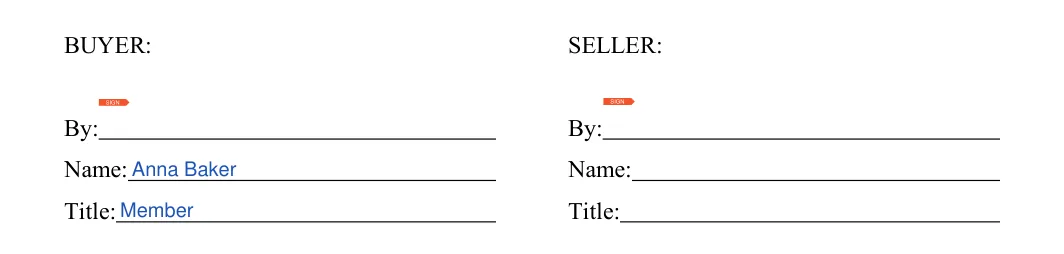
The FormsPal template has a signature block for the buyer and one for the seller. Each block has a By line, a Name line and a Title line. It has no separate notary or witness lines. One rule in the sources here calls for notarization: under Nev. Rev. Stat. § 113.150(3), a rescission under subsection 2 of that section is effective only if made in writing, notarized and served no later than 4 working days after the buyer is informed of the defect, on the holder of any escrow or, with no escrow opened, on the seller or the seller's agent.
Yes, in some places, and only in the way each rule below sets out. Under Ohio Rev. Code Ann. § 5302.30, a buyer of residential property can waive the right of rescission. Under Va. Code Ann. § 55.1-709, the right ends when the buyer signs a written waiver separate from the purchase contract after receiving the disclosure. Under Or. Rev. Stat. § 105.475, a written waiver delivered to the seller removes the revocation window.
The template has three lines in Section 2, and each line holds one dollar amount and one name. Fill in only the lines you need.
Have the date, the full names and mailing addresses of the buyer and seller, the date of the original purchase contract and the street address of the property ready. If a deposit is being released, also write down the amounts and the names of the people who receive them.
Yes. Select Create My Document to answer a few questions and build the form online, or download the PDF or Word file and fill it in yourself.
General information, not legal or tax advice.
