
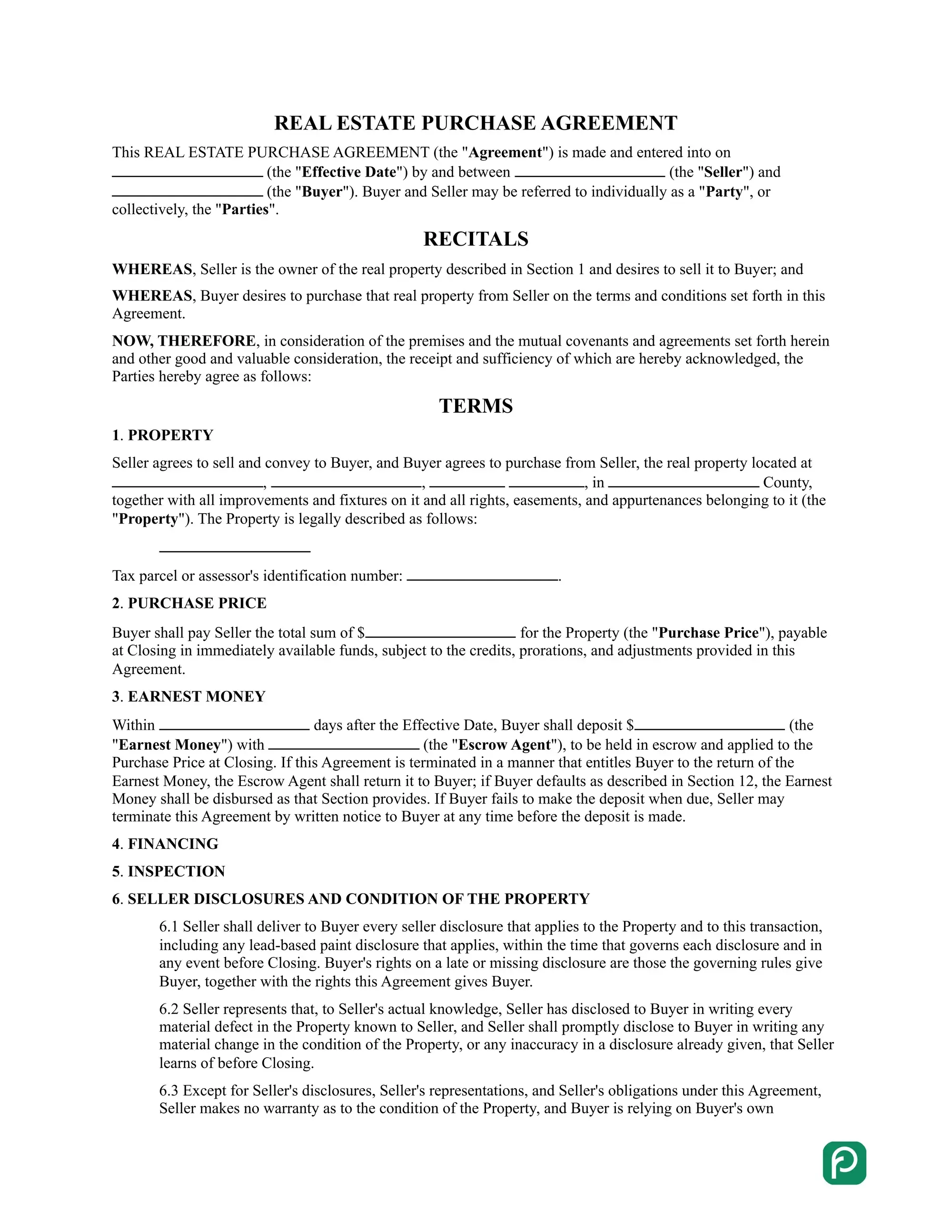
An Illinois real estate purchase agreement is a written contract where a buyer and a seller record the price, the payment terms and the conditions of a property sale. This Illinois real estate purchase agreement template is a residential form you can fill out online or download as a PDF or Word file. The sections below explain, with sources, what Illinois law asks of a seller in a residential sale.
Last Updated: October 2026. This guide is reviewed and updated regularly to reflect current Illinois law. If you notice an error or outdated information, please contact us.
Build Your Document
Answer a few simple questions to make your document in minutes
Save and Print
Save progress and finish on any device, download and print anytime
Sign and Use
Your valid, lawyer-approved document is ready
This template records the deal in numbered sections, from the parties and the property to the price, closing and default. Fill in each blank, check the boxes that apply, and have both sides sign. Each side should keep a signed copy. Other states have their own versions in the fillable real estate sales contract collection.
The template has sections for:
If you work with a real estate agent or a lawyer, ask them to read the agreement and the disclosure report before anyone signs. Strike or change any line that does not match your deal.
A seller of residential real property in Illinois must complete all items in the disclosure report. The seller must also deliver the written report to the prospective buyer before the contract is signed.[1.2] The Illinois Residential Real Property Disclosure Act prescribes the form. It is called the Residential Real Property Disclosure Report.[1.4]
The report asks the seller to answer yes, no or not applicable to 24 statements about the property. The seller must explain any yes or not applicable answer, except the first statement, in the additional information area.[1.4]
The 24 statements cover these areas.[1.4]
The report defines a material defect in its own words:
In this form, "material defect" means a condition that would have a substantial adverse effect on the value of the residential real property or that would significantly impair the health or safety of future occupants of the residential real property unless the seller reasonably believes that the condition has been corrected.
In plain words, it is a problem that seriously lowers the value of the home or threatens the health or safety of the people who will live there. A defect the seller reasonably believes has been fixed is not covered.
Not every sale is treated the same way. The Act lists certain transfers in which the seller is exempt from the Act, whether or not a disclosure report is delivered.[1.1] Read that list in the statute before you decide a report is not needed.
A buyer who receives the disclosure report has a short window to walk away. The prospective buyer may terminate the contract within 5 business days after receiving the report. The buyer gets back all earnest money deposits or down payments, without any liability to or recourse by the seller.[1.5]
The seller has duties after the report is delivered, and a buyer has a limited time to act.
These answers cover common questions about the Illinois seller disclosure report that goes with a residential purchase agreement. Each answer that states a legal rule cites the Illinois statute behind it. Answers about general practice carry no citation.
A seller of residential real property owes the buyer the Residential Real Property Disclosure Report, which follows the form the state prescribes.[1.4] In practice it is the seller's written answer to a fixed list of questions about the property. Three duties come with it.
Certain exempt transfers are the exception.[1.1]
A seller who knowingly violates a duty under the Act, or who reports information the seller knows is false, is liable for actual damages and court costs. The court may award reasonable attorney fees to the prevailing party.[1.6] No action may be started later than one year after the earliest of possession, occupancy or recording of the instrument of conveyance.[1.7]
Yes. One statement asks whether the seller is aware of unsafe concentrations of or unsafe conditions relating to lead paint, lead water pipes, lead plumbing pipes or lead in the soil. A seller who answers yes must explain the answer on the form.[1.4]
Yes. One of the 24 statements asks whether the seller is aware of unsafe concentrations of radon on the premises. A seller who answers yes must explain the answer on the form.[1.4]
This template is a residential form. A commercial sale often involves larger sums or several buildings, so many buyers and sellers ask a lawyer to review the terms before they sign.
General information, not legal or tax advice.
