
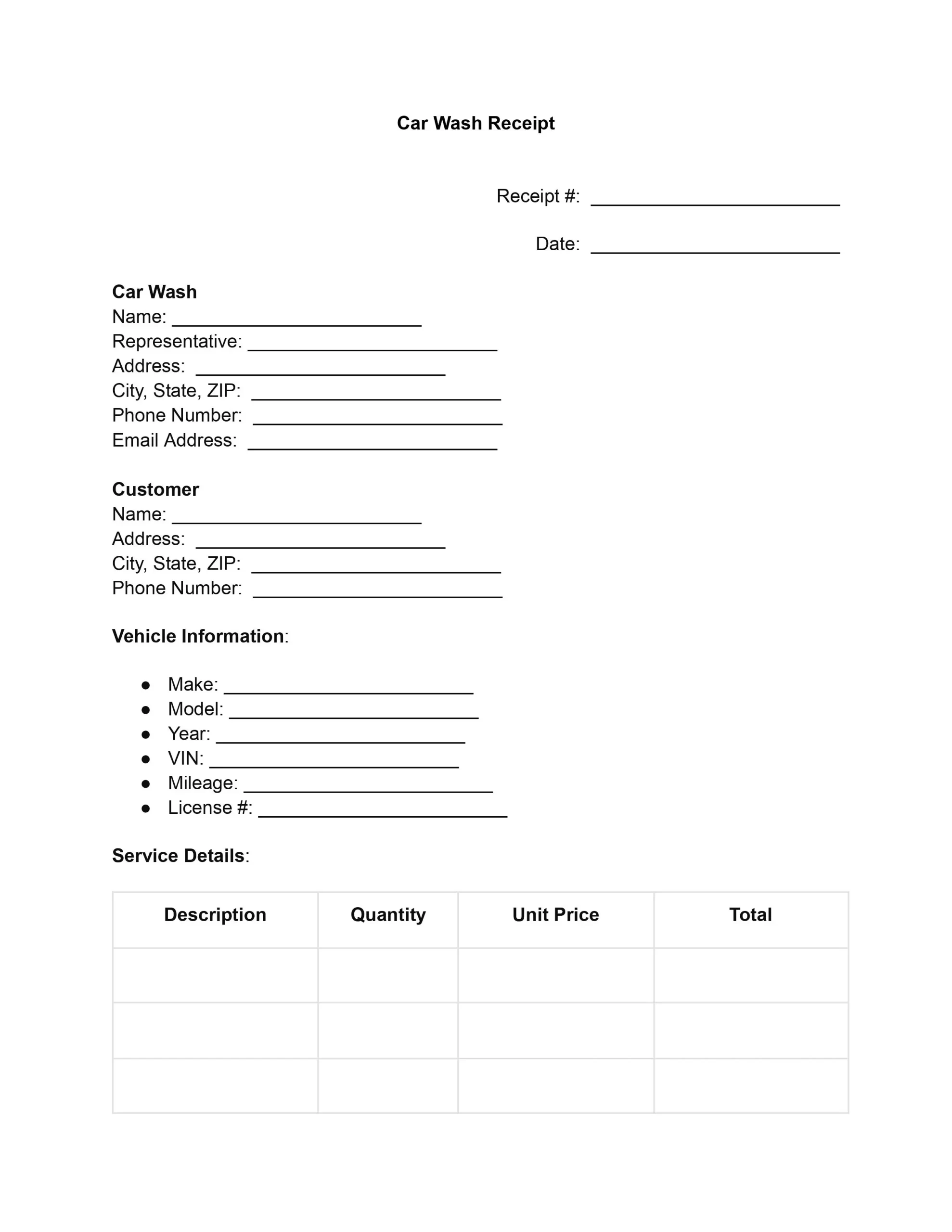
A car wash receipt template is a ready-made form that records the services a customer received and the payment the car wash collected. Issuing a car wash receipt book is important for business owners because it ensures legal compliance and financial management. It also fosters a professional image that consumers appreciate. Use the steps below to fill in each part, from the receipt number to the signature.
Last Updated: October 2026. This guide is reviewed and updated regularly to reflect current law. If you notice an error or outdated information, please contact us.
A car wash receipt is a written record of the services a customer received at a car wash and the amount paid. The customer keeps it as proof of payment, and the business keeps a copy for its records. A good receipt template lists the date, the vehicle, each service, the total, and how the customer paid.
Customers keep the receipt as proof of payment and as a record of what was done to the vehicle. It also helps when they file an expense report or ask about a charge later.
The business keeps a copy of each receipt as a record of the sale and the services performed. Copies make it easier to answer questions, track daily sales, and match payments to services.
A car wash receipt lists who provided the service, who received it, which vehicle was cleaned, what was done, and what was paid. The receipt template has a line for each of these answers.
Choosing the template is only the first step. Next, fit it into your daily routine so every customer gets the same clear receipt at checkout. These three steps help you set it up:
A consistent receipt at checkout shows customers that your business is organized and open about its prices.
Work through the template from top to bottom. Gather the customer’s details, the vehicle information, and the list of services before you start, so you can fill in each part in one sitting. The eight steps below follow the order of the template.
Enter a unique receipt number at the top, such as 1001 for the first receipt and 1002 for the next. A numbered receipt is easy to find again. Then record the date the car wash service was provided.
Fill in the car wash business details, including the name, representative’s name, address, city, state, ZIP code, phone number, and email address. This section provides essential contact information and establishes the receipt as an official document from your business.
Enter the customer’s name, address, city, state, ZIP code, and phone number. This information personalizes the receipt and can be helpful for follow-up services or promotional purposes.
Describe the vehicle with these details:
These details tie the service to one particular vehicle. A short note on its condition when it arrived is also useful.
List each service with its quantity, unit price, and total cost, for example an exterior car wash and an interior cleaning. A line-by-line breakdown helps customers see what each service costs.
Add up all services to get the subtotal before tax. Then add any taxes that apply to reach the final total amount due. Showing each line separately makes the pricing easy to follow and builds trust with your customers.
Mark how the customer paid:
Fill in the check or card number if applicable. This part of the receipt confirms how the transaction was settled.
Have an authorized representative of the car wash sign the receipt and add their printed name and the date of signature. Give the customer a copy and keep one for your files.
The same template works for most car wash businesses, but the details you record can change with the type of service you offer. Adjust the service lines and the notes so that each receipt reflects what the customer actually received.
This sample shows how a finished receipt can look. Every name, number, and price is made up, so replace them with your own details. Use it as a guide for how much detail to put under each part of the template.
Sparkle Car Wash, 456 Oak Street, Springfield. Receipt No. 1001, dated October 10. Customer: Anna Baker, 123 Main Street. Vehicle: 2019 Honda Civic, gray, with a small scratch on the rear door noted on arrival.
| Service | Qty | Unit price | Amount |
|---|---|---|---|
| Exterior car wash | 1 | $12.00 | $12.00 |
| Interior vacuum and wipe-down | 1 | $15.00 | $15.00 |
| Tire shine | 1 | $5.00 | $5.00 |
| Air freshener | 1 | $3.00 | $3.00 |
| Subtotal | $35.00 | ||
| Sales tax (sample rate of 6%) | $2.10 | ||
| Total amount due | $37.10 |
Paid by credit card ending in 4821, paid in full. Signed by Jordan Lee, Manager. A copy was given to the customer.
Most receipt problems come from missing or vague details. A few simple habits keep a receipt clear weeks later, when a customer or your business needs to check what was done.
Yes. Place your logo and business name at the top so customers recognize your brand. Keep the rest of the template layout the same so the receipt stays easy to read.
An invoice asks the customer to pay, while a receipt confirms that the payment was made. A car wash that bills a business account might send an invoice template first and issue the receipt after payment.
It is optional. The VIN ties the receipt to one vehicle, which helps when the same customer comes in often.
Show how the customer paid:
Yes, for similar jobs. Detailing packages list more tasks than a basic wash, so the car detailing receipt has room for a longer list of services. For repairs and maintenance, the auto repair receipt is a closer fit.
Look up the receipt number, or search by the date and the vehicle, and then print or email a copy. Numbered receipts make this lookup quick, which is another reason to give every receipt its own number.
Either works. A printed copy is easy to hand over at the counter, and a PDF copy is easy to email and store with your other records.
General information, not legal or tax advice.
