
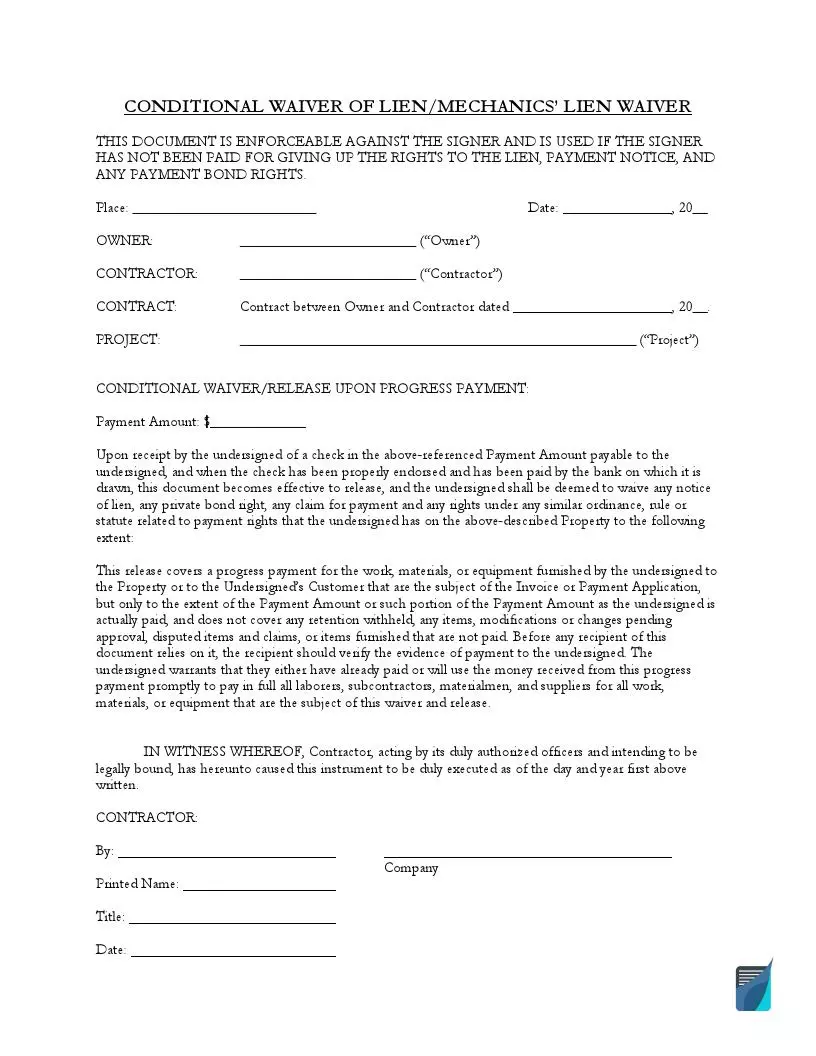
Conditional Contractor’s Lien Release Form is a special kind of mechanic’s lien form created by a contractor or a company. The free template on this page works as a conditional lien release form that you fill in online or download as a PDF. Many people call it a conditional lien waiver.
Last Updated: October 2026. This guide is reviewed and updated regularly to reflect current law. If you notice an error or outdated information, please contact us.
Build Your Document
Answer a few simple questions to make your document in minutes
Save and Print
Save progress and finish on any device, download and print anytime
Sign and Use
Your valid, lawyer-approved document is ready
This type of document is drawn up if the company hires contractors and wants to pay them at the end of the work or progressively, that is, paying for the work before the end of the work.
Progressive wages are often more convenient for contractors and the company. It allows contractors to receive the necessary payments on time while the company avoids large one-time cash expenditures.
But often, with progressive or final wages, both the contractor, the subcontractor, and the leading contractor are involved, and the company is obliged to pay off each on time. Such an intricate payment system can lead to difficulties or debts on behalf of the company, so it is more convenient to use the lien system when paying contractors.
| Document Name | Conditional Contractor’s Lien Release Form |
| Other Names | Conditional Lien Waiver, Conditional Waiver and Release |
| Avg. Time to Fill Out | 7 minutes |
| # of Fillable Fields | 14 |
| Available Formats | Adobe PDF |
A lien release form is a short paper between a contractor and the party paying for the work. It ties a payment to a signed statement from the contractor. The points below describe what the document states and how people tend to use it, in plain words.
Generally speaking, Conditional Contractor’s Lien Release Form is used instead of a work contract and announces that an employee has been paid for the work.
A lien release is a document that states that the contractor has received money for his or her work and agrees not to demand a lien from the company and to claim liens in the future.
Lien releases come in two kinds, conditional and unconditional. The list below sets the two side by side, so you can pick the kind of lien waiver that fits where your payment stands today.
A conditional line release becomes valid only after the money is received in the recipient’s bank account, not after the document is signed. This type of lien release is considered the most convenient and reliable for both the company and the contractor because it guarantees that the money will be credited to the account.
Two choices shape the form you create, the type of release and the way you show that the payment was made. Before you start creating a Conditional Contractor’s Lien Release Form, decide which type is convenient for you. There are two types of Conditional Contractor’s Lien Release Form:
Remember that you also need to prove that the payment was made, and you can do this in two ways:
To avoid the hassle of completing the Lien Release Form, we recommend that you use our form-building software. If you think you need professional help with filling out the form, it is best to seek legal advice on how to complete the Conditional Contractor’s Lien Release Form.
The steps below follow the FormsPal template that this page hands out, one step for each block of the form.
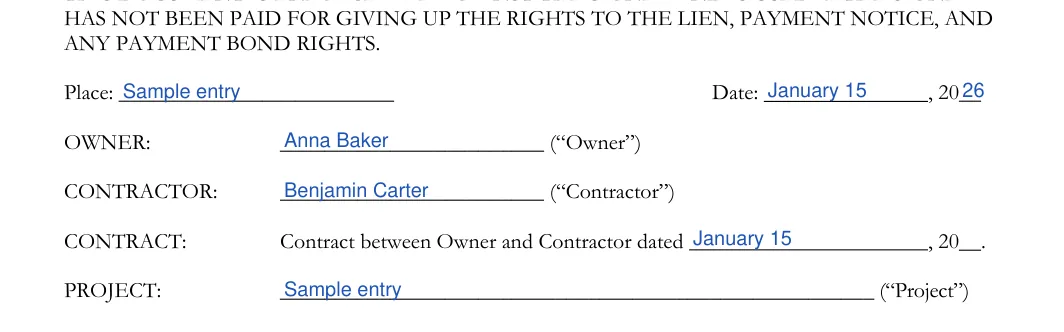
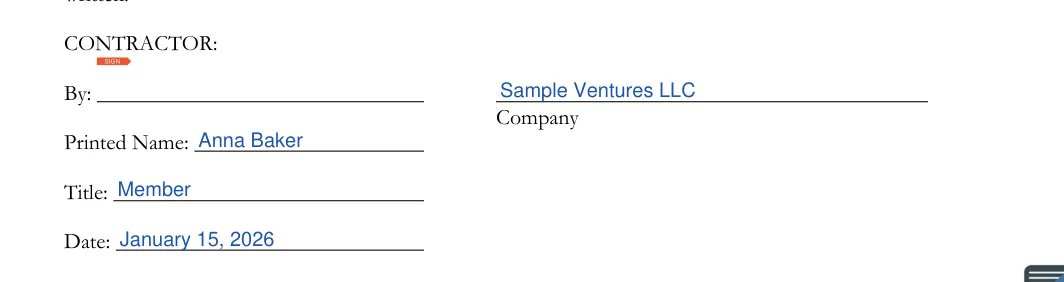
The screenshots under each step show the FormsPal Conditional Contractor’s Lien Release template filled with sample entries in blue, so you can see where each answer goes. The names, addresses, dates and amounts are examples only.
Fill in the place, date, parties, contract date and project
At the top of the form, enter the Place and the Date. Next, type the Owner and the Contractor. On the Contract line, enter the date of the contract between them. On the Project line, describe the job in a few words.

Enter the payment amount
Under the progress payment heading, type the dollar amount on the Payment Amount line. Read the printed release paragraph under it before you sign. It has no blanks to fill in.


Complete the contractor signature block
Under CONTRACTOR, enter the Company name, then sign on the By line. Add the Printed Name and the Title. Under the signature, enter the date of signing as day, month and year.

Once every line is filled in, a few last steps finish the job. Follow them in this order, so the signed copy, the payment record and the names on the form all match when someone looks at them later.
Check the Form
Compare the owner and contractor names, the contract date, the project and the payment amount with your own records.
Sign the Document
After filling in all the fields, you must sign the form.

Keep and Share Copies
Keep a signed copy with your payment records. Send a copy to the other party and note the date you sent it.
It is a lien release that goes with one specific payment. Many people call it a conditional lien waiver. FormsPal offers a free template with 14 fillable fields that you can fill in online or download as a PDF.
The section on conditional and unconditional releases above sets the two kinds side by side. Pick the kind that matches where your payment stands today.
The heading of the template reads Conditional Waiver/Release Upon Progress Payment, and it has one Payment Amount line. Enter the amount of the payment you are working with.
Build it with the online builder, or download the PDF and fill it in with the FormsPal PDF editor. Enter the Place and Date, the Owner and the Contractor, the contract date, the project, the payment amount and the contractor signature block.
Sign on the By line under CONTRACTOR, then add the printed name, the title and the date next to it.
Keep these together in one place:
General information, not legal or tax advice.
